Vol.2..Norwegian Farmer’s Son..July 28th

July 28th……….“TELL US, GRANDPA, HOW DID YOUR PARENTS FIND WAYS TO START AND COMPLETE LARGE PROJECTS ON YOUR FARM. DID THEY BORROW MONEY? OR FIND OTHER, MORE OLD-FASHIONED WAYS TO MAKE THINGS HAPPEN”??

The nails, embedded within those old walls, screamed out in agony, or so it seemed, by the screeching sounds they made upon removal with Dad’s claw hammer. If the claw hammer failed to ‘get ‘er dun’, Dad’s sinewy muscles maneuvered his clawed wrecking bar into place and drove the claw ‘home’ with a short sledge hammer. Now, it was just a matter of leverage against the 90 degree bent end of the tool and that nail gave up its place and came away to drop to the floor below.
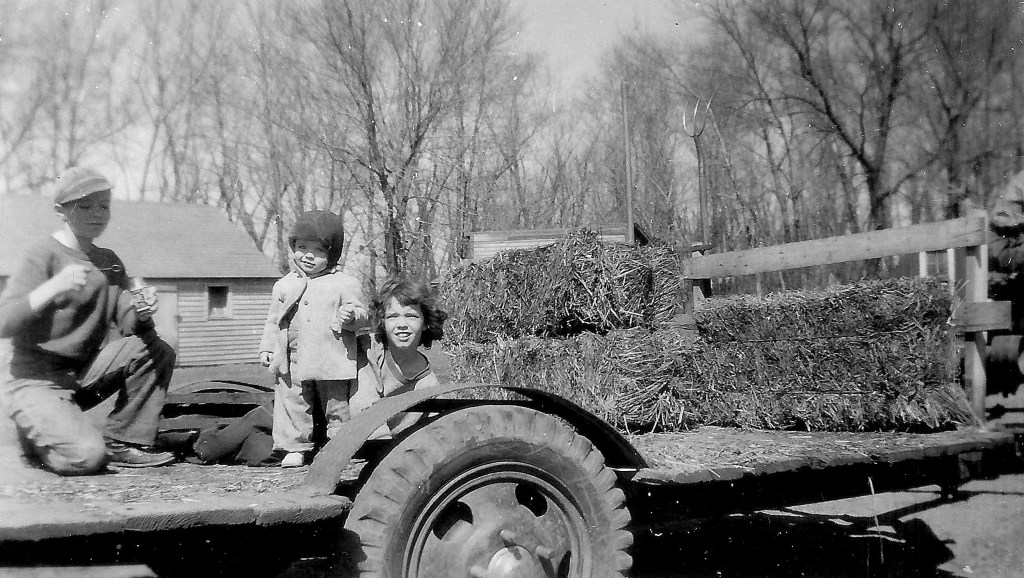
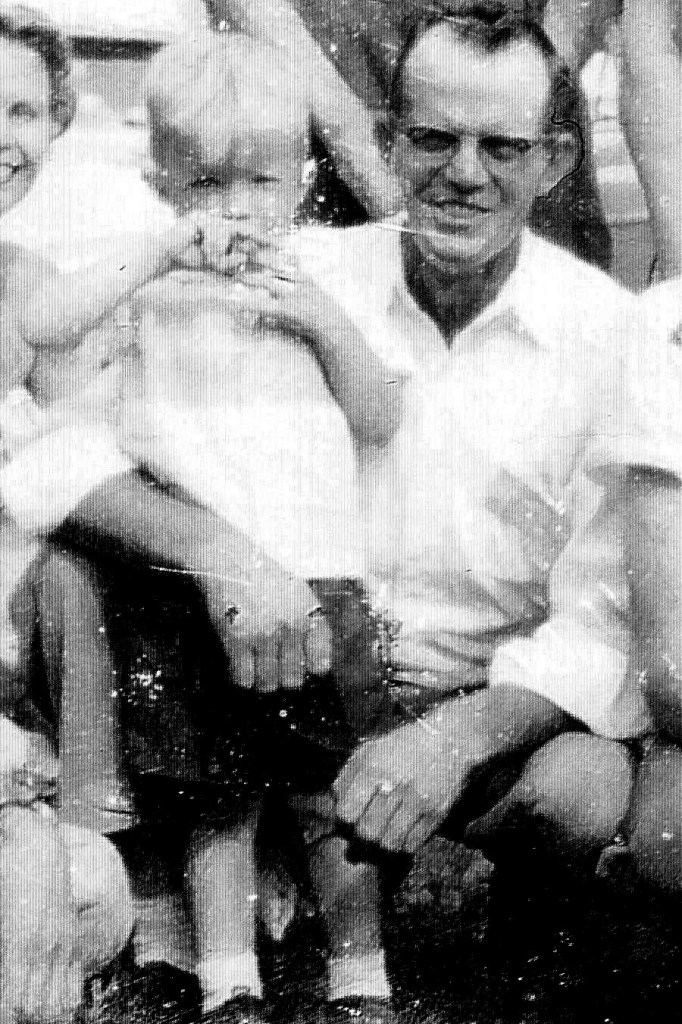
March of 1955 shows tiny Elliott with his big brother and sister on the wagon that was used to haul wood home from the old, abandoned house in their town of Kiester, Minnesota

Earlier that day, our father, Russell, had hooked up his two wheel ‘flat rack’ onto our Farmall Super M tractor and had me climb aboard for the ride the two of us would make into our hometown of Kiester, Minnesota. Arriving at the intersection, to the south of our farm, Dad checked both ways for cars on the east/west asphalt highway. Slowly letting out the tractor’s clutch, Russ cranked the steering wheel to make a left turn at the top of Ozmun’s hill. With the trailer still obediently behind us, he shifted that dear Farmall into road gear and we began to fly as those massive, chevroned rubber treads of the tractor tires sang their own song as their blurred, rotating image matched the brisk winds that cooled us as we came nearer to our lovely village we all called home………Kiester.

There’s an old adage that goes, “One man’s trash, is another man’s treasure”. Our father’s ‘treasure’ that day was a decrepit old house within the city limits of our village that had been abandoned for some time and was made available to anyone who wanted to salvage the lumber from that old abode. “Free is a VERY good price”……and that’s just what this house offered to our farm family………free wood for the taking. Our folks had a dream to build a two car garage and shop on our home place and this old house was to supply most of that lumber.
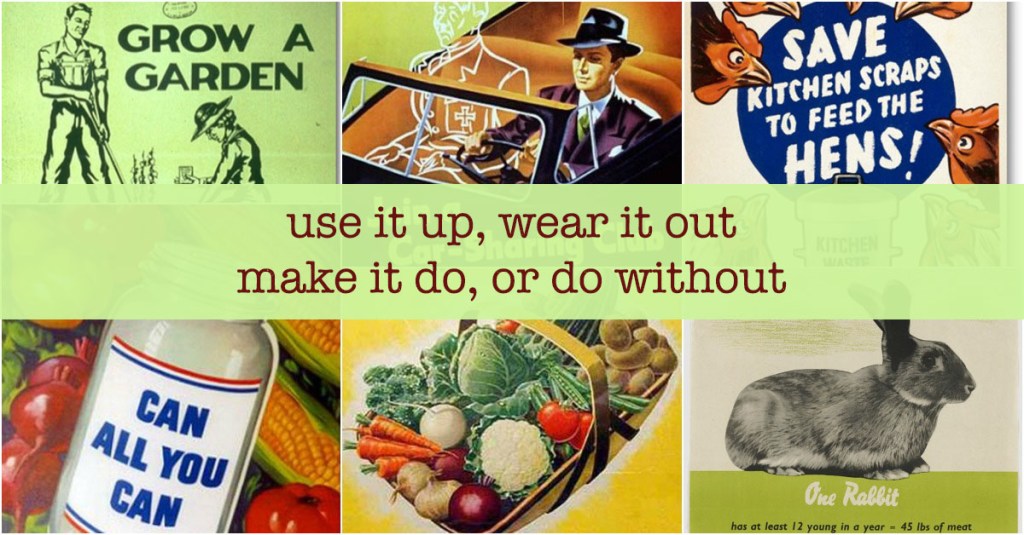
Our beloved, hard-working parents came from what is called, “The Greatest Generation”. They were hardened by the lean times of the 1930’s, with its economic depression and then had to sacrifice for our soldiers, sailors and Marines during World War II. The mindset of those days was to “Use it up, wear it out, make it do, or do without” and that mantra was a staple of how they lived out their daily lives; especially when it came to ‘stretching the dollar’ to make our farm as successful as they could.
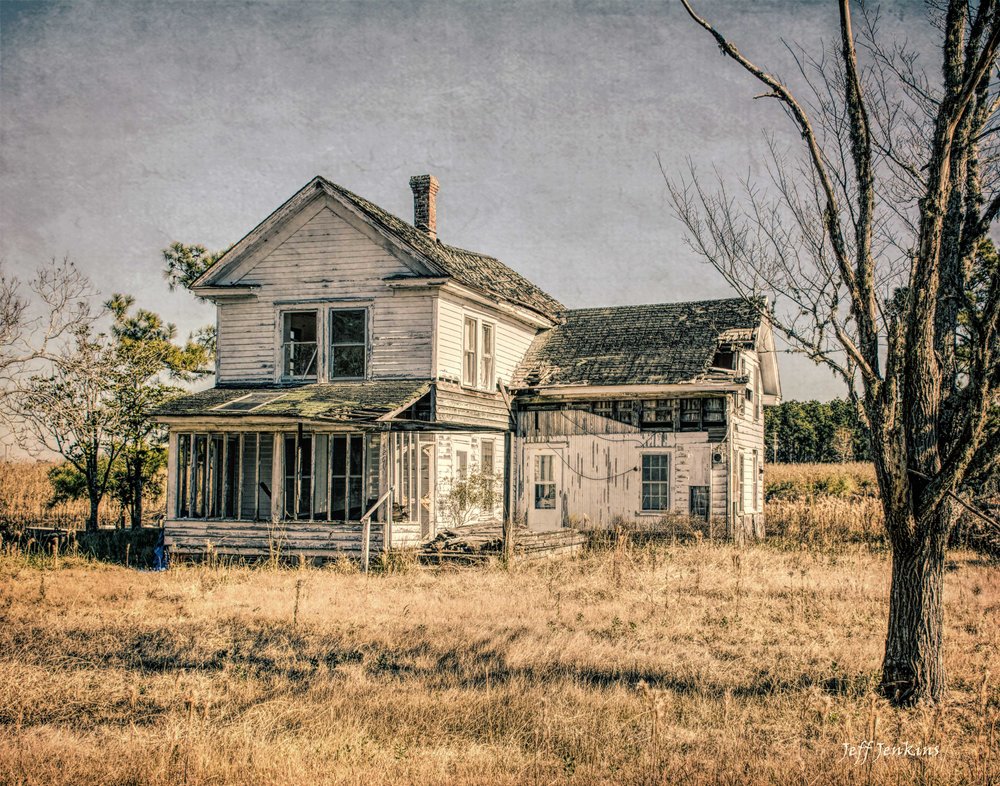
When we pulled up in front of that derelict old home, it seemed to speak to me, in a way. I could almost hear the nails pleading to stay in the walls of what once had housed an entire family and their life energies. Yet, as a seed kernel of corn dies in the soil, in order to bring a new crop to life, it would be the destiny of this old house to give up her lumber to ‘live again’ in the form of our new garage and shop.

I questioned why Dad would even want to go to the efforts to build that two car garage and shop. I can only assume that #1. It would give him a safe place for our car and pickup over the frigid winters, instead of being covered in snow and frozen stiff. And, #2. It could have been that Dad desired a large shop to be able to pull large welding and repair projects in out of the weather. His original shop building was so small, it could only house his tools. And, therefore, he was relegated to making repairs while being subjected to any and all kinds of weather.

In those summer months, we sometimes ‘harvested’ lumber from the old house during the daylight hours and hauled the wood home to stack for the big day when our new garage construction began. Yet, there were also times, after our dairy herd were milked for the evenings, that we’d hook up the trailer and head into town for another load of wooden ‘gold’ before the sun went down and made it too hard to see inside that non-electric house.

I had always been raised to respect the sanctity of other people’s homes. It was, in a sense, as if someone’s home was sacred ground and you showed respect by never entering it unless you were first invited in by the family. Well, even though there was no longer a family in that dilapidated old house, I felt uneasy, the first few times, of stepping inside the front door with Dad.

While my handsome Norwegian father and I worked together in demolition, the late afternoon sun would often flood through the rippled glass windows and its illuminated golden rays of light shone through the floating dust in the air that resulted from our hammering and sawing.

Being the little adventurer I was, I’d take a break from ripping out nails and slowly climb up the creaking stairs to the second story of the home and explore what use to be the family bedrooms. From those room’s vantage point, I’d look out over neighboring rooftops from those cracked and lonely looking upstairs windows. In my limited little boy knowledge, I surmised that this old house could have been as much as a century old at the time we began making it yield up its wood to us for our building project at our farm.

Even as a young boy of 11 or 12 years, at the time, I couldn’t help but muse upon how many families had called this place home in their days. I pondered how this building had once housed the laughter of birthday parties, the hugs of family reunions and joyous Christmas holidays within these same walls that Dad and I were now taking apart, one by one.

Elliott’s dad, Russell, is on left holding a granddaughter. Elliott’s sister, Candi, is on right. Behind them is the two car garage and shop that was built largely of wood from that old house in their hometown of Kiester, Minnesota.

After the investment of our father’s sweat, splinters, blood and blisters……..we could give the good Lord thanks and praise for the new life that that old lumber had bestowed upon us in allowing us to create our new lovely two car garage with adjoining shop that made our farm out in the country seem ‘right uptown’ as that old house had once been.

Now there was a dry place for our family car and our old Ford pickup truck during icy winter months. And, Dad even had the joy of setting up a stove in the shop side of our new garage to keep himself warm in the winter while doing repairs and hobbies in our new fancy ‘car heaven’.

That old house, in Kiester, had been re-born to bless the family of this Norwegian Farmer’s Son.

Vol.2..Norwegian Farmer’s Son..July 27th

July 27th………..POEM – “It’s Time To Party”!! Created by N. Elliott Noorlun

It’s time to party hearty, And shake my boogaloo!!

I’ve created 650, Short stories and poems for you!!!

I know I’m just a nobody, Among billions in the world,

But I’ve had fun in sharing, My life that I’ve unfurled!!

There’s happy, sad and silly, In these chapters from my past,

But when I’m gone, My written ‘life song’, Will still be here to last.

For my tiny living legacies, Who are still too young to read,

Will have this tome, To read at home, Of the life their grandpa did lead.

Vol.2..Norwegian Farmer’s Son..July 26th

July 26th……….“TELL US, GRANDPA, ABOUT TIMES ON YOUR FARM WHEN THE WORD “FAMILY” HAD A MUCH BROADER MEANING THAN SIMPLY A DAD, MOM AND KIDS”.

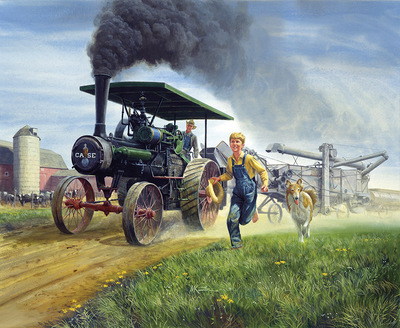
Cawing crows catapulted themselves from the treetops of our windbreak as they were startled by the screeching, air-powered whistles on the behemoth-sized “Case” Steam Engine that approached our farm from the south. Upon that Minnesota gravel road, the smoke-belching, gargantuan power house, with its iron wheels, pulled what looked like an enormous metal dragon behind it, also upon bare-iron wheels.

The Noorlun’s young, first born son, Lowell, felt the ground near our driveway begin to rumble and quake from the immense, squeaking and crushing sound of gravel under those iron wheels making the turn into our south U-shaped driveway.

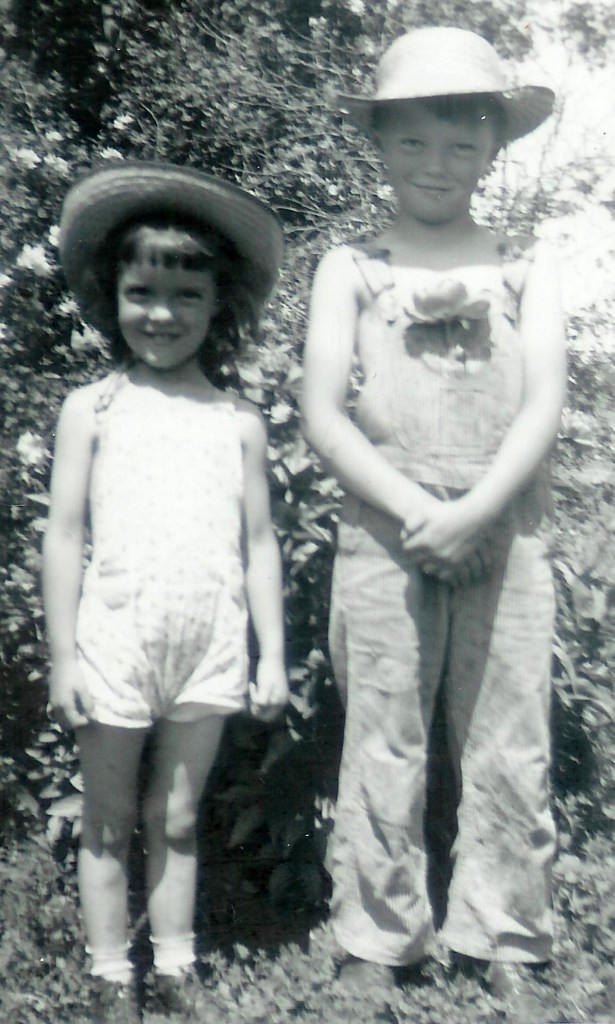
Circa 1950 when little Rosie and Lowell enjoyed the era of threshing oats on their farm.

Little ‘Lowey’s’ legs lit up, inside those bib overalls, and he took off towards the house on a full run, just like the old ‘town crier’ of olden times, hollering “Dad!!! Mom!!!! The threshing crew is here”!!!!!

Harvest times were one of many occasions, throughout the year, when the small, family farm culture of our area came alive with the blessed reality that “no man is an island and no man stands alone”. Our immediate family cluster was sweetly under the all-encompassing giant umbrella of untold numbers of other small family farms of our locale that relied on one another to accomplish everything from harvesting all the way to being ‘first responders’ in injuries or illnesses to other fellow farmers.

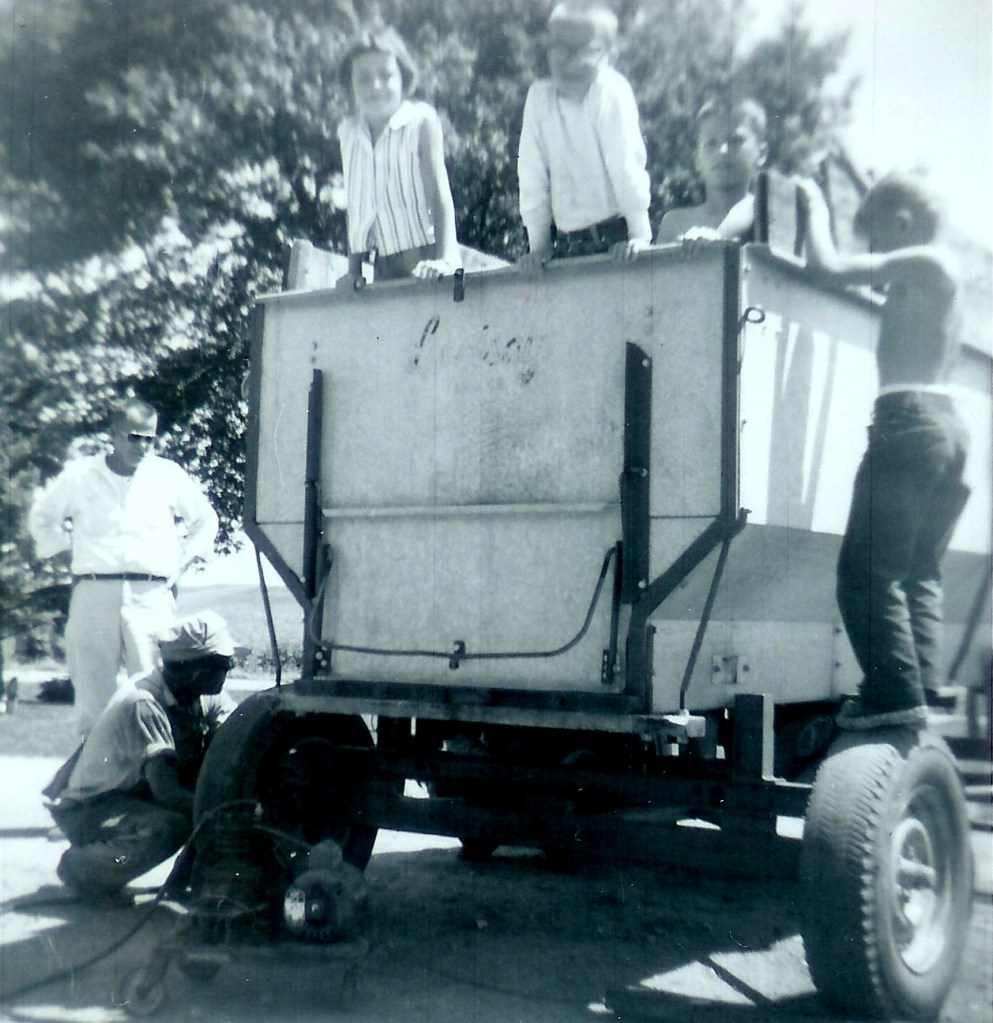
Elliott is standing on the tire of the family grain wagon in 1962. Notice the lift gate of the wagon where oats will pour out as they were unloaded into the Granary Building.

On that special, sparkling Midwest morning, our family were to be the recipients of local love and blessings shown by groups of neighbors and this amazing metal marvel called a Threshing Machine that was now making its way to the west of our orchard where ‘shocks’ (usually 5 to 10 sheaves stacked vertically) of oats were standing in clusters where they’d been recently harvested with a cutting and tying machine called a “Binder”.

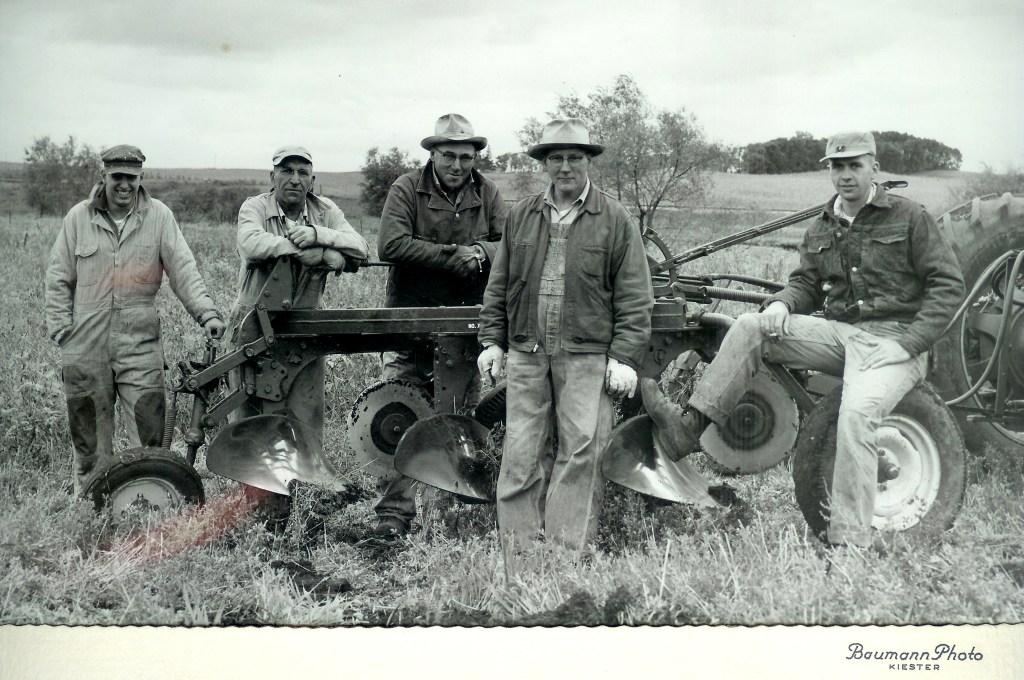
L to R: Darrel Mutschler, Gib Cleven, Chet Ozmun, Helmer Wipplinger and Louie Heitzeg. Three of these families, and others, helped Elliott’s father thresh oats. In this photo, from 1963, they blessed Elliott’s father with plowing his fields while he was in the hospital.

Pretty soon, Lowell, and his little sister, Rosemary, heard the sounds of tractors and wagons coming towards them from both north and south of our farm. One could hear these men shifting down the gears of their tractors, to make the turn into the driveways of our farm. There came to us men from the Mutschler, Ozmun, Heitzeg and Bauman families, just to mention a few. Behind their tractors they pulled implements like ‘flat racks’ and ‘grain wagons’, etc. so that this “Threshing Bee” would be a success seeing oat kernels removed from their dried stalks and the grain then augered up high and into our Granary Building.

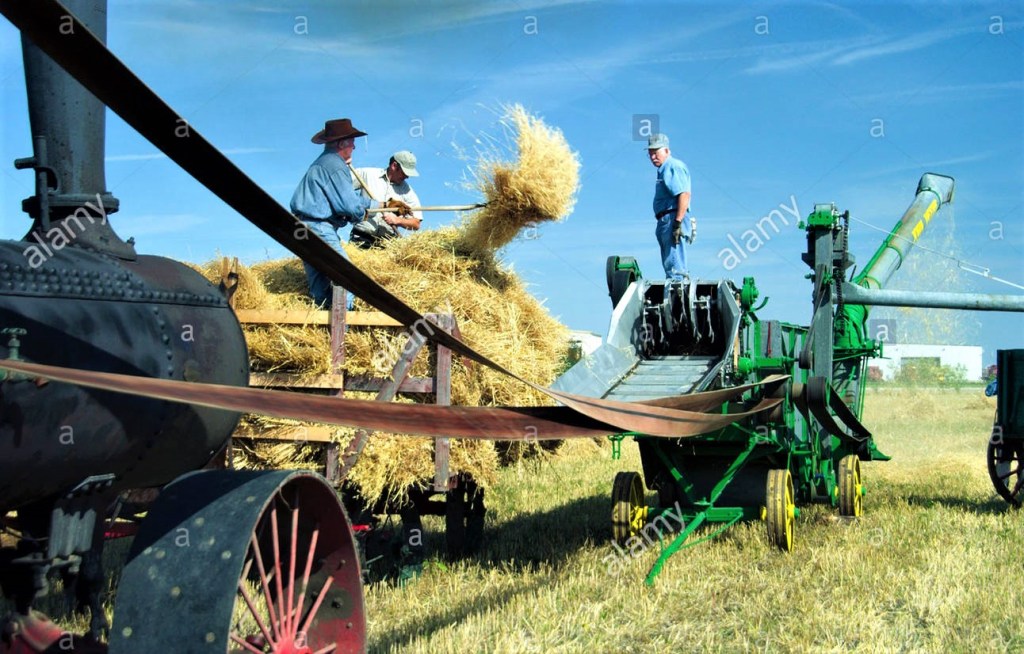
Once in place, on the oats field, the Case Steam Engine unhooked itself from the Threshing Machine and maneuvered around to face the thresher from a distance. A very long pulley belt was uncoiled and placed over a ‘fly wheel’ on both the steam tractor and the thresher. The driver of the steam tractor backed up ever so gently to bring the pulley belt taut enough to, when engaged, cause the myriad of mechanical ‘munchers’, within the threshing machine, to chew and separate the tiny oat kernels from its dried mother plant and send it to a waiting wagon.

Those of our neighbors with ‘flat racks’ on their tractors drove from ‘shock’ to ‘shock’ and tossed the sheaves of oats onto the wagon. When full, the wagon pulled up alongside the thresher as the steam engine tractor engaged its massive, round ‘fly wheel’, causing the thresher and its myriad of parts to come alive with motion and movement. Workers then, using pitch forks, tossed oat sheaves onto a conveyor belt that pulled them into the thresher to be separated from the plant stalks and sent into a waiting grain wagon to be towed up to our yard and in front of our Granary with the grain auger that angled skyward to the upper roof access doorway.

Back at the threshing machine site, the chaff and straw, left over from threshing the oats, was blown out the back of the threshing machine and mounded on the ground to a golden yellow mountain of what would be used as bedding for our animals over the winter months.

Wagons, full to the brim with oats, were then lugged by their tractor and operator up to the front of our Granary Building at the main farm place. Once in position, the hinged ‘hopper’ of the grain auger was let down behind the grain wagon. A nearby tractor was assigned to run this helical screw conveyor auger via the connection of what was known as the PTO (Power Take Off). The screw-type conveyor inside the very long metal tube started spinning. As it did, the lift gate of the wagon was opened and untold bushels of oats began flowing out and down into the ‘hopper’ that caught the oats and began their ascent up, up, up and into the roof doorway of our Granary Building. Inside the Granary, our father, Russell, and helpers were busy shoveling oats to the corners of each storeroom so as to utilized every space possible for that year’s grain crop.

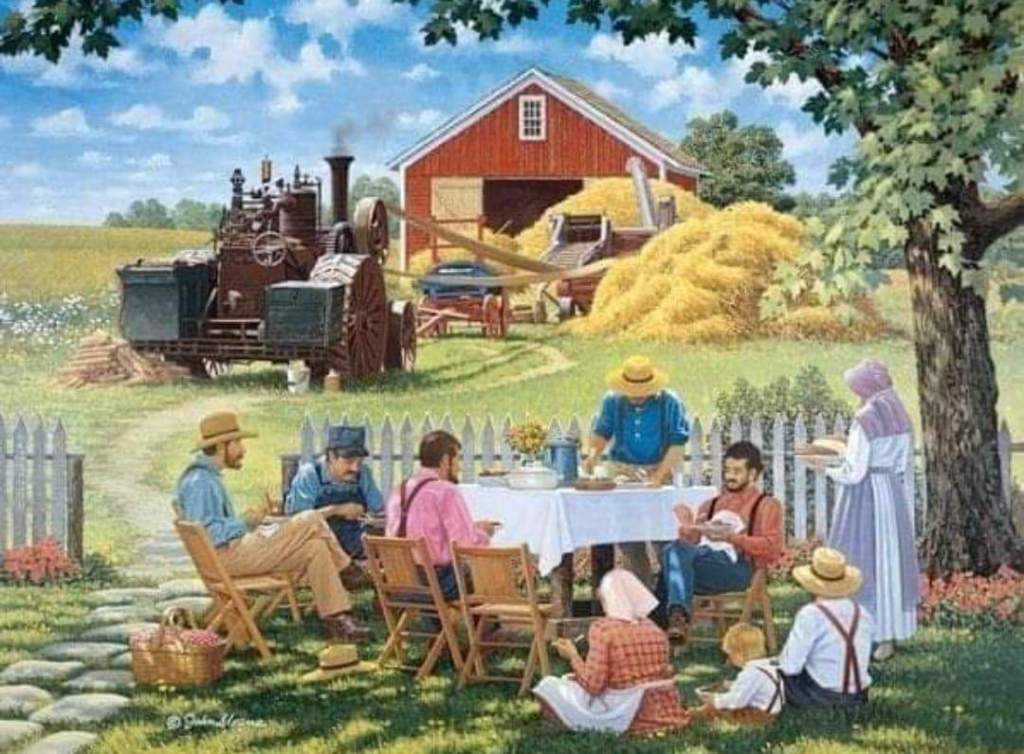
In the dappled coolness of our shade trees, our mother, Clarice, plus her ‘army’ of ladies were preparing a feast to feed these fine fellow farmers for all their sweaty efforts to bless us with this harvest. Machines were put to rest while hands, arms and faces were washed in chilled waters from our well’s pump house. It was time to give God thanks for this fine food and fellowship of families who came together to be a gigantic blessing to the entire family of this Norwegian Farmer’s Son.!! 😉 ><>

Vol.2..Norwegian Farmer’s Son..July 25th

July 25th………..POEM – “Russell Lupines For Russ” Created by N. Elliott Noorlun on 8/22/21

When our children were tiny, After Dad had died, I wanted a colorful way,

For them to remember their Grandpa Russ, Who had lived before their day.

Numerous times each year, On our way to Dad’s grave, We’d stop along back country roads,

To pick “Russell Lupines” for Grandpa Russ, We’d gather in loving arm loads.

And when we’d arrive, At the graveyard each time, To decorate my daddy’s ‘place’,

Our little ones just could not quite grasp, As bewilderment flooded their face.

Too tiny to comprehend what death is, That Dad’s ‘rest’ was beneath our feet,

Our darlings would wave and begin to call out, To elders nearby they would greet.

“HI GRANDPA RUSSELL”!!!! , As they’d wave at a man, Who stood at a distance from us.

So innocent they were, And true of heart, We never did make any fuss.

Only one of our five, Ever met my dear dad, Just a toddler when God called Dad to ‘Glory’.

Russell Lupines for Russ, Was our way to convey, Dad’s memory and share his life story.

Vol.2..Norwegian Farmer’s Son..July 24th

July 24th…………WHEN IT CAME TO PICKING BERRIES ON YOUR FARM, GRANDPA, WHICH ONE WAS YOUR FAVORITE”??

POEM – “Royal Red Raspberry Ramblings” Created by N. Elliott Noorlun on August 12th, 2016.

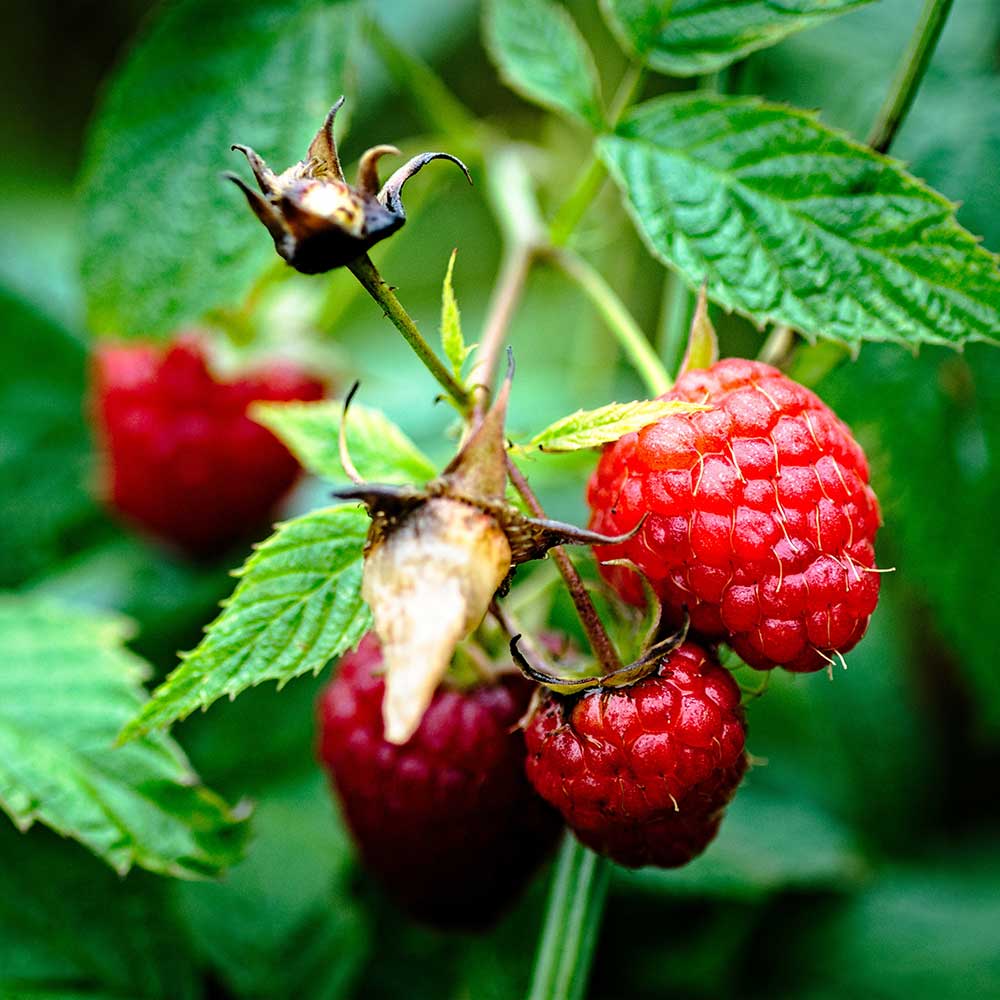
Regal red royal raspberries, Are a tasty ‘Time Machine’,

Taste just one, And I’m in flight, To our farm’s ‘berry’ tasty scene.

There in days on our farm, I’d relish the times, In our woods or garden near,

While gorging on ‘rubies’ so entrancing, As the Mourning Dove’s song I’d hear.

While picking and eating, Those jewels so red, I’d get lost in sweet visions sublime.

And even today, In my memory’s sway, I’ll fly back to that tasty farm time!!

Vol.2..Norwegian Farmer’s Son..July 23rd

July 23rd…………“WHAT WAS AN OLD-FASHIONED FARMING PRACTICE THAT OUR GREAT GRANDPA RUSSELL USED TO HELP A NEIGHBOR IN NEED ON THEIR NEARBY FARM”?

Mr. Chet Ozmun 1909 – 1990

Serious sweat slid in surreptitious swirls before launching off of Russ Noorlun’s nose as he and burly-chested Chet Ozmun labored side by side on the south rises of the hilly farmland that belonged to Chet’s parents before him.

Chester Sidney Ozmun, born in 1909, was still, in the 1950’s, carrying on a good share of his father’s type of farming with those immensely handsome and massively powerful teams of Belgian Draft Horses.

On that marvelous, late summer’s morning, there was a farmer’s song in the musical jangling of a melodious marriage of leather, metal and wood as Mr. Ozmun wed his handsome harnesses to the bodies of those gentle Belgian giants that would be pulling his Oats Binder through his fields. There was a warmth of golden light from that eastern sunrise that, skidding horizontally, lit up the treed gateway that led west out of his farm yard and over to the Oats Binder waiting in the windbreak of trees. His team seemed to welcome Chet’s soft, “Chirrup”! command (and a “Click, click” sound coming from the side of his mouth) as their master gave a genteel slap of the reins upon their backs. The three of them (a man and his two horses) walked off in a rurally regal promenade through that canopy of green that arched above them.

In comparison to the early days of farming, this Binding Machine was a mechanical marvel for farmers to behold. Although true it was, that many farms in the Kiester, Minnesota area had moved on to gas tractors and such; this day was to be a gentle return to the ways of yore in this particular farm’s setting. And, at Chet’s request of assistance, our beloved farmer father, Russ Noorlun, was more than glad to be of assistance and blessing to his fellow farmer in loving need.

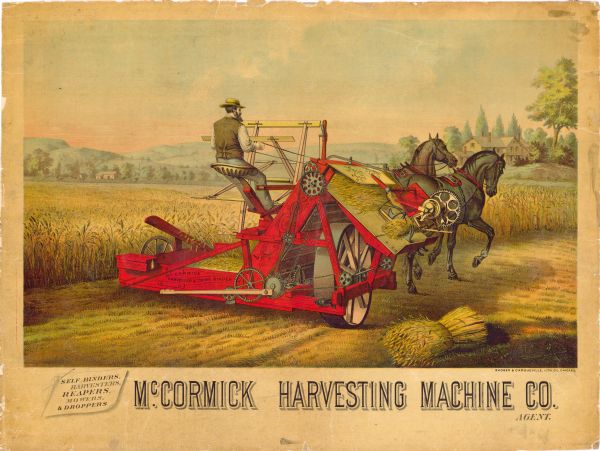
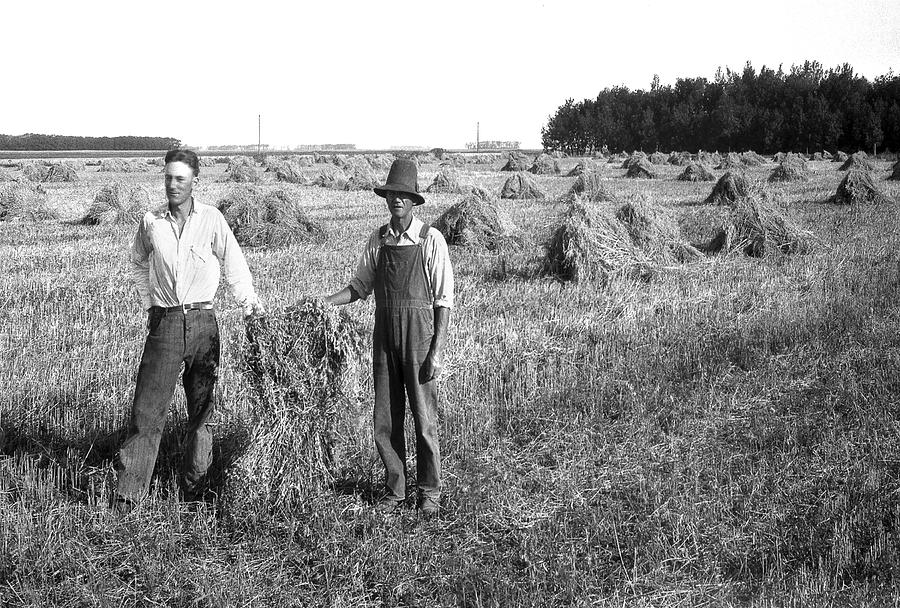
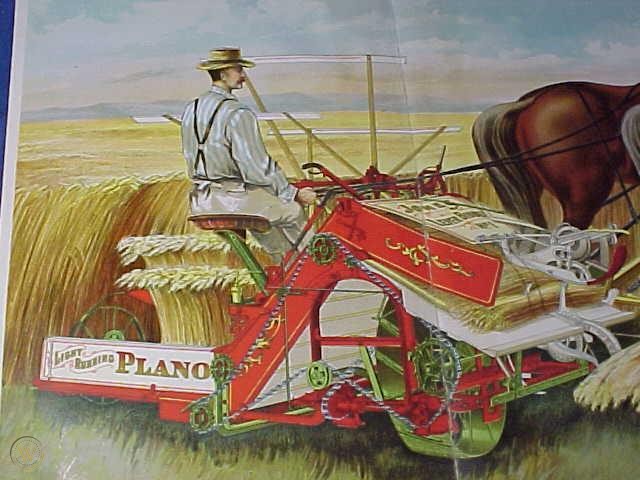
As those muscular, equine powerhouses pulled forward, the Oat Binder Machine began to cut a swath (roughly 5 or 8 feet across) of oats that then laid down upon a moving conveyor belt that brought enough oat stalks up and together that were mechanically rope-tied into what was known as a sheaf and dropped onto the ground to one side of the Binder. It was a far more efficient method of harvesting oats (or wheat, etc.) than using the antiquated, large, hand-operated Whip Scythe that both Chet and Russell Noorlun’s ancestors had to use for harvesting in the olden days.

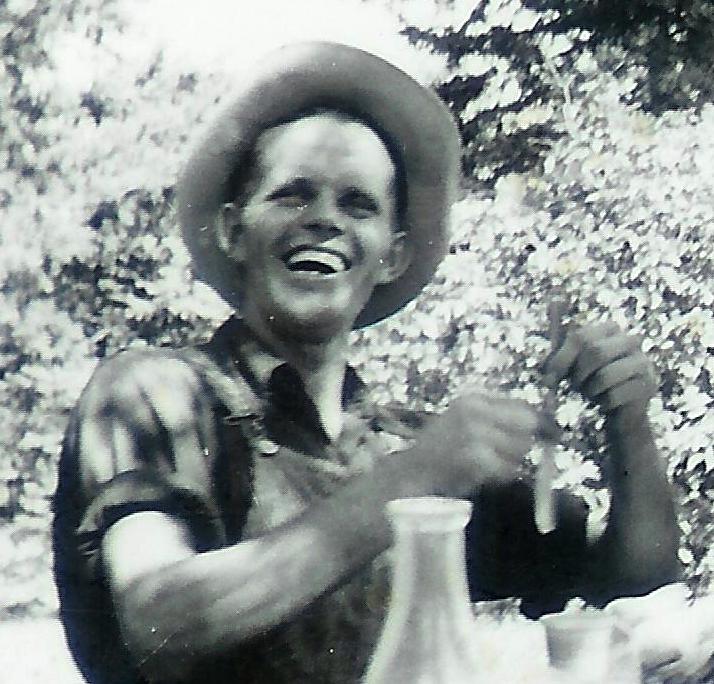
Elliott’s daddy, Russell Conrad Noorlun. Circa late 1940’s on a picnic with his wife, Clarice, and her cousin, Jerome Rogness and wife.

Our Norwegian daddy gladly assisted his German farmer brother with the oats binding process until that sun-bathed hillside was ‘shaven’ of oats and what was left were neatly tied bundles in rhythmed rows that brought both of these hard-working men back onto the field as a team to take those sheaves and begin ‘shocking’ them together.

Modern readers may be led to think that ‘shocking’ would have something to do with electricity, right? Not in this case. Working in a sweaty tandem, Chet and Russ walked along grabbing between 7 to 12 sheaves of bundled grain and arranged them into a standing teepee, of sorts. Chet may have been taller and bigger than Russ, but this wiry, slender Norwegian neighbor was not about to be outdone as he maintained his speed in this field work and, thanks to the challenge at hand, sometimes even out-worked his much loved German-heritaged neighbor.

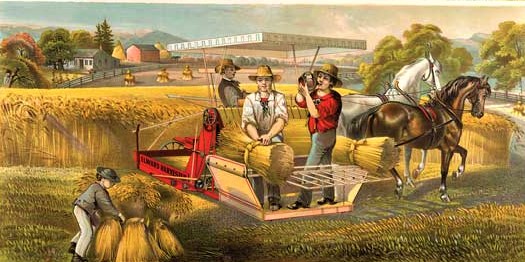
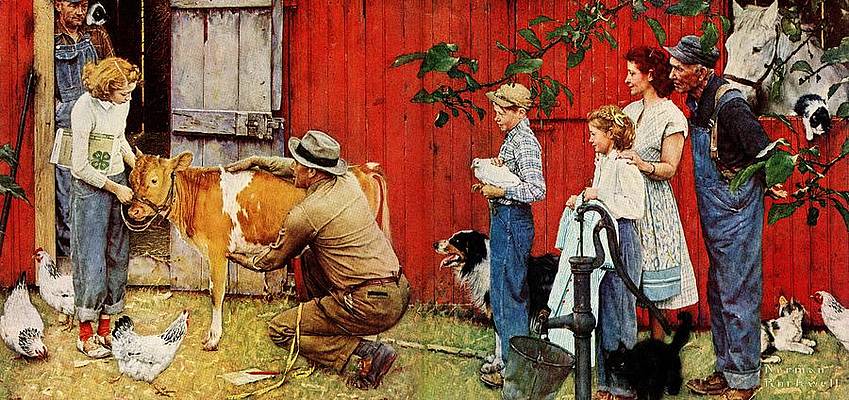
‘Shocks’ of grain can be seen in the lower left corner of this painting.

Creating these ‘shocks’ of oat grain (sometimes referred to as ‘stooks’) provided a number of benefits to the crop just harvested. #1. With the grain heads to the sky, they could continue to ripen and dry until another process came along called, ‘threshing’. #2. The shocked gatherings of oats were created to shed some of the rain that may occur after the harvest. And, #3. It made the grain a little less accessible for the local vermin (field mice, etc.) to reach and eat too much of the grain’s kernel heads.

As the Minnesota sun lengthened its shadows of a pending evening, Chet insisted that Russ join he and his sweet wife, Violet, for a lovingly made, good old farm house suppertime. The last of the oats were now in picturesque teepees that dotted the Ozmun field as if a community of special Indian guests were camped upon that hillside that caught the last tickling of sunlight fading into night.

Pork chops smothered in caramelized onions, baked potatoes, and peas smelled heavenly on the breeze just outside the Ozmun home. To these famished farmer friends, these aromas were better than any fragrance France had ever created in a perfume. The Belgians had been ‘put to bed’ and these two fine men scrubbed up to enjoy a wondrous meal together. These were the good old days when Axel Challgren, our town’s local butcher, would leave all the fat on the pork chops and Violet had created a scrumptious meal including those pork chops. Well, Chet had carved off the pork chop’s fat at the beginning of the meal and slid that gelatinous treasure to the edge of his supper plate. Now, at the delectable end of the meal when the plate was almost empty of victuals, it turns out that Chet had saved that pork fat for last, and savored each bite of pork fat, as if it was just like his own version of dessert.

It was going to be a late night of milking our cows, once Russ got back home to the Noorlun farm that lay just to the north of Chet’s place, yet, these were the days of brother farmers following the Christian tenets laid out by our Lord Jesus, Himself, in gladly “going the extra mile” (from the New Testament Book of Matthew Chapter 5 and Verse 41) to show love for a neighbor and their families …….including this Norwegian Farmer’s Son.
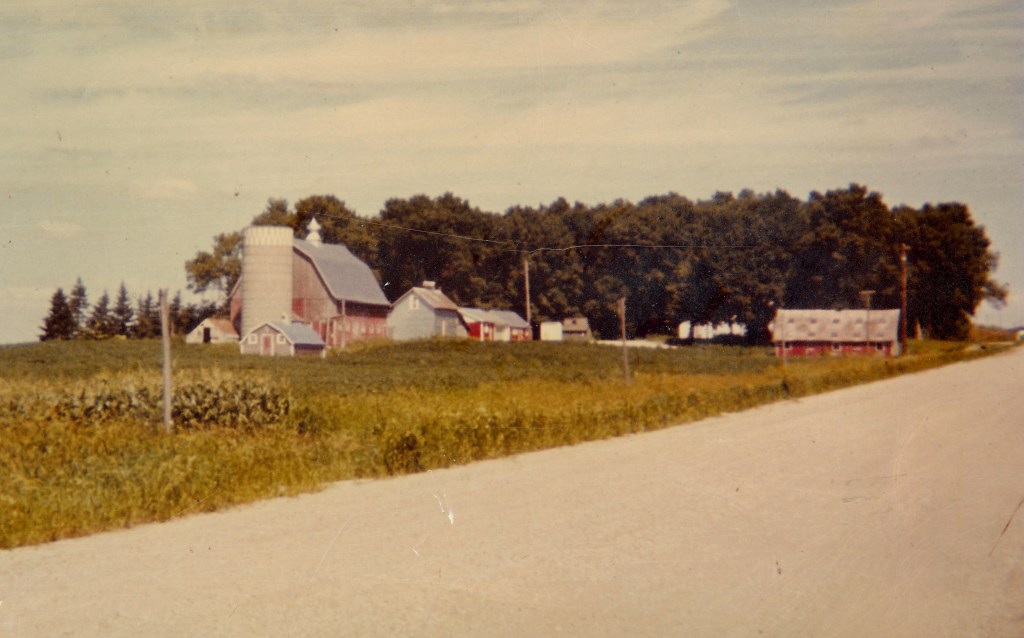
Chet & Violet Ozmun farm west of Kiester, Minnesota. Photo courtesy of Monty Flaskerud. ;o)

Vol.2..Norwegian Farmer’s Son..July 22nd

July 22nd………..“GRANDPA, WHEN YOU HEARD THAT YOUR FAMILY FARM, NEAR KIESTER, MINNESOTA WAS COMPLETELY GONE…….WHAT WERE SOME OF YOUR THOUGHTS”?

POEM – “Farewell Dear Farm”. Created by N. Elliott Noorlun on May 2nd of 2015 when I heard that the last vestige of our farmstead had been removed to make room for more acres to plant crops on.

Upon this soil, So black and rich, We called this place our home.

For decades life, Transpired for us, As across green fields we’d roam.

Our cows would low each evening, After father had milked and fed,

And they settled to straw beneath them, Warmly comforted to bed.

These memories planted, So bright and clear, Still glow within my soul,

Integral to, The scope of life, That helps to make me whole.

Yet, just today, I heard the news, The remnant of what was,

Has fallen to, The bulldozer’s blade, And the sound of cutting saws.

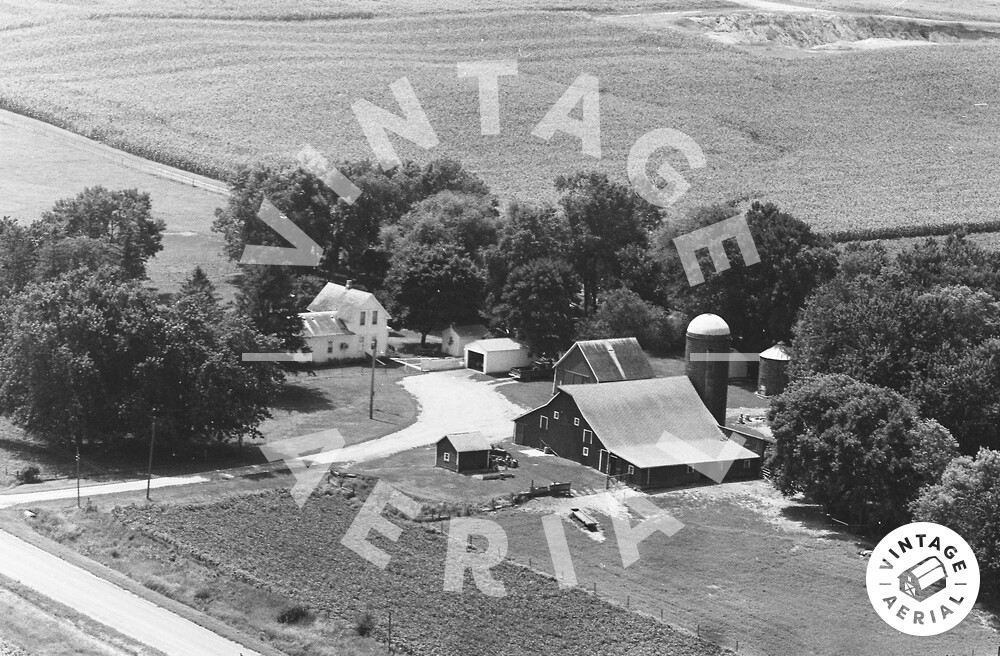
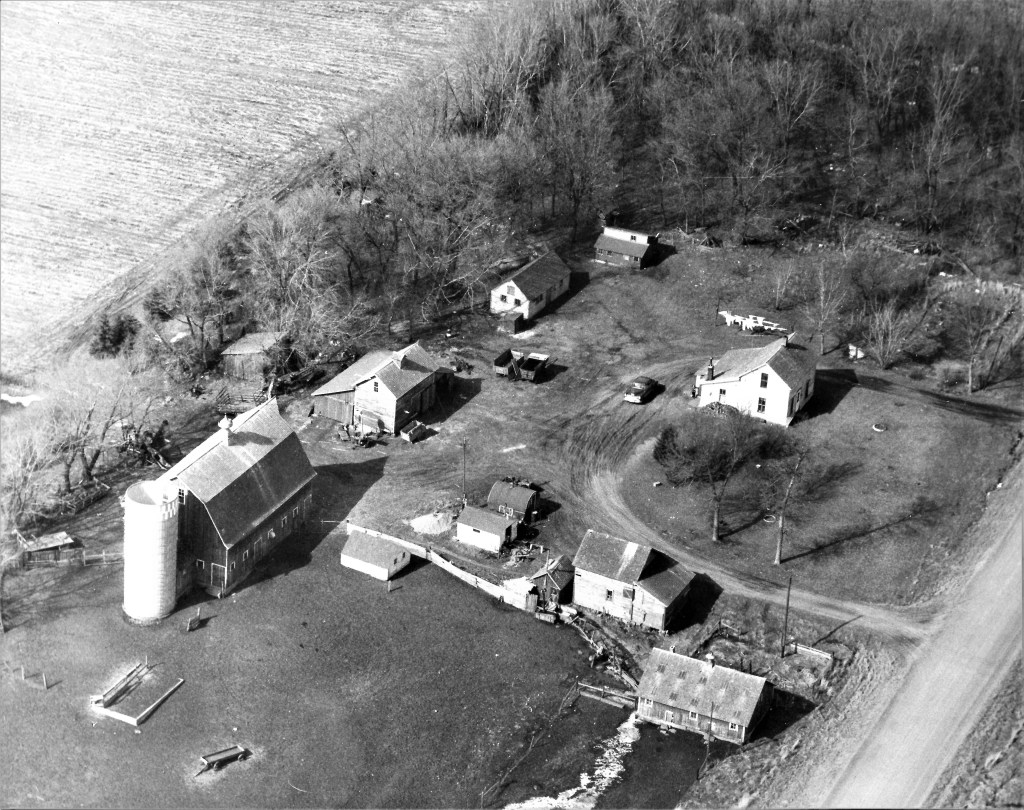
A 1959 photo from the air of Elliott’s childhood farm looking to the northwest.

You now return, Our precious farm, To the land the Indians knew.

We cared for you, And you taught us, too, How to love this land so true!!!

Vol.2..Norwegian Farmer’s Son..July 21st

July 21st………….“DID YOUR HOMETOWN CHURCH, IN KIESTER, MINNESOTA, HAVE ANY SUMMERTIME ACTIVITIES FOR CHILDREN TO ENJOY”?

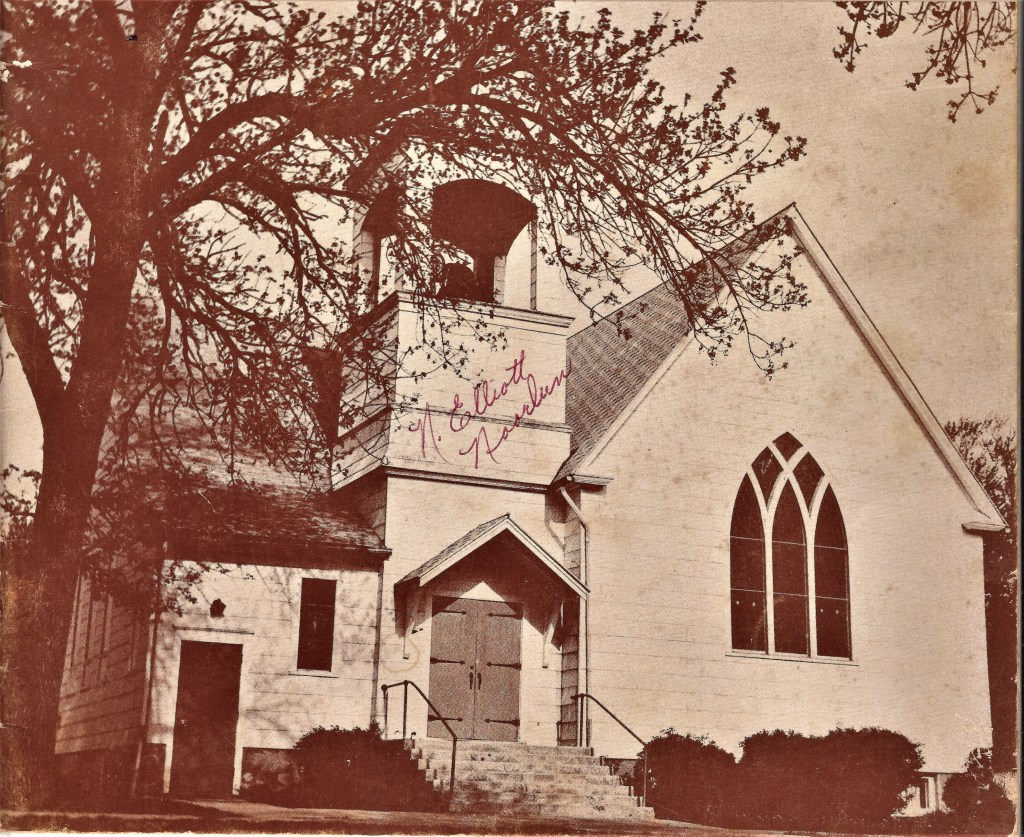
Elliott’s childhood church. Grace Evangelical United Brethren.

Speckled diamonds of a Minnesota morning winked at us all through the cooling canopy of shade trees along North 3rd Street in our wonderful, peaceful burg of Kiester, Minnesota. Summer, in all of its glory, had once again descended upon our village in the south central part of our grand Home State.

Our family’s house of worship, Grace Evangelical United Brethren Church, had once again come together to provide the youngsters of our dear town with Summer Vacation Bible School; so as to have a child-focused time of godly training in our Christian faith, with singing of hymns and children’s songs, coupled with fun activities and so much more!

While loving adults were busy inside our ‘church house’, preparing this special morning of godly children activities, our growing band of boys and girls stayed outside those handsome double doors with the massive, wrought-iron hinges. From one direction, and then another, local little town kids were dappled, as they walked, with a moving kaleidoscope of sun/shade/sun/shade as they ambled closer to us from their respective homes nearby. Farm families rolled up to the church and dropped off their little ‘Johnny or Suzie’ to join us there on those wide, cement steps of this sweet place of Christian fellowship.

Our growing group of youngsters were chit-chatting amongst ourselves while waiting for the broad church double doors to swing open in welcoming us to the morning’s fun under God’s sun.

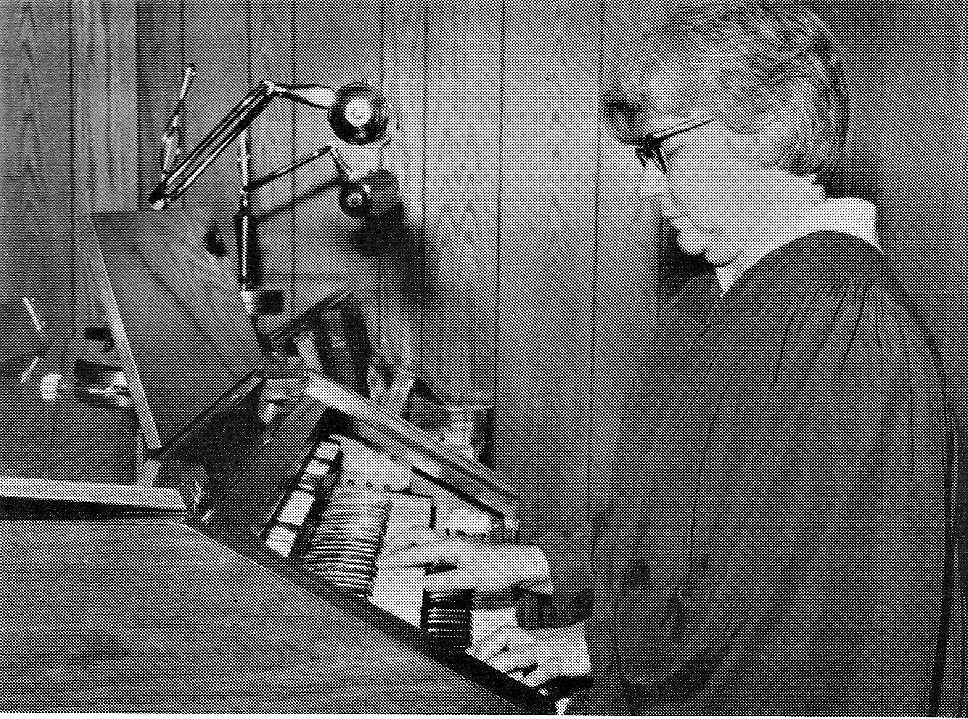
Mrs. Dixie Ballweber at the church organ.

Talented Dixie Ballweber took her place on the bench at the organ in the worship auditorium (or ‘sanctuary’, as we were raised to call it) and began to play a rousing rendition of the old hymn, “Onward Christian Soldiers”. Our adult attendants at the church entrance encouraged us to march like little Christian soldiers as we entered and took our seats in the wooden pews for opening songs and a Bible lesson.

Us little ones were enraptured with the Bible verse-based storyline that day and enjoyed how each story, from that loving, adult church member, came to life via the usage of “Fuzzy Felt” characters for Bible Stories that magically clung to a large, felt-covered board on a tripod. With each added colorful felt figure, the story unfolded in a brilliant array right before our young eyes.

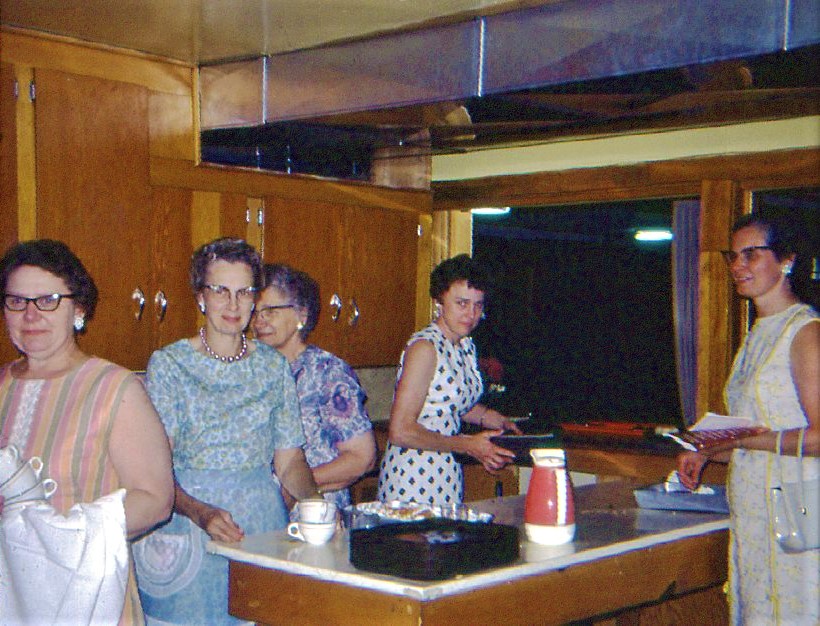
L to R…..Ruby Courrier, Genevieve Mutschler, DeEtta Kraus?, Janet Twedt and Jean Kraus.

By this time of the morning, heavenly fragrances were floating up from the church’s basement kitchen where sweet ladies like Ruby Courrier, Genevieve Mutschler, Janet Twedt, Jeannie Kraus and others were busy baking large batches of cookies that we would enjoy later in the day for snack time.

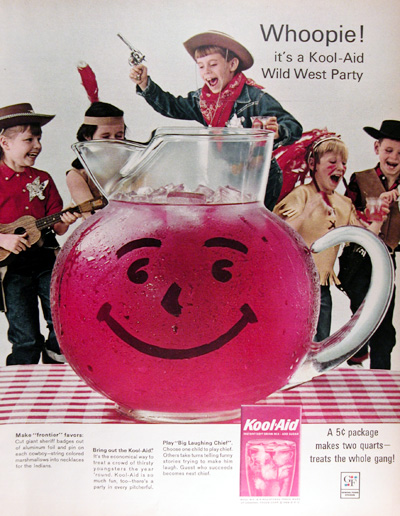
Our town’s public park was just down the street from Grace E.U.B., so after songs and story time, our young energetic bodies were led down to that wide open green expanse for games and fun as we raced the morning away with “Hide-n-Seek” and a myriad of other kid’s fun to blow off our unending energy of those happy years. After hiking back to the church, our tummies were ready for those delightful cookies, made with love, and gallons of yummy “Kool-aid” drink in eight flavors of joy. My favorite was Cherry “Kool-Aid”.

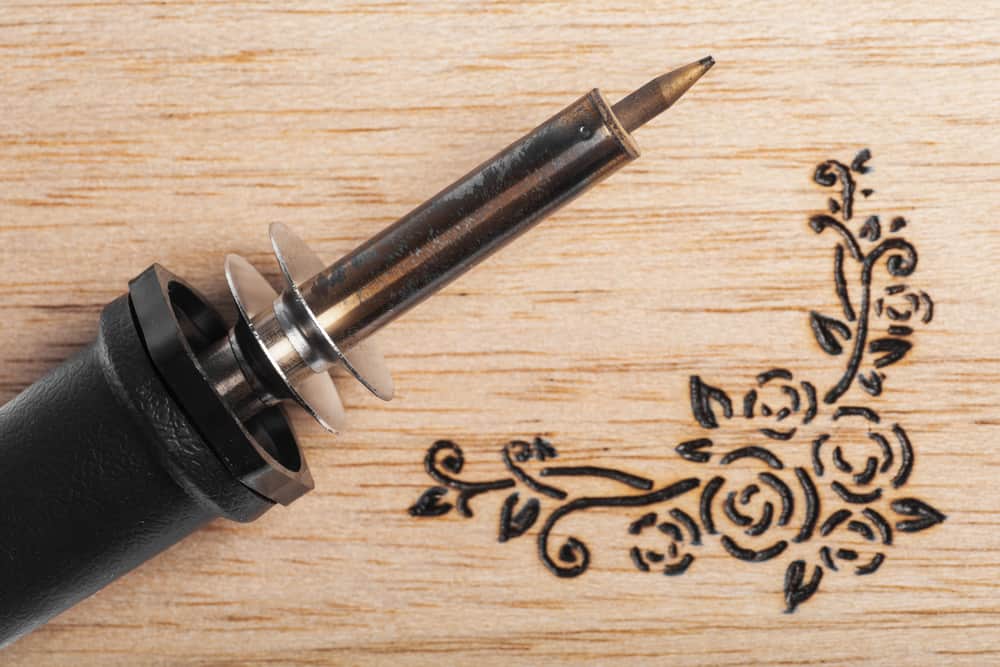
Re-energized by such yummies for our tummies, it was now time to learn our Bible verse for the day and begin working on a craft that we could give to our parents by the end of the week. Kind-hearted Mrs. Jean (or Jeannie) Kraus was our teacher for my group on one of those certain summertime Vacation Bible Schools. Mrs. Kraus had found a wonderful craft of creating a hard-wood cutting board for our mother’s kitchens. It appeared as an open Bible and we used a wood burning kit to trace and burn in lines into the wood to appear like pages of the Bible. Then, we rubbed oil coat after oil coat to treat the wood before putting a ribbon around it and giving to our mothers at the end of this special week of fun at church.

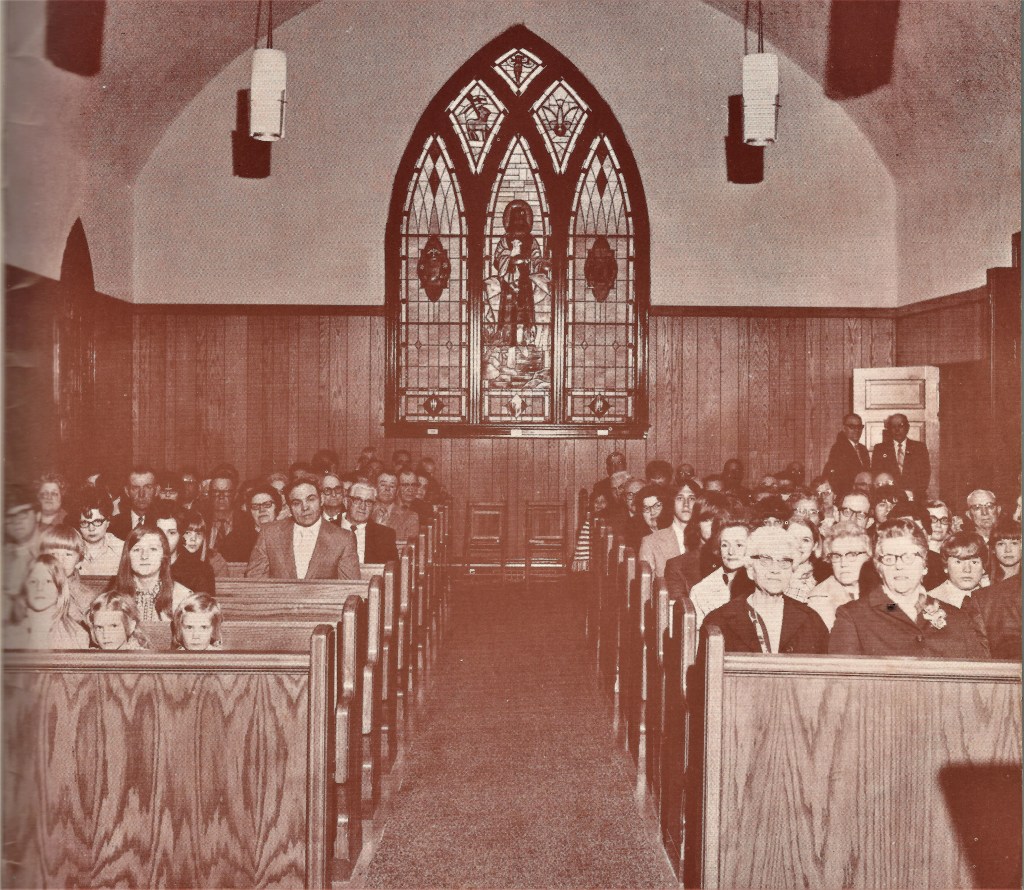
The congregation of Grace Evangelical United Brethren Church in Kiester, Minnesota. Circa 1972.

Today’s young generation, with their super high technology, will never understand the explicit beauty of life’s simplicity in those dear days gone by. Yes, even there in our fun times of Summer Vacation Bible School that were such a joy for this boy known as The Norwegian Farmer’s Son.
Vol.2..Norwegian Farmer’s Son..July 20th

July 20th……….“WAS THERE A SNACK YOU ENJOYED DURING YOUR YOUNG DAYS IN KIESTER, MINNESOTA? WHAT WAS IT CALLED AND WHAT WAS THE OCCASION THAT YOU REMEMBER FIRST EATING IT”?

POEM – “A Tasty Time Machine”. Created by N. Elliott Noorlun. It was January or February of 1967 and I was a member of the Kiester High School “Bulldog” Wrestling Team. Our Mat Men were going to be bussed to a wrestling meet in Sherburn, MN (if I rightly recall). I had just enough time to rush up to the Kiester Food Market and found this “new” and very tasty cracker called “Chicken In A Biskit”. Yummm yumm!!! 😉
Can a taste transport, Like a time machine can? To a past time of joy or fun?

It does for me, With this cracker snack you see, Oh the wheels of time do run!

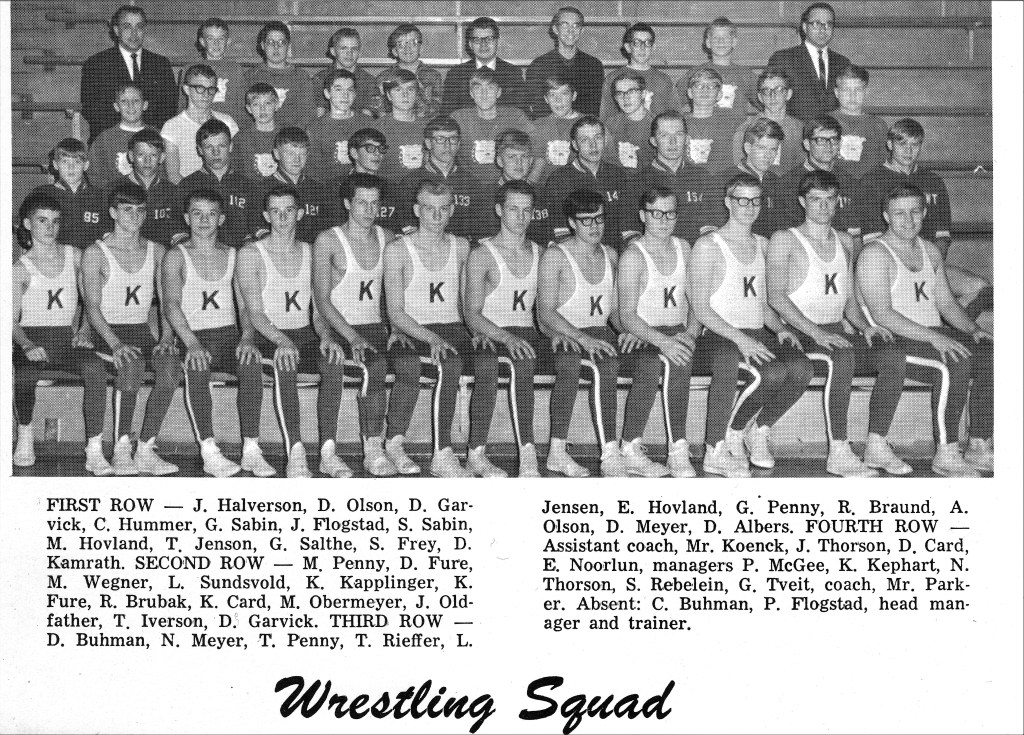
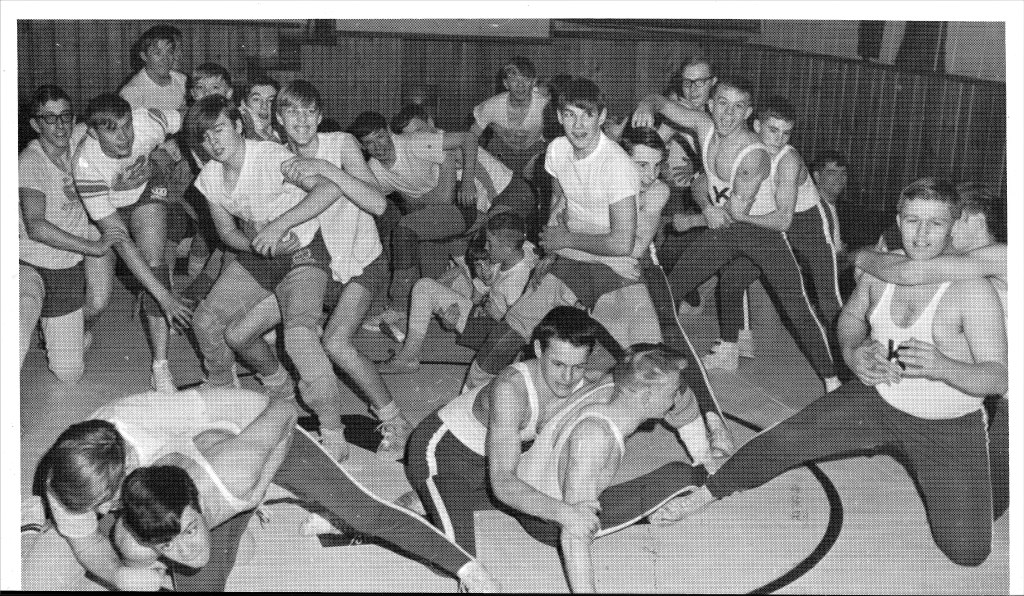
Elliott is top row, fourth from left. This was the 1966-67 Kiester High School “Bulldog” Wrestling team led by Mr. Parker and Mr. Koenck

Back to the year of ’67, At the tender age of thirteen,

When all was a joy, For this here boy, In the days when I was still lean. 😉

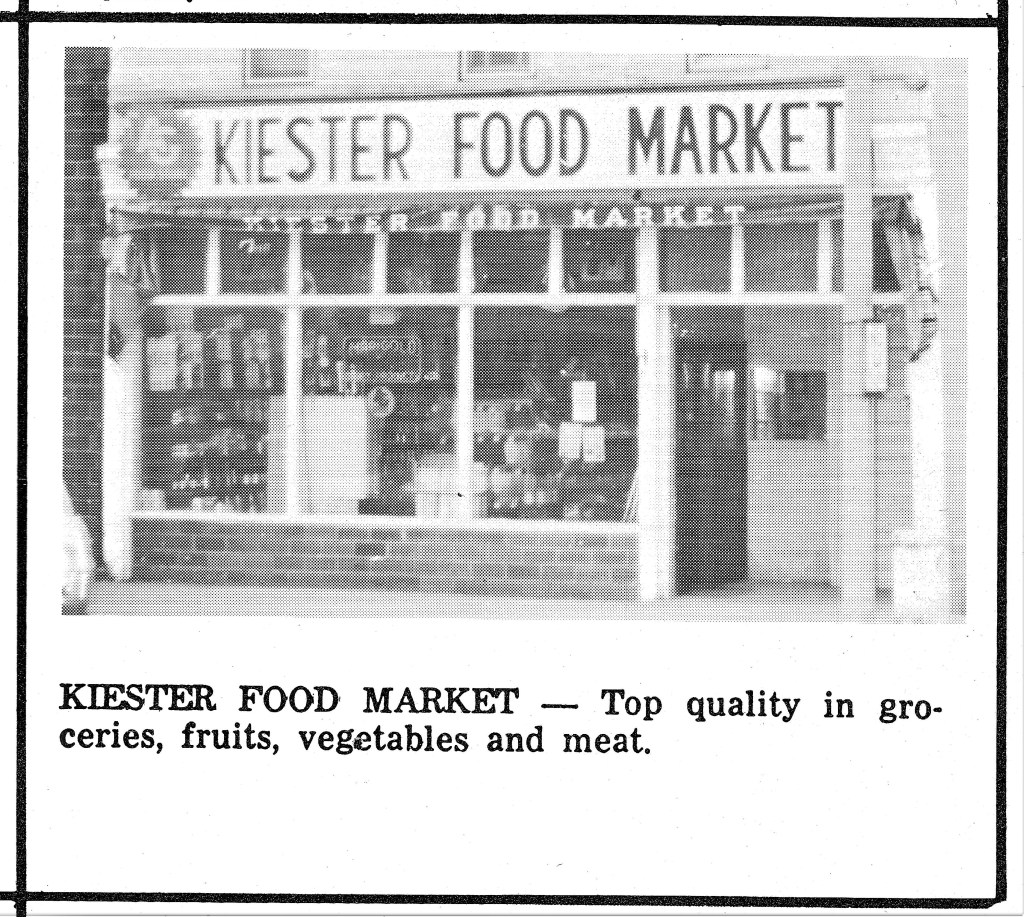
The Kiester Food Market…….where Elliott first discovered “Chicken In A Biskit” crackers!!! 😉

On a winter’s eve, Our wrestling team, Was soon to board the bus.

So quickly I flew, For the grocer I knew, Had a snack to please all of us.

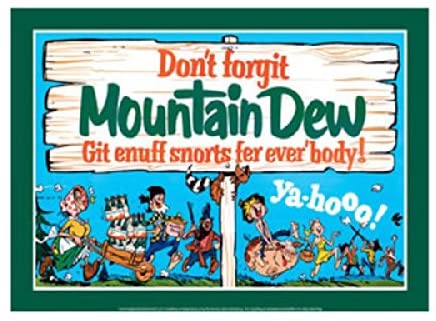
In olden times, “Mountain Dew” was another name for whiskey, thus the hillbilly type of advertising as you see here for the soda beverage that is still called “Mountain Dew”.

With a pop in one hand, And crackers in t’other, I jumped back on board, Just in time!

To the meet we did fly, While my pals and this guy, Munched a snack that was truly sublime!!! 😉

Our “Bulldogs” could sure have a lot of fun when that whistle of Mr. Parker’s would blow!!! 😉

Vol.2..Norwegian Farmer’s Son..July 19th

July 19th…………“SHARE WITH US, GRANDPA, ABOUT THE DOCTOR IN YOUR CHILDHOOD HOMETOWN OF KIESTER, MINNESOTA. DID HE PRACTICE MEDICINE BY HIMSELF? TELL US OF SOMEONE THAT WAS HELPED TO FEEL BETTER FROM A SICKNESS”.

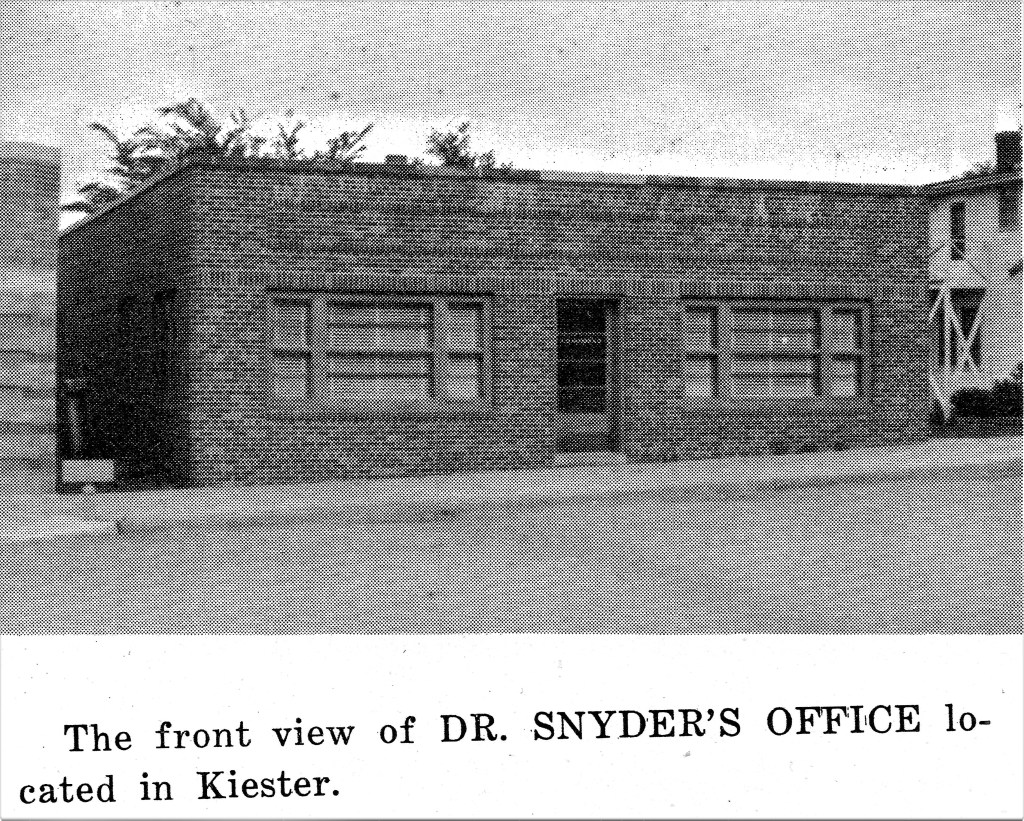
That 1952 Nash-Rambler “Airflyte” veritably ricocheted off of the sidewalk’s parking curb as Bessie Thorson tried to park in front of Dr. Clifford Snyder’s medical office on the Main Street of Kiester, Minnesota. Mrs. Thorson was one very concerned mother and had made a beeline to the doctor’s office for her beloved son, Neil, to get some medically essential ‘tender loving care’. Her hasty approach to parking that day gave a bounce to her and the car, but they had landed safely, overall.

As she rushed around to Neil’s side of the car, the aroma was on the air that morning of hot coffee and fresh apple pies emanating from the “Maple Café” across the street. Those fragrances were quickly replaced, though, by the classic perfumes of alcohol and antiseptics as mother and sick child made their way inside Kiester’s one and only medical facility.

The Thorson family with little Neil to the far left in this photo.

However life’s dice are destined to roll, Orville and Bessie Thorson’s son, Neil, just seemed to have a natural proclivity and inclination towards Rheumatic Fever as a little boy growing up. So much so, that by the tender age of 10, this disease had descended upon this young lad’s life at least three times. Both Neil, and his loving mother, Bessie, had made the conclusion, in jest, of course, that Dr. Snyder’s waiting room might as well have been their second home for all the time they’d invested there seeking treatments.

When you’re a frightened and sick little boy, like Neil was, any and all sources of solace and comfort meant the world to this tiny man who was dealing with the agonies of fever, shortness of breath, painful joints, etc. that had taken up residence in his young child body.

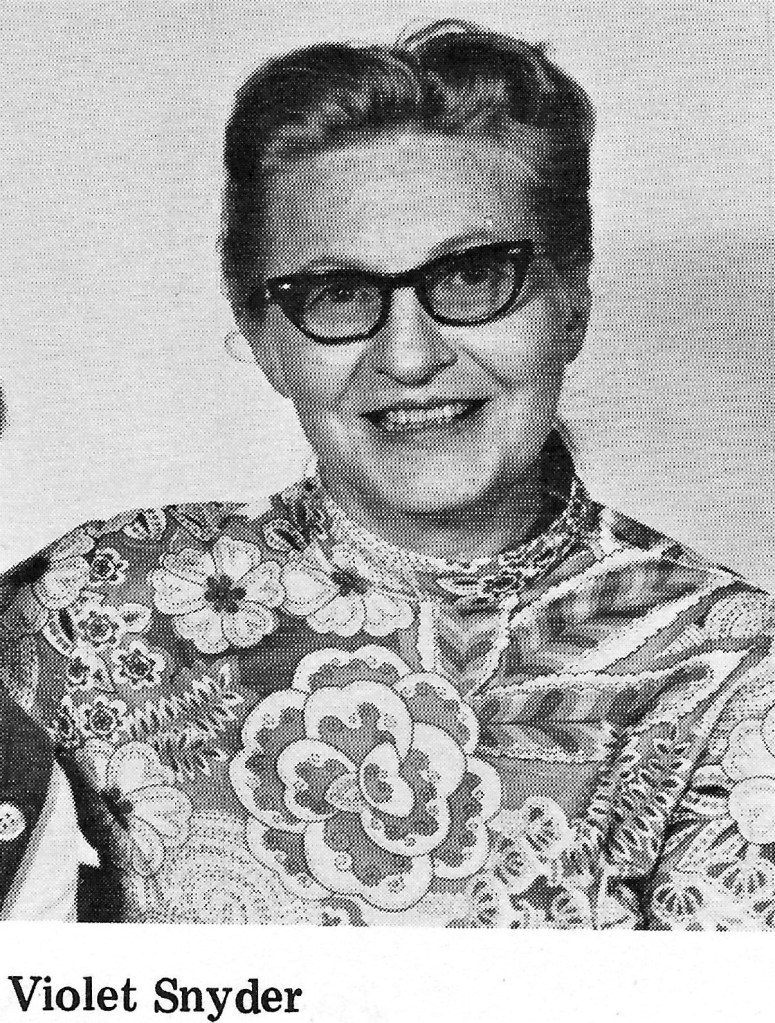
A very feminine, smiling angel of mercy, all dressed up in the classic white nurse’s uniform of that era, was Dr. Snyder’s wife, Violet. What a godsend she was in assisting her physician husband in trying to help Mrs. Thorson in any way humanly possible to alleviate little Neil’s suffering.

Mrs. Thorson and Neil were such frequent visitors to Dr. & Mrs. Snyder’s office that there came to be a mutual familial inclusion of love and appreciation between these two Kiester families.

On one grand occasion, Dr. & Mrs. Snyder gave Neil the amazing gift of his very own stethoscope!!! What a treasure he held in his little boy hands that day and with eyes wide in grateful wonder, too!!! He now could listen to his very own heartbeat and that, in itself, planted the seeds within young Mr. Thorson of possibly following a career into medicine……….although life had other career plans eventually.

Sweet Mrs. Snyder showed Neil and his family a deepness in caring that extended far beyond the medical office experience. Mrs. Snyder took a personal and caring mentor place in wanting see the best in life happen for this little boy who eventually became healthy once again and successful over those repetitive bouts with that nasty old Rheumatic Fever. This womanly, sweet soul of the medical world also saw to it that she saved copies of each of little Neil’s creations that he had given to her over the years. There was, in her possession, a 6th Grade Play that young Mr. Thorson had written, also in her archives were a mimeographed, homemade newspaper that was created by Neil, and, Violet had even kept and treasured a copy of an essay focusing on Ecology that won Neil the Grand Prize of a two week vacation trip to Long Lake, Minnesota to attend a “Conservation Camp” (of course, little brother, Jeff, had to chide his big brother as he teased it was really a two week “Concentration Camp”…….Heheheh ). 😉

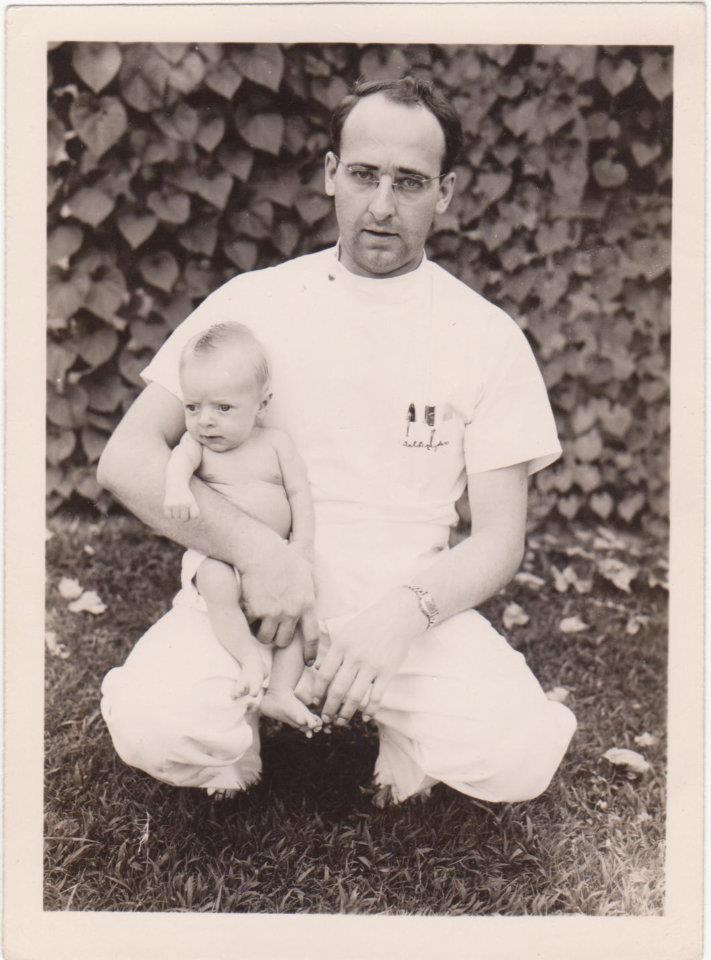
A young Dr. Snyder cuddling with his baby son, Clifford, in earlier days.

‘Going the extra mile’ for young Neil was the loving norm for Dr. & Mrs. Snyder. As Dr. Snyder soon learned, there was a new experimental penicillin derivative that had just appeared on the market and could possibly be just the ticket for this young man’s chance at conquering this reoccurring and debilitating illness. Through Dr. Snyder’s connections at State and University levels, he was able to get this medication for the Thorson family for FREE!!! At that time, each pill (which was to be taken twice a day) would have cost the family $2.00 a day; which in those days was quite a bit of money. In 2024’s calculations, that medication would have cost the Thorson family over $7,935.00 for one year’s supply.

The Snyder family were just one example of a community full of caring hearts that used their talents, in whatever profession that they plied, to make our hometown of Kiester, Minnesota truly the greatest place to enjoy life there in the happy memories of this Norwegian Farmer’s Son.