I may be only one oat seed in a field of millions, yet I have a story to share of beginnings on our beloved farm in southern Minnesota and beyond to life as I've seen it to this point. Famous? No. Gifted? Unlikely. Yet, I want to leave a legacy to my children and grandchildren of who this gentle Norwegian man was. My happy times, sad times, successes and failures. Someday, those who are tiny now, will have this volume to come to and get to know this Norwegian Farmer's Son.
April 19th…….“GRANDPA, DID YOUR DADDY USE HORSES TO FARM WITH IN SOUTHERN MINNESOTA? OR JUST TRACTORS”?
POEM – “King And Colonel” by N. Elliott Noorlun
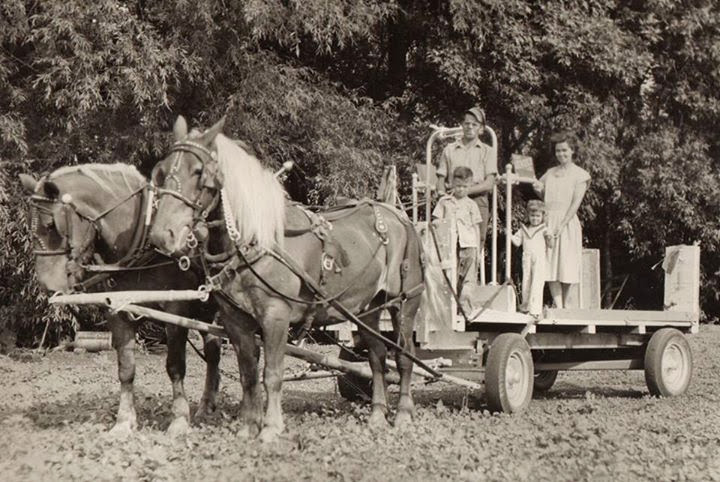
It is Summer of 1949 and Elliott’s parents, Russell and Clarice, are enjoying a ride around their farm yard with brother Lowell and sister Rosemary. “King and Colonel” had just pulled this wagon (with a cow on board) through a local parade in Bricelyn, Minnesota. Likely the Independence Day Parade on July 4th of that year. 😉
“King and Colonel”, That equine pair,
With regal manes, Of flowing hair,
Helped make Dad’s work, Seem rightly fair,
While working on our farm.
Whether pulling plow, In rich black furrow,
Or parade wagon, In nearby burrow,
This stately team, With power thorough,
Always meant us good, Not harm.
Our father there, With reins in hand,
It must’ve made him, Feel so grand,
To farm the land, Just like his dad,
I’ll bet his heart felt warm!!! 😉
It’s around 1952 and Elliott’s big sister, Rosemary, takes a lunch break with their father, Russell, as he munches on some milk and cookies. Not sure of the names of these handsome draft horses. LOVE that classic wagon!! 😉
April 16th……..“SAY GRANDPA, DID ANY POLICE EVER COME OUT TO YOUR FARM NEAR KIESTER, MINNESOTA”? “IF SO, WHO AND WHAT FOR”?
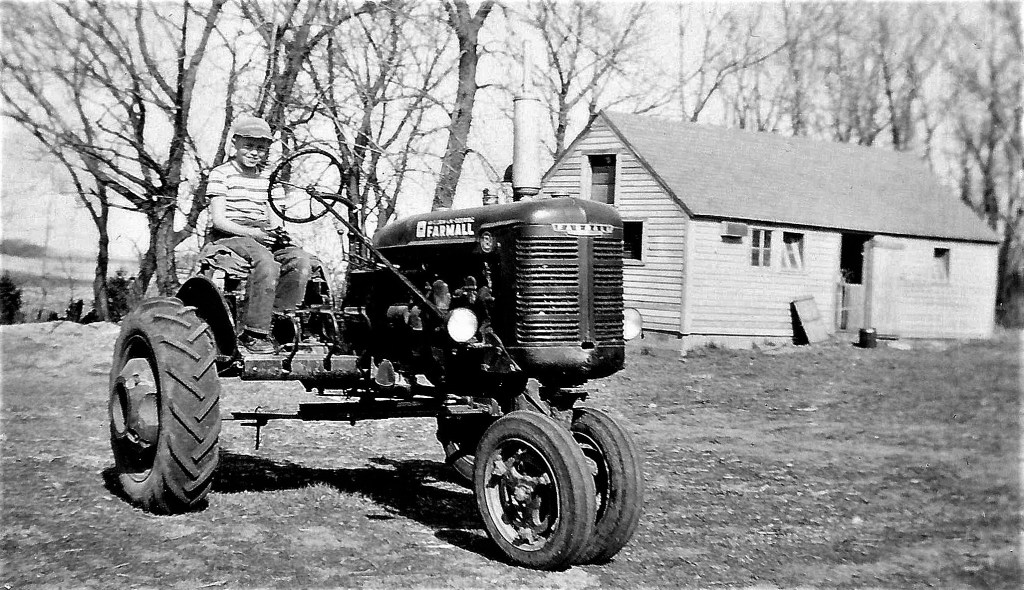
Elliott’s brother, Lowell, sits on the Farmall B tractor that he drove in 1957 when he saw the bank robber flying past their farm.
Even the crows, in the wooded windbreak of our farm, had some thing to ‘crow’ about on June 5th of 1957. And, I do believe that our local population of bees were even jealous. Why, you ask? Because on that momentous day, there were six other “B’s” happening on or nearby our farm that had to do with a B..ank, B..andit, B..uick and a B..oy and B..arfing B..uckets!!!! Big brother, Lowell Noorlun, was a whole 14 years old upon that sunny summer day and had matured into the age of young manhood there on our farm.
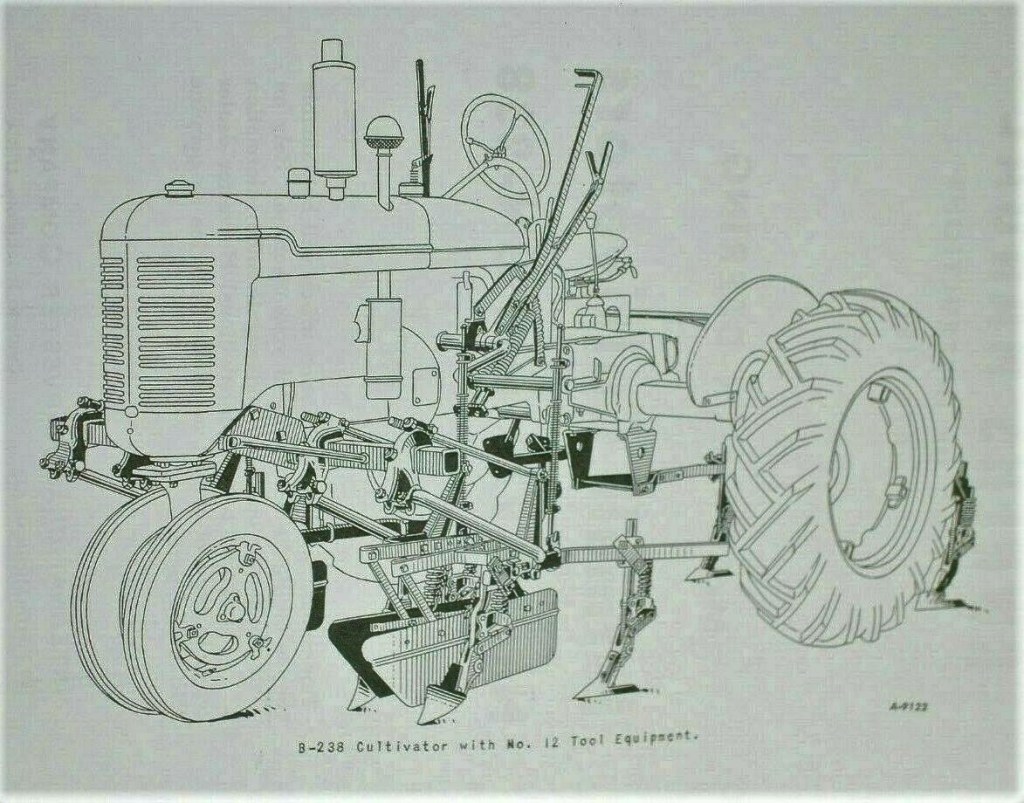
This is a cultivator. The numerous “spearhead shovels”, at the bottom, are designed to dig up the weeds between the rows of corn.
Along with young manhood came the responsibility of obeying our father’s orders to take our little Farmall B tractor (with a cultivator attachment mounted onboard) and begin cultivating the weeds out of the field of corn to the southwest of our main farm place. With every intent of wanting to do a good job and pleasing our dad, Lowell drove that little tractor to the cornfield, dropped the “spearhead shovels” down into that black soil and let out the tractor’s clutch to begin beautifying our handsome corn rows. As big brother reached the far west end of our property, he lifted the cultivator out of the ground to make a sharp turn around for heading east on the next set of corn rows. As he dropped the “spearhead shovels” into the ground, and unbeknownst to Lowell, he had hit a large underground rock that bent out one of those shovels; taking it out of alignment for the job at hand and making it point directly at the young corn plants.. At that same moment, big brother also saw something that distracted him from his duty.
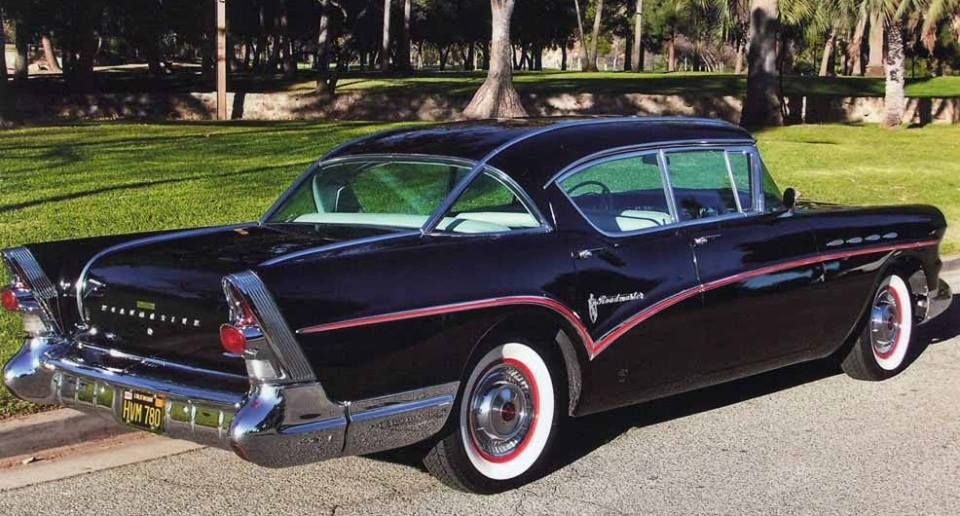
Like the proverbial ‘bat outta hell’, a sparkling new 1957 black Buick Roadster Riviera came rocketing along the gravel road from the south near Chet Ozmun’s farm. Boiling up clouds of dust flew skyward as it hit ‘warp speed’ past our farm and out north past Charlie Heitzeg’s farm. The maniacal driver then hooked a sharp left at the intersection and, like jet exhaust, disappeared to the west of us towards Bricelyn, Minnesota.
Elliott’s daddy was NOT happy when he heard what happened to the corn.
During that car spectacle, brother’s tractor is was still rolling forward. And, in the scope of less than a minute, Lowell’s attention was back to his cultivator work. With a glance, he looked back behind him in horror!!! That bent “spearhead shovel” had ripped out a long section of young corn plants from the ground. Lowell knew our farmer dad would be so angry he’d erupt to the point of being ‘fit to be tied’ about that potential crop loss……..even though it was purely unintentional on our brother’s part.
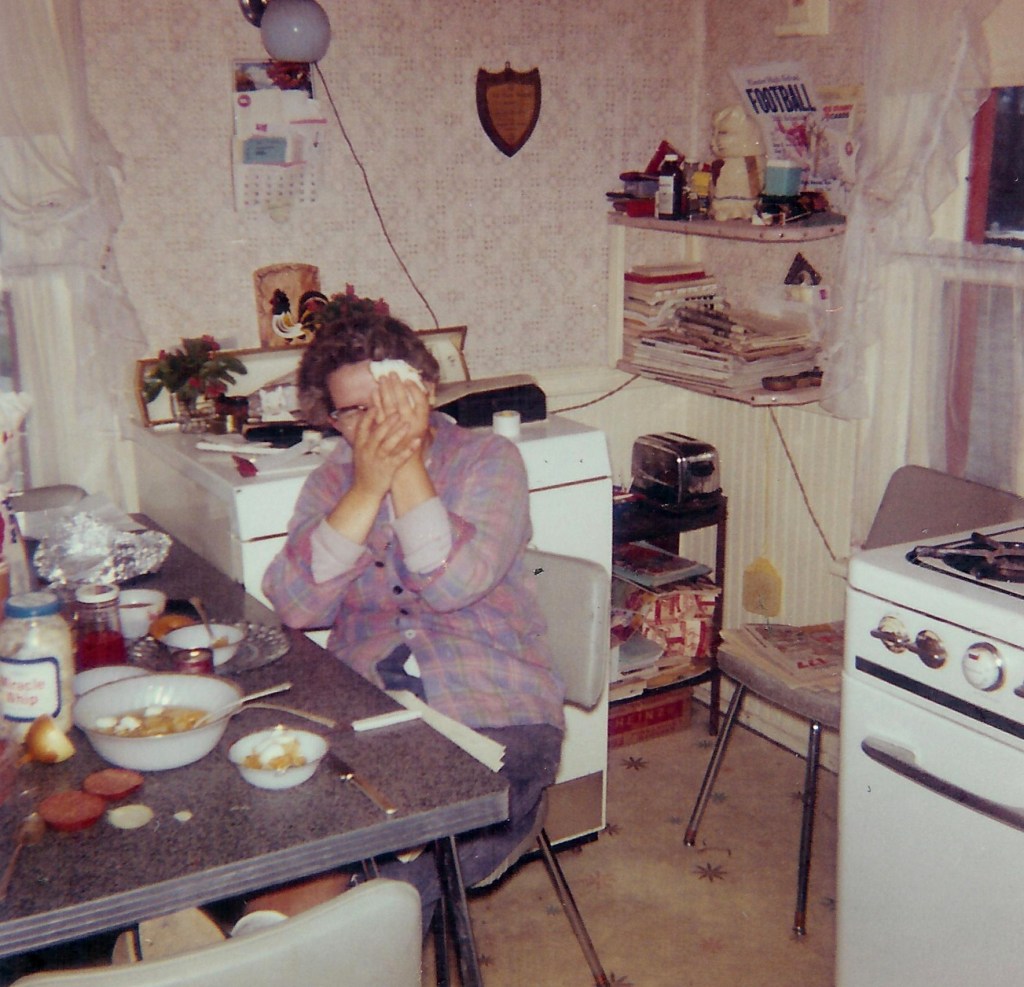
There was no time to be tidy for Elliott’s mother, Clarice, as she got a quick bite to eat while helping Lowell in the cornfield that day.
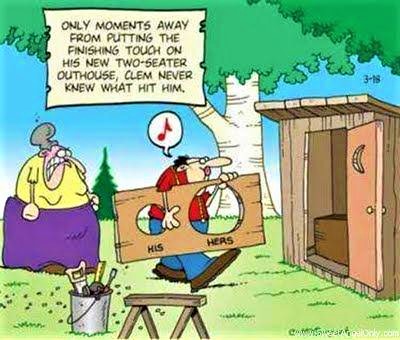
Poor brother!! He aimed his Farmall B back to the farmyard and shop to make repairs to the cultivator and tell Dad about what he had just witnessed, regarding the speeding black car, and what had happened to the corn. Sure enough, to put it mildly, Dad was NOT happy!!! Since Dad was committed to other farm work on that hot June day, our beloved mother Clarice ‘came to the rescue’. She and Lowell headed back out to the cornfield to manually re-plant, by hand, that long row of uprooted corn plants. The stress of our father’s anger, plus working out in that hot Minnesota sun saw our brother, in his deep worrying, succumb to a case of heat stroke. When dear Mom and Lowell were finished re-planting the corn, that sick elder sibling of ours made a mad dash to our toilet ‘Out-House’ . Good thing our commode in the woods was a ‘two-seater’ because brother was ‘busy’ sitting down on the one seat and leaning over to barf into the hole of the other seat.
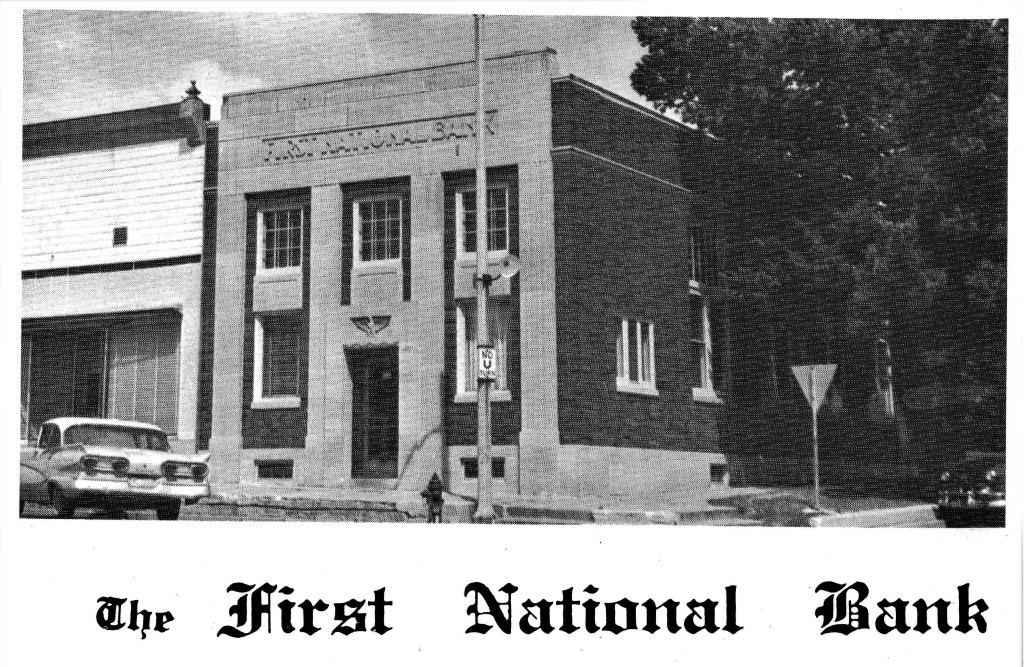
The only bank in Elliott’s hometown of Kiester, Minnesota.
From what brother related to our father, regarding the speeding black car, Dad thought it wise to call our local Peace Officer in Kiester by the name of Harold Lamping. Mr. Lamping was grateful for Dad’s call and shared that just moments earlier, The First National Bank in town had been robbed and someone saw the crook make a get-away in that same kind of black car. Turns out, the brand new ‘get-away’ car had been recently stolen off of a car dealership’s lot in Minneapolis. As the story unfolded, it turned out the armed gunman had done some pheasant hunting in the Kiester area in the past, so decided that the bank in our town would be his ‘target’ for the crime he was about to commit. The culprit came into the bank that day, found out who the administrator was and leveled his gun at Mr. Donald Elwell, the president of the bank. The thief, feeling remorse even during the bank robbery, kept telling Mr. Elwell and others that he “hated to do it”, but was desperate for money. The robber’s demands were met and he managed to get almost $5,000 (worth $55,884.00 in 2024) in cash and $12,900 (worth $144,181.00 in 2024) in Traveler’s Checks.
With his loot in hand, the gunman herded Mr. Elwell, ten employees and one lone customer into a back bookkeeping room, then made his escape. After driving west out of town, then north past our farm, the thief eventually headed south to the Kansas City, Missouri area and put that black Buick into storage there. After that, the bad guy headed for Las Vegas, Nevada and eventually California where he spent the lion’s share of his cash ‘living the high life’…….for a while, at least. ‘Mr. Crook’ somehow made his way to Houston, Texas hoping to melt in with the locals there and be able to start fresh in a new life with his Traveler’s Checks.
It wasn’t too long, after the bandit hit the bank, that our parent’s got a call at the farm from the FBI (Federal Bureau Of Investigation). Two FBI agents wanted to come out to our farm to interview Lowell about what he had seen that fateful day. Since our brother was still a minor at the time, our parents were present for the interview by the agents. Lowell was definitely impressed by the men being impeccably dressed in their business suits along with their official identification badges to show the seriousness of their task at hand. Adding our brother’s testimony to their other evidence finding, they slipped into their car and were on their way. A break came in the case when a letter was found near our hometown that was addressed to a man named, Robert McDonald.
Mr. McDonald had led a life of similar crimes dating way back into the late 1930’s. With that letter, and other detective work, within a month agents made an arrest of Mr. McDonald in Houston, Texas and he was brought back to Minnesota to stand trial for his crime. During the trial, the defendant related how he was released from prison in 1946, after serving 8 years for earlier “hold ups” and stealing from various savings and loan businesses. His original address had been Altoona, Wisconsin and, even though he was trying to live within the law, he feared losing his current job with the railroad because tests were soon coming up that would reveal that he was actually colorblind. This potential job loss, accumulating bills and arguments with his wife (and be his words she was the one “who wanted to wear the pants in the family”), drove him back into a life of crime and sought money via robbing The First National Bank of Kiester.
Most of the Traveler’s Checks were recovered, at the time of Mr. McDonald’s arrest and a prison sentence of 15 years in the penitentiary was leveled against him. We can only hope that at the end of his sentence, in the year 1972, Mr. McDonald was able to live a more law-abiding life.
Being a little tike of only three years old, at the time, I really didn’t comprehend how all this adventure transpired. Yet, I was glad for my brother’s part in cementing his hero status in the eyes of this Norwegian Farmer’s Son!
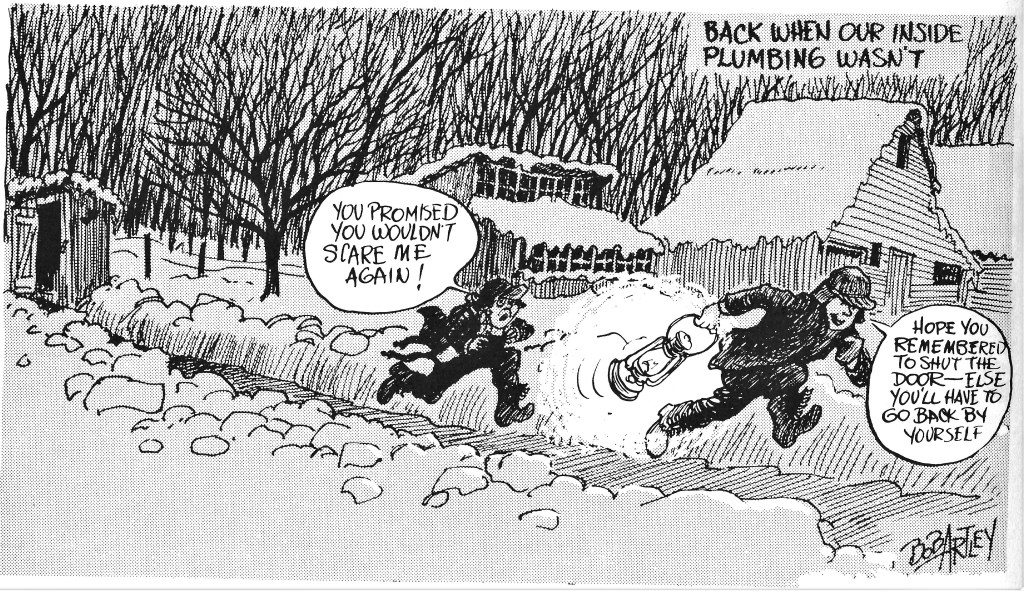
April 14th………“AS A LITTLE BOY ON YOUR FARM, WHEN YOU WERE AWAY FROM YOUR HOUSE EITHER PLAYING OR WORKING, WHERE DID YOU GO TO USE A BATHROOM”?
POEM – “The Urge To Purge” by N. Elliott Noorlun
Way back yonder, In the olden day,
That some of us recall.
We headed for, The nearby woods,
And yonder wooded stall.
Grateful just, To have a place,
To answer nature’s urge.
We’d close the door, In days of yore,
Then toot to boot, And purge!
Now if you had, A “TP” roll,
You really were ‘uptown’.
But many a page, Of Sears catalog,
Got used and then thrown down.
And OHHH those Hoot Owls, On windy nights,
Would hurry any ‘need’.
As branches scratched, Against the walls,
And imaginations feed.
For be it real, Or in my head,
So scared I truly flew,
Back to the house, Like flying grouse,
And left behind my peeeeyuuuuu!!!! 😉
Elliott’s father, Russell, and big sister, Rosemary take a break for some milk and cookies on their farm. The little building to the right in this photo is the family’s “Outhouse”.
April 13th……..“SAY, GRANDPA, DID YOU EVER KNOW AN AMERICAN SOLDIER FROM WORLD WAR ONE? WHAT DID HE DO DURING WHAT WAS KNOWN AS ….. THE GREAT WAR?”
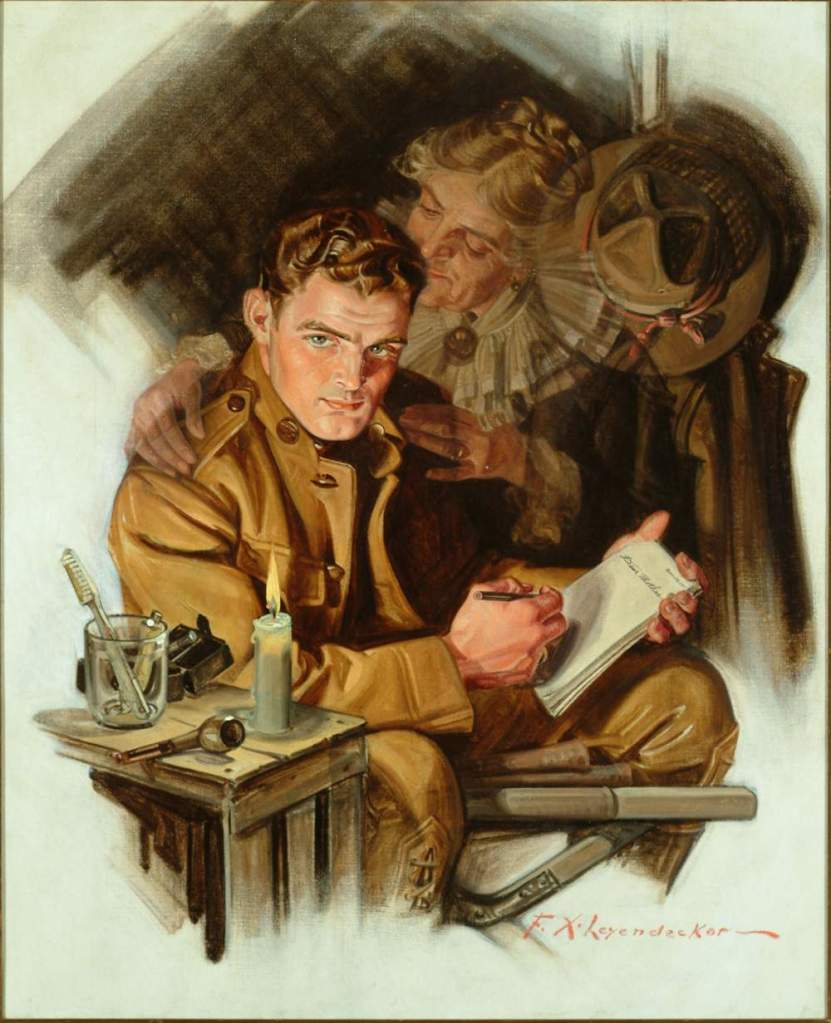
A loud succession of domino-like, “clankety-clang” sounds emanated from the iron couplers on the long line of Pullman Coach railroad cars. They, in turn, were being obedient to the massive, steam-engine locomotives that yanked them forward from the loading platform at Fort Snelling, Minnesota. Beautiful and 17 years young, Lizzie, accompanied by her future mother-in-law, were fervently giving hugs and their “God Bless You!!!” to tall, lanky, blue-eyed John P. Madsen. That late summer day of 1917 was a momentous event for this young patriot with Danish blood in his veins. While Lizzie and his mother, Mrs. Madsen, honored John, even John’s hometown of Ringsted, Iowa honored her ancestral elders by holding forth the same title of recognition from their original town in Denmark by the same name. Obviously, many a good Dane had come to America to help farm the fecund black soils of that handsome new land they all called home. A good man who loved life and his nation, young John had answered the call to serve “Uncle Sam” in any way possible during that current global conflict known today as World War I (One). Rather than carry a rifle, though, John and up to 28,000 others would carry a different tool of war to defeat Emperor Kaiser Wilhelm and the German Army.
With a piercing screech of the steam whistle from that ‘Iron Horse’ locomotive, John, heeding his sergeant’s growl, blew a kiss to his mother and fiancé as he hopped aboard that west-bound troop train. With his duffel bag stowed nearby, John gingerly made his way down the pulsating aisle of their Pullman Coach car and managed to snuggle his long legs, the best he could, into a window seat to take in the view of his first time adventure going west. A journey of this length was going to encompass at least three days, or more, so it was best to make the best of it and relax. The never-ending expanses of prairie land passing by, coupled with the consistent “clickety-clack, clickety-clack” of the railroad tracks beneath him, caused John’s eyelids to become heavier and heavier until he crossed the threshold to dreamland with his Army-issued campaign hat pulled down over his face.
After crossing the mighty Rocky Mountains, later in the journey, John Madsen’s eyes were still like wide saucers in sheer awe of the immense majesty of those mountain peaks that scratched at the very skies above them and tickled the bellies of the clouds that dared to drift too low to earth.
John was lonely for his beloved mother and fiancé back home. Letters were his way of staying in touch.
Cruising now, down the windward slopes of the Rockies, the rugged terrain slipping by the train soon turned into the marvel of a conjuncture with the powerful Columbia River of Washington State. Peering from his window seat, our young Army Private could’ve spit right into that roiling river; they were that close as the iron rails before them bent and curved round each bend of that impressive river whose waters were heading west, also.
The multiple day journey of John’s troop train made the young Danish-American that much more lonely for his darling mother and his bride-to-be that he had left on that railroad platform at Fort Snelling. That tender-hearted young soldier couldn’t wait to be billeted upon arrival at Vancouver Barracks near Fort Vancouver, Washington so he could get off his first of many letters back home.
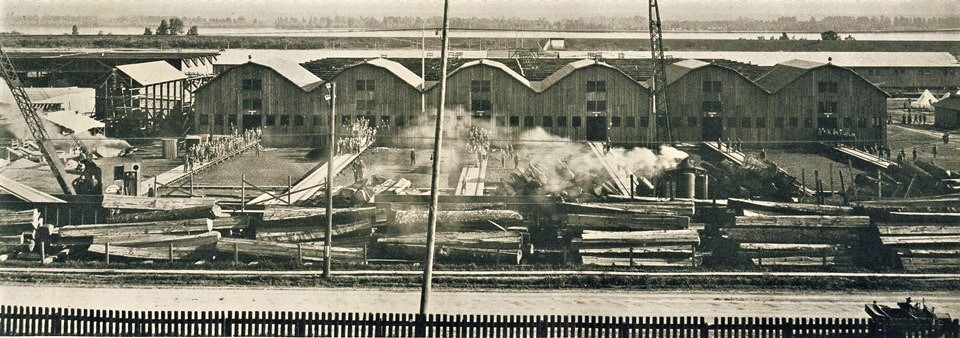
The wide Columbia River, in the distance, ambles by the gigantic, and world’s largest Spruce Sawmill in Vancouver, Washington.
By this time, in his rail journey, the handsome Columbia River, that divided the states of Oregon and Washington, had become like a friend to John and his fellow ‘doughboys’. Even the train, itself, seemed to be struck by the awe of what they saw next as the revolutions per minute of the steam engine’s wheels began to slow as they arrived onto the scene of the largest spruce wood sawmill in the world.
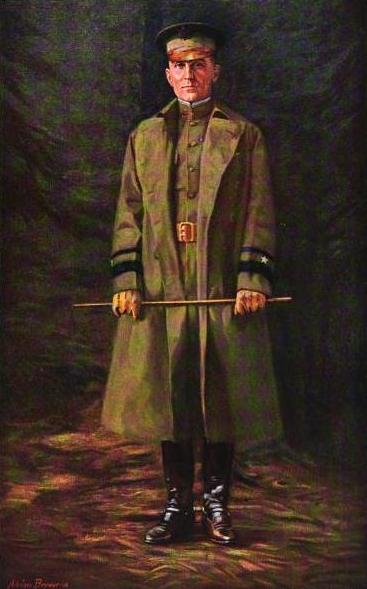
United States Army Colonel Brice P. Disque who commanded Vancouver Barrack’s Spruce Production Division.
Within sight of this immense sawmill campus were the sparkling blue waters of that same Columbia River that John had enjoyed from his train window. The winking waves of the river, flowing past towards the Pacific Ocean, seemed to say, “Well, ‘doughboy’, you’ve got your work cut out for you now”!!
The elegantly attired Army Colonel Brice P. Disque convened an assembly of these robust young Americans to share with them what their weapons of valor would be as they employed them to defeat the Emperor Kaiser Wilhelm and his German Army. Holding a large trumpet-like megaphone, and in a booming voice, the Colonel exclaimed, “Men, your weapons, in this Great War, will not be rifles, but saws, sledgehammers, axes, and the like”!!!! “Engineers have found that Sitka Spruce, which fills the hills of these Pacific Northwest forests, is ideal for building not only our American military aircraft, but also for our allies of Britain, France and Italy”!!!
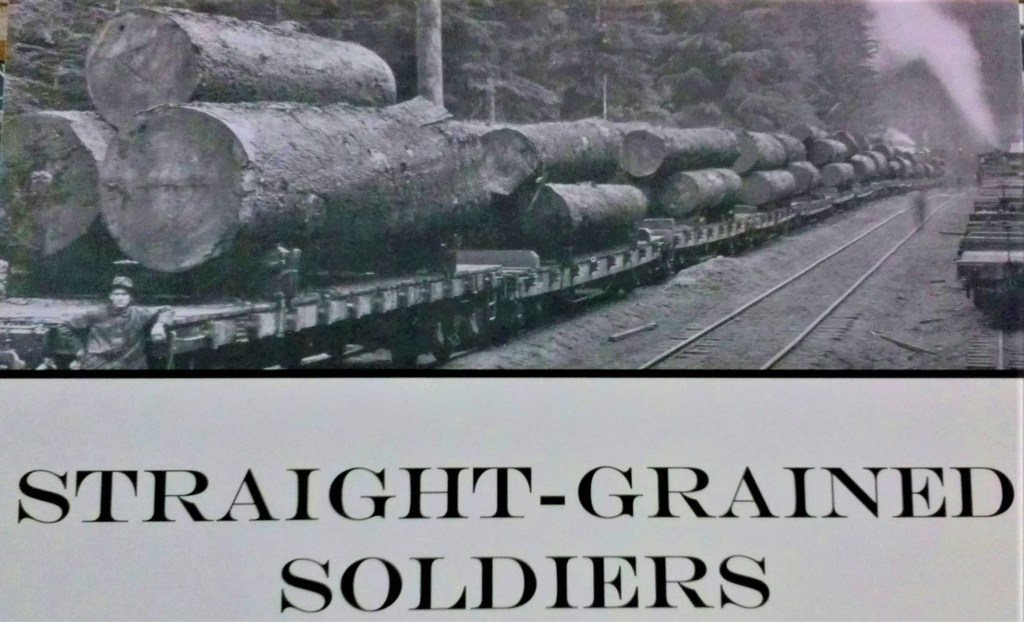
From that day on, John, and his fellow Army pals became loggers, truck drivers, mill workers, etc. and were affectionately called, “The Straight-Grained Soldiers”.
Sitka Spruce was known for its being a light wood, straight in its grain (which made it very strong) and, its ability to not splinter when struck by bullets. From this resilient wood source were made our American Curtiss “Jenny” aircraft, the British “Sopwith Camel” fighter aircraft, the French “Spad” fighter aircraft and others. Under the leadership of Colonel Disque, The Spruce Production Division exceeded their production goals and produced 143 million board feet of spruce for airplane manufacturing.
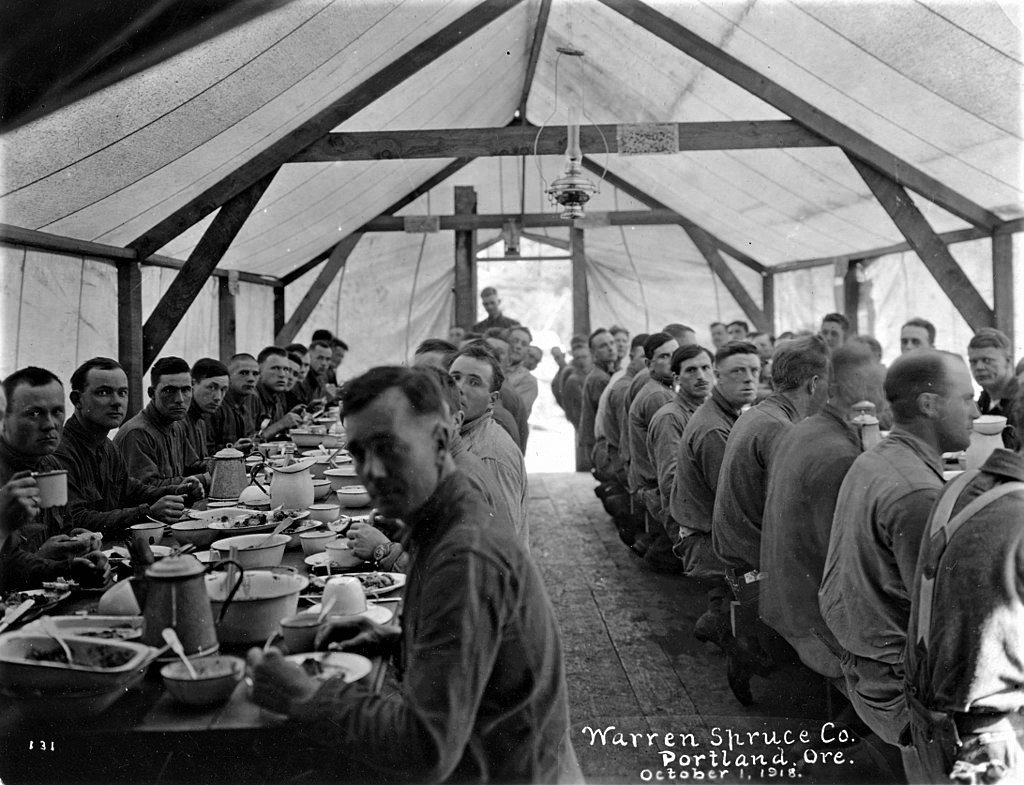
It’s time for a hearty meal for the soldiers in 1918. No one knows for sure, but the second young soldier on the left has a resemblance, at least, of the John P. Madsen of this story.
All work and no play made for pretty dull ‘doughboys’ while working in the military employ of “Uncle Sam”. A tent-city sprang up around the Spruce Mill and some of those tents were used for feeding the hungry mouths of thousands of young men who gave their all in the forests and wood mill each day. Baseball teams were organized for fun during off-duty hours and even musical gatherings became a fun way to while away the evening hours or off-duty times. The Headquarters Office for Colonel Disque and staff were located across the Columbia River in Portland, Oregon with logging and mill sites scattered throughout Oregon and Washington.
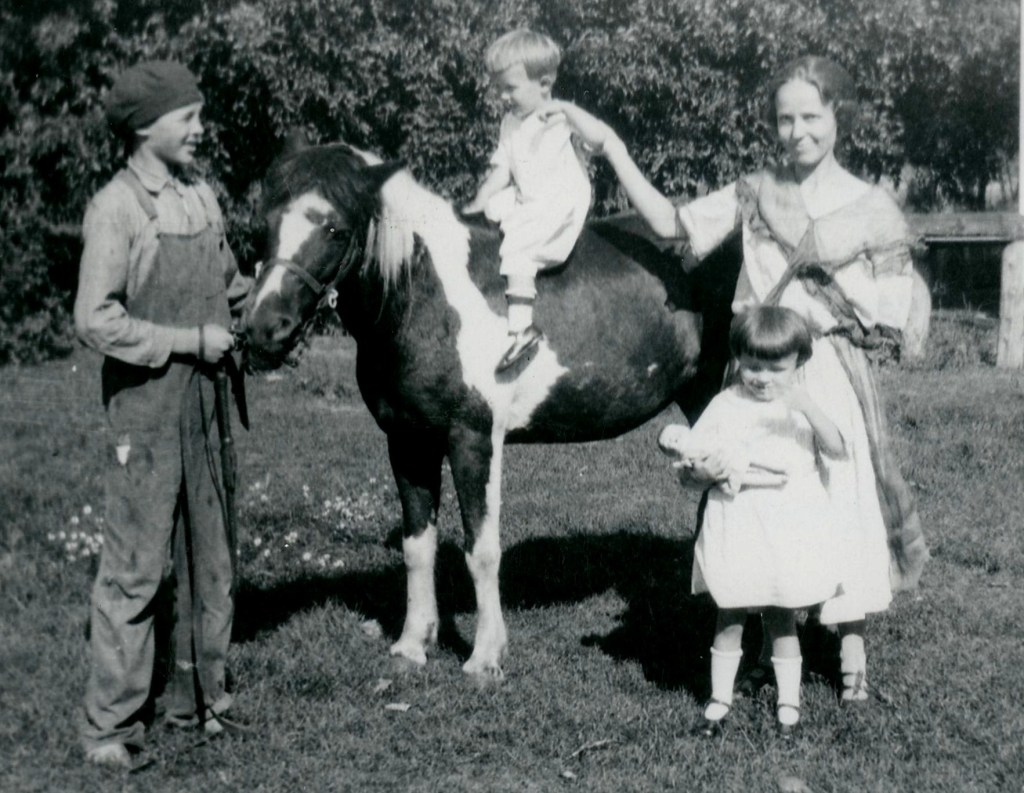
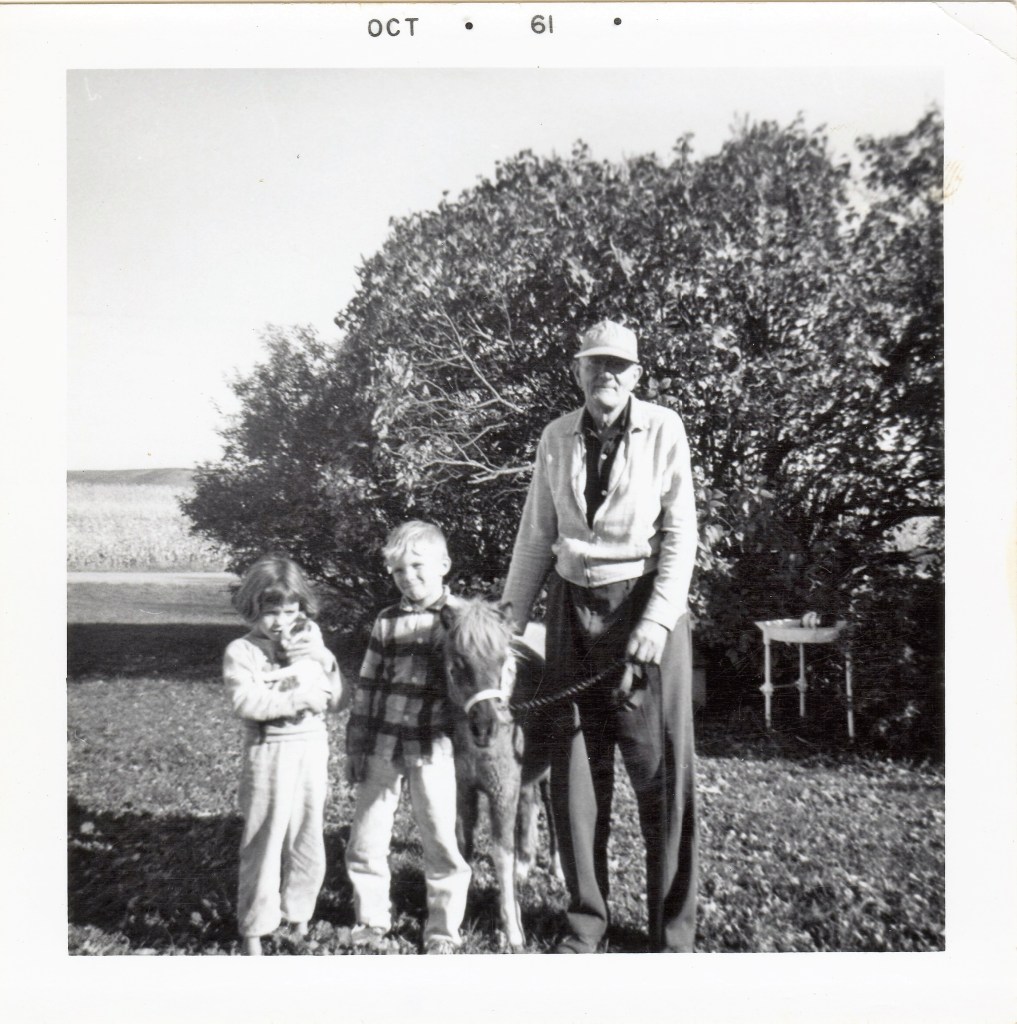
Little sister, Candice, Elliott, “Joker” the Shetland pony and dear John P. Madsen smile for the camera on their farm northwest of Kiester, Minnesota in the early October of 1961.
The day after the Armistice was signed, on November 11th, 1918, all wood mill production ceased and young John Madsen was among the thousands of young “Straight-Grained Soldiers” that were soon heading home.
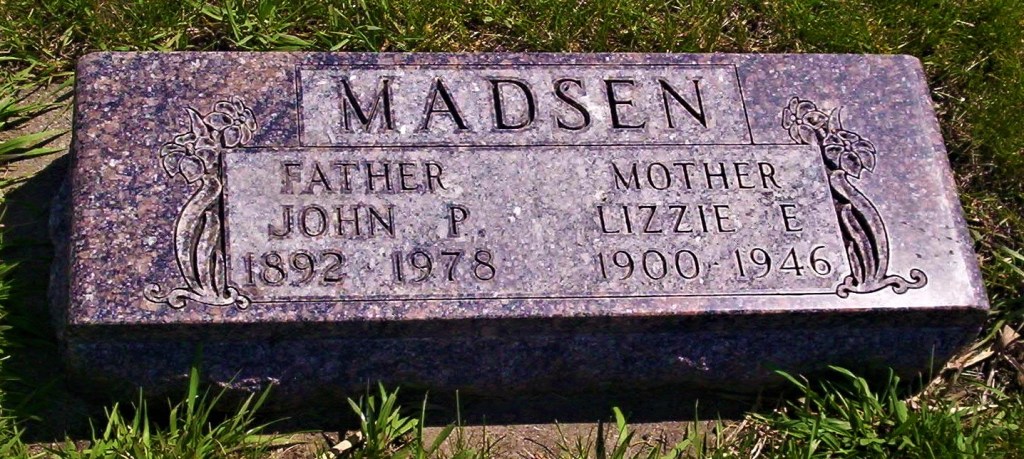
Marriage ensued for John and Lizzie with a family of five children blessing their lives. The Madsens lost their little son, Walter, at the young age of four years in 1928 and then John lost his beloved Lizzie who was taken in death in 1946. Fast forward to the late 1940’s and early 1950’s when John, via our family friend, Harry Bauman, came to work on our Noorlun farm as a hired hand for our daddy, Russell. Those tender, Danish blue eyes of his were now weakened with age and John had to wear super-thick ‘coke bottle bottom’ glasses to make his way around in daily life. Yet, those long, lanky legs, that had carried him around the Spruce Mill, in his Army days, still made him a giant in our lives. And you know, his being a giant wasn’t merely from his physical height……….it was his ever grateful, ever inspiring and ever positive view of relishing each day of life God gave him (from 1892 until 1978) that touched the life and soul of this Norwegian Farmer’s Son.
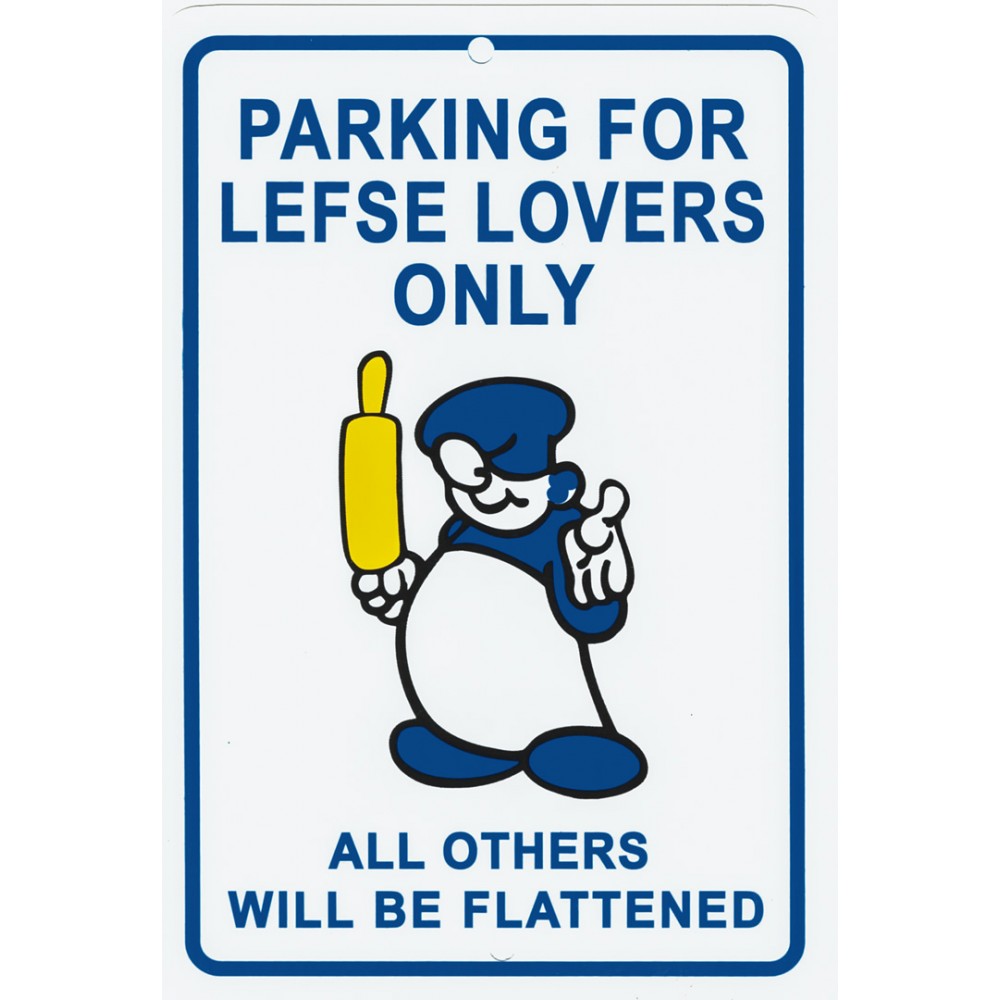
April 11th…..“BEING NORWEGIAN, GRANDPA, WAS THERE A SPECIAL TREAT THAT YOU ENJOYED THAT CAME FROM YOUR ANCIENT MOTHERLAND OF NORWAY?”
SONG – “Yust A Little Lefse” The author of these fun lyrics is unknown. For the younger generation tuning in to this……….these lyrics reflect how a first or even second generation Norwegian person tried to speak English. I sweetly recall my Norwegian grandparents had a distinct ‘flavor’ to their English because their native Norwegian language was still very much a part of them.
Our sweet Norwegian mother, Clarice, found this cute item and took this to her Senior Citizen Church Group at Bethel Lutheran Church in Brush Prairie, Washington. The group called themselves, “The Keenagers” and on December 14th of 1995, they all had some fun singing this song. You can, too…..it is sung to the 1948 tune, “Just A Little Lovin’ (Will Go A Long Way)”…..written by Eddy Arnold and Zeke Clements. A great audio clip of this song can be found on YouTube. Enjoy!!! 😉
CHORUS: Yust a leetle lefse, Vill go a long vayyy,
Gives yew indeeyestion, Most all of dah day.
Poot it on yer menu, Yew’ll be sure tew say,
Yust a leetle lefse, Vill go a long vayyyyy!
VERSE: Lefse’s good for many tings, Und vee can gif yew proof,
Fer tiling on dah kitchen floor, Or patching up dah roof.
Peeple sometimes use it as, Dah soles upon dair feet,
And some folks tink, It’s even good tew eat!!
CHORUS: Sing it again, ya? 😉
VERSE: Leif Erikson vunce had a boat, It vas a leaky scow,
He said, “Tew beat Columbus, Vee yust gotta leave right now”!!
April 10th……….“WAS THERE EVER AN ITEM FROM YOUR CHILDHOOD HOMETOWN IN MINNESOTA THAT CAME BACK INTO YOUR LIFE LATER ON?”
POEM – “The Rove Of Mr. Clove” by N. Elliott Noorlun
Elliott’s brother, Lowell, found this in an antique store over 80 miles from Kiester, Minnesota.
I ponder as to when, My little glass friend,
That you had decided to rove,
From Paulson Drugs and Kiester,
A tiny bottle we’ll call, “Mr. Clove”.
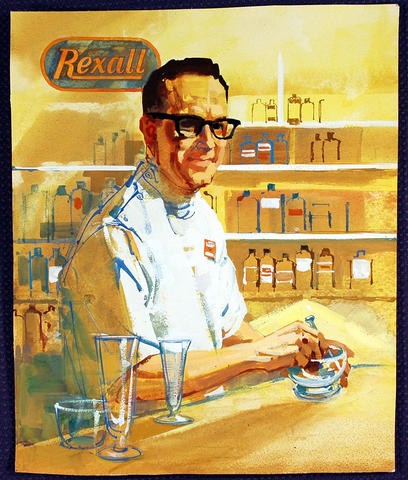
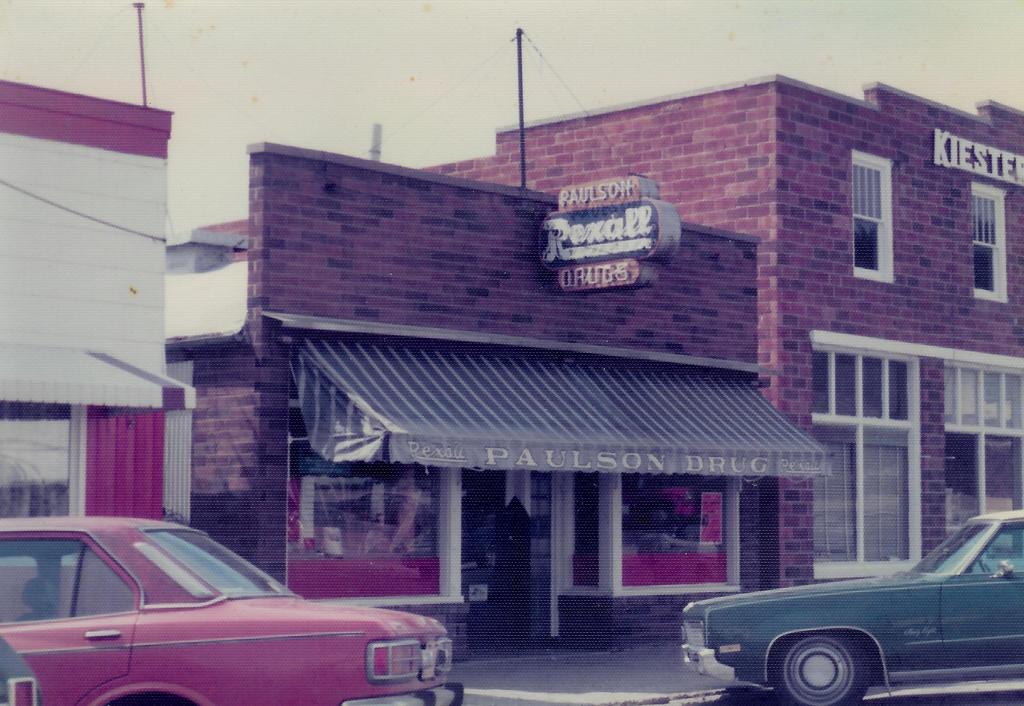
This is where “Mr. Clove” first lived, which was at Paulson Rexall Drug Store on Main Street in Kiester, Minnesota. Just think of the wonderful ways Mr. Paulson put clove oil to use in helping folks to heal.
In days gone by, Mr. Paulson, great guy,
Would pull you down from his shelf,
To ease someone’s pain, With their good health to gain,
You were a popular pixie elf.
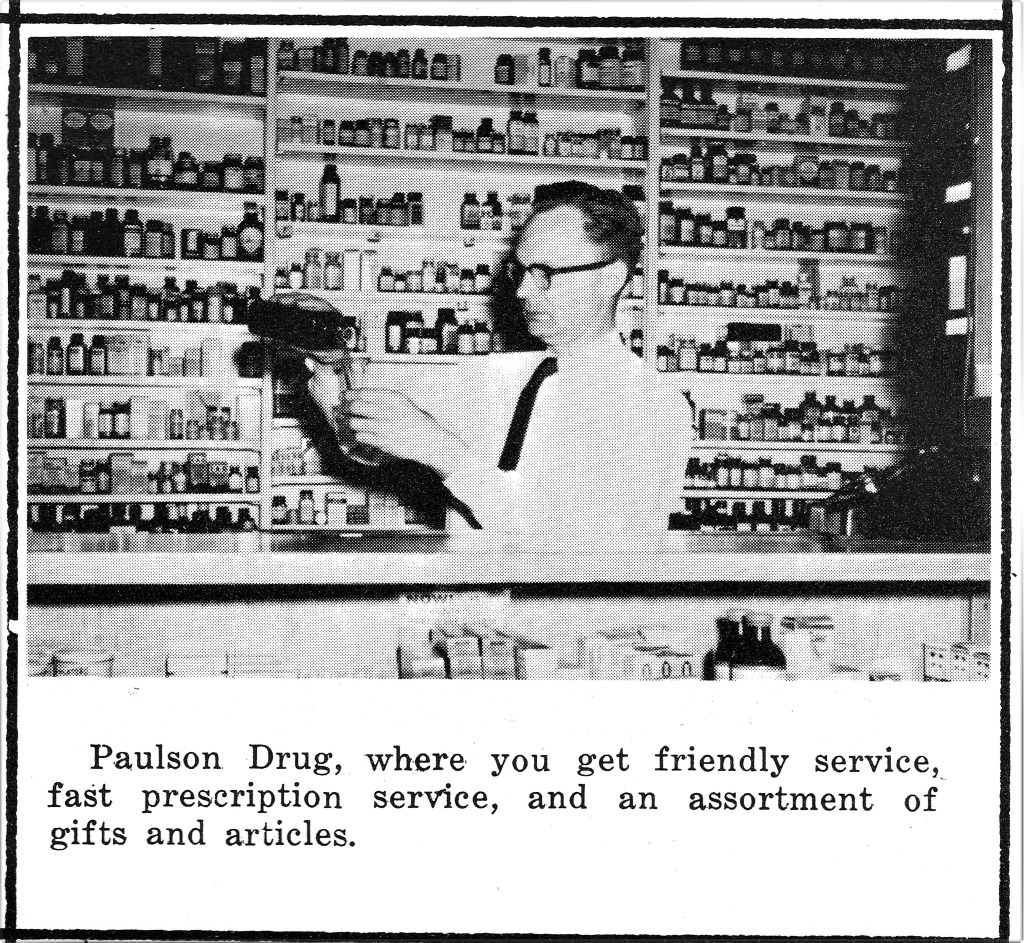
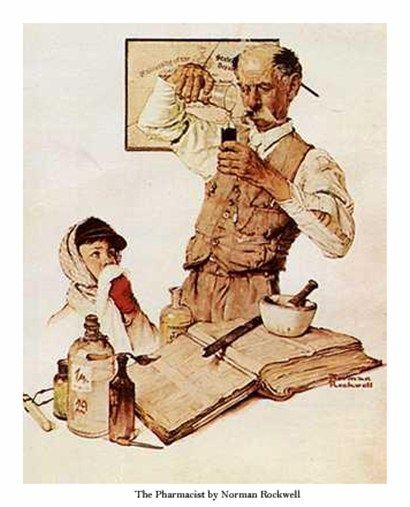
From an advertisement in the 1963 “Rambler” Yearbook, our very respected pharmacist, Mr. Paulson, creates something to aid one of our town folk.
You sat there with pride,
Of an assortment quite wide,
With other bottles of medicinal elixir.
Should farm lady come in,
With a wart on her chin,
In a minute came the potion to fix ‘er!! 😉
What’s comical in this graphic is item #4. I don’t think anyone wants to reLIVE stress; they want to relieve stress!! 😉 hehehe!!
Someone, “Mr. Clove”, must’ve needed your power,
To help them through their ailing hour,
Because you left “Paulson’s”, And traveled for miles,
Maybe toothache had turned someone sour?
Languishing away on a dusty antique store shelf, “Mr. Clove” must’ve been lonely for the good old days in Kiester.
Whether pocket, or purse, Or suitcase of nurse,
You traveled a journey so far,
To Mantorville town, Quiet place of reknown,
Did you hitchhike and ride someone’s car?
Lost in a plethora of knick-knacks n paddy-whacks, “Mr. Clove” no longer shined important as he had in the medicinal arsenal of Mr. Paulson.
There you sat on a shelf, Not quite feeling yourself,
That cluttered antique store now home.
Among all that junk, You were feeling a funk,
Cause you’re now just a lost little gnome.
Do you think “Mr. Clove” rejoiced to see another “face”, in the form of Elliott’s brother, from his old hometown?
But through your glass eyes, You saw a surprise,
A face from your old hometown.
He recognized you, And saw you were blue,
So he bought you to erase your frown.
Elliott was given the gift of “Mr. Clove” by his brother, Lowell. Now Elliott mixes memories with each whiff of the still viable clove oil inside.
Now you once again live, On a home shelf to give,
Out the fragrance you still have inside.
“Mr. Clove’s” back among friends, With the fragrance he lends,













































 Norwegian Farmer's Son