
May 16th………“WHEN IT CAME TIME FOR HARVESTING THE FIELDS ON YOUR FARM, WHERE AND HOW DID OUR GRANDPA RUSSELL GET HIS GRAIN CROPS TO MARKET”?

THERE IT WAS!!! In the distance!! A galvanized “Emerald City” right out of the 1939 “Wizard Of Oz” movie!!! 😉 Wellll, O.K., so it wasn’t green, still, it was a farmer boy’s version of the classic children’s tale!
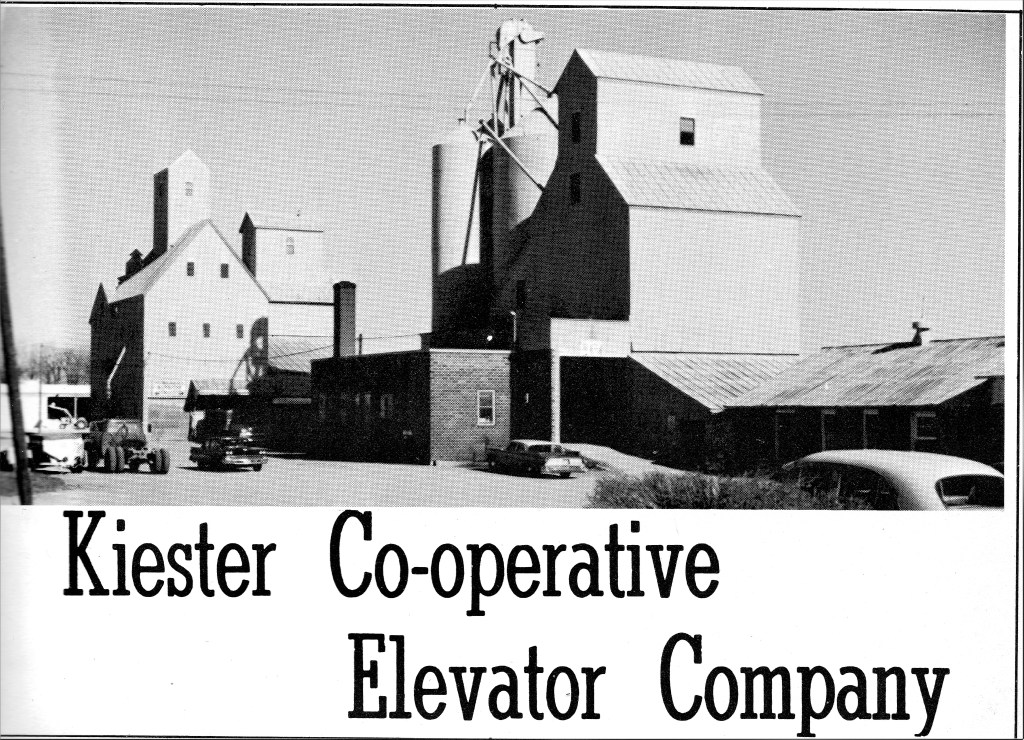
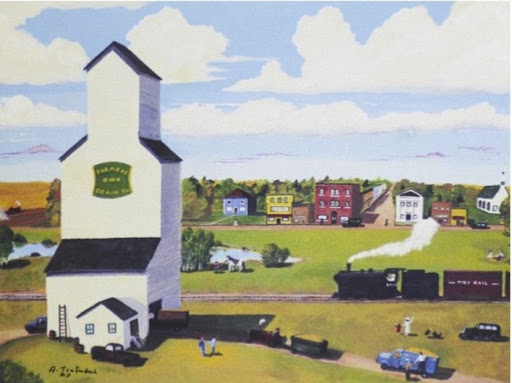
You will have to admit, though, what I saw, from the highway far outside the city limits of our hometown of Kiester, Minnesota, was amazing!!! That clanking, caliginous, conglomerate collection of buildings was taller than all the trees, houses and commercial buildings combined that made up our grand little village just a mile or so from the Iowa State Border there in south central Minnesota. The name of this gray, galvanized grotto for grain? It was known as “The Kiester Co-operative Elevator Company”.
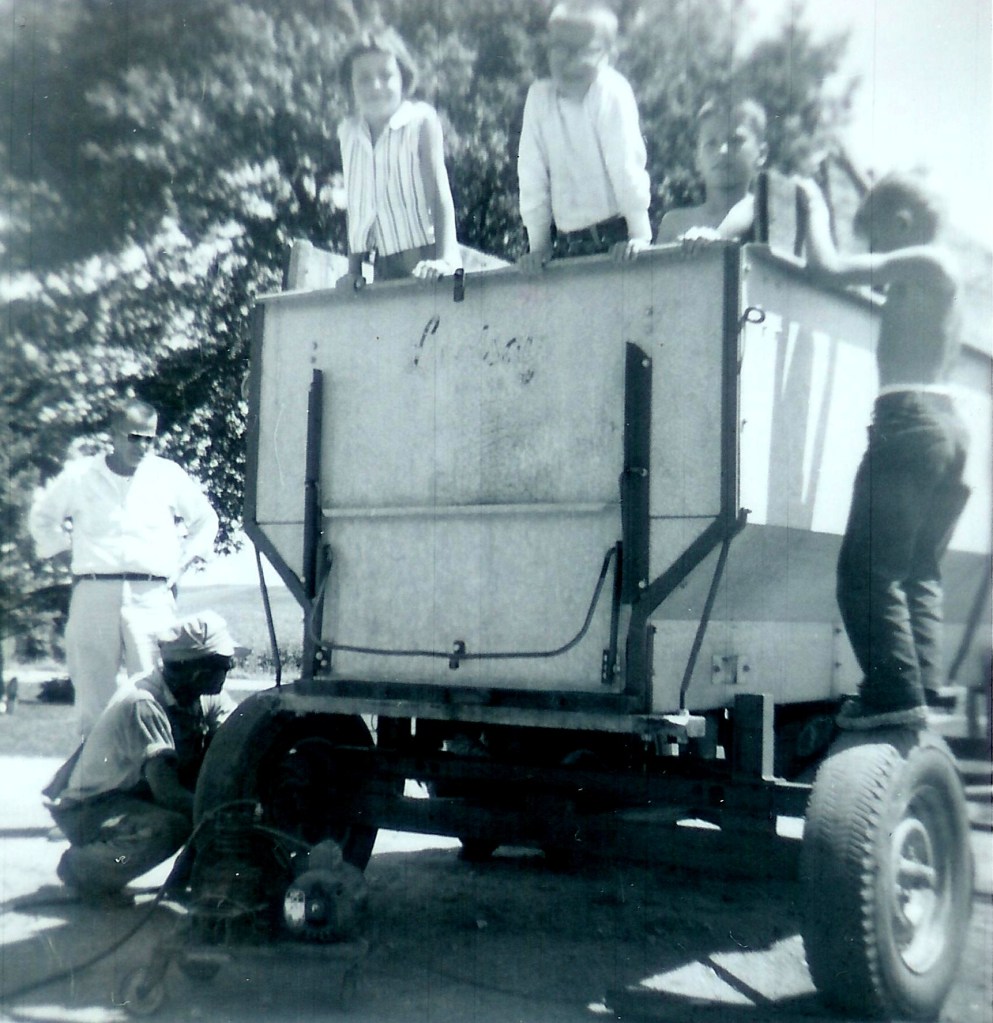
Harvest time had once again descended upon the now golden fields of our family farm which lay three miles northwest of Kiester. Oats, soybeans and soon even the corn would all be calling for Dad’s tractor-drawn combine or corn-picker to begin cutting, shelling and making our grain crop ready to be hauled to the local market in our nearby town.
Dad’s tall, handsome brother, Erwin, and family had just rolled into our farm yard from Colorado. I was giddy with our visiting playmates along with little sister, Candice. We were consumed in jubilant playtime as we climbed up, and over, and into and out of that grain wagon.
While his ubiquitous sweat rolled down his neck from beneath his engineer’s cap, our dear farmer father was hustling and bustling in the process of airing up tires and man-handling our farm’s grease gun to lubricate every “Zerk” fitting (named after Oscar Zerk) so that this wagon and our other machinery were at peak condition for the harvesting at hand.
With the harvest now in full swing, Dad had rolled his tractor and one of the many full grain wagons of soybeans into the yard near our farm house. He was famished and happy to come inside for the noon meal (which we called dinner). In more relaxed times of the year, Dad would usually enjoy taking a nap after dinner, but during harvest there was too much important work to do, so I knew my father was going to pull that grain wagon into town and to the elevator after his meal. “Dad! Can I please come along and ride on the tractor with you to the elevator”?, asked this little Norwegian Farmer’s Son. “Well, o.k., Son, but only if you promise to hang on very tightly all the way to and from town”!!!

The Indian Summer sunshine was warming us both as we climbed aboard our Farmall H tractor for this mini-adventure of grain hauling.
In today’s modern agriculture, everything from the tractors, to grain wagons, to diesel semi-trucks are exponentially gigantic compared to what we were using. But, being that ours was a small farm, our parents lived by the perspective they had gained from coming through the Great Depression and World War II. My folks lived by the rule: “Use it up, Wear it out, Make it do, Or do without”!!! The family grain wagon and our older model Farmall tractors were all we had to work with, so that was the modus operandi (usual way of doing things) and the ‘make it do’ on our farm.
As Dad pushed his foot to the starter button, the tractor’s engine came to life. With all pistons popping, the hinged muffler cap shot immediately upright, like a soldier to attention, and stayed there in salute as the throttle was moved to a higher engine speed in preparation to pull out of the yard. As Dad let out the clutch, that faithful old Farmall H grimaced a bit in her engine sound as the load of soybeans, in our wagon behind us, challenged her power. Yet, with the tenacity that made these tractors famous, she overpowered the weight of her trailing soybean load and we rolled gently down the knoll of our driveway and onto the graveled road heading for Kiester. It was seldom that I was able to witness the high speed of ‘road gear’ in our tractors, but today, the winds of late summer and early fall raced past my ears in a buffeting buffet of sound that was only superseded by the constant engine and muffler of our red chariot of choice.

Our duo of tractor and grain wagon came to a stop at the paved highway atop Ozmun’s hill (that belonged to our beloved neighbors Chet & Violet Ozmun). Pulling out from the stop sign and onto the paved highway, my father put the H through her gear pattern to eventually achieve ‘road gear’ once again. This time, I now heard a different chorus in my ears. Instead of grinding gravel beneath our tractor’s tires, it was the thrum, thrum, thrum of the large, chevron-treaded tires slapping the paved highway beneath us. I was in kid heaven experiencing this fun time with our family patriarch!
“Kiester Co-operative Elevator Company” was now almost waving at us as we approached town. To be obedient to the speed limit signs, we began to slow down as we came rolling into our city limits and through the neighborhood towards our destination. Dad shifted down the tractor from our speed on the highway so that he could safely navigate into the granary complex of scales and unloading area. Our full grain wagon was weighed with the soybeans onboard and then we were directed up the incline and into the cavernous opening of the elevator. Dad carefully pulled the wagon across the metal grating that will ‘swallow’ all of our soybeans. We came to a stop and the tractor brakes are set as we dismounted our red metal steed. We walked behind the wagon and our farmer father pulled up on a sliding door at the back of the grain wagon. Prairie winds, zipping through the giant doorway, whipped up chaff dust as soybeans burst forth from the wagon opening by the bazillions and started to stream out and down into that pit below us.
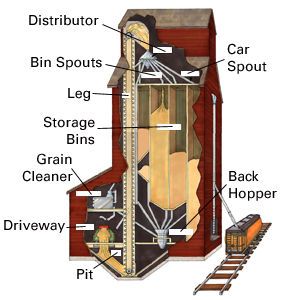
Our town’s grain elevator did just what its name said it would do; it elevated that grain of ours from the pit below and then, by various immense, screw-type auger systems, moved the soybeans (or oats, or corn) up, up, up and into the super tall storage structures.
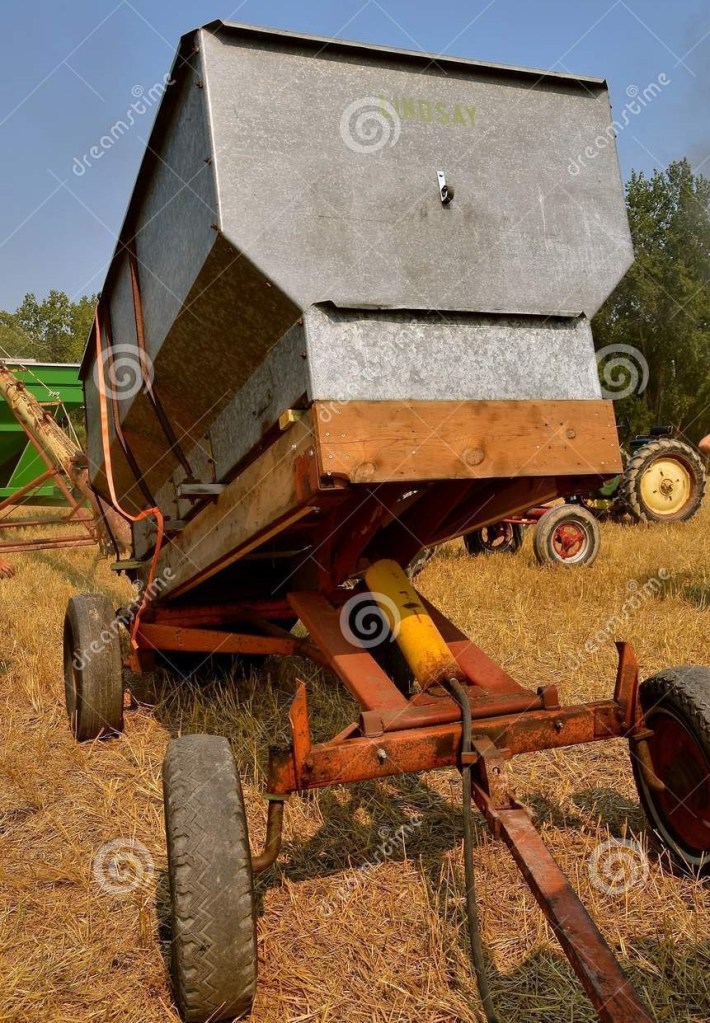
When the first rush of soybeans had escaped into the abyss below us, the rest of the load of grain needed some lifting assist to empty the rest of the load. Our daddy then would walk up to the Farmall H (whose engine is still running at a slow idle speed) and pulled a lever to actuate a hydraulic lift under the wagon. It slowly began to raise the wagon box up and up until the last soybean raced to its new home in the underground below the grating.
With a push to the other direction of that same hydraulic lever, our grain cart came back down to a flat plane once again and we drove out the other end of this amazing grain storage facility. Once again, Dad had the wagon weighed to show its empty weight. The difference in the loaded and empty weight measurements are what our family will eventually get paid for from the elevator when the harvest is completed.
The Central & Northwest Railroad, that ran west to east through our village, was a high contributing factor in the very birth of our small town in 1900. In those early days, the railroad was a connection for not only passengers to our area, but for the commerce, grain trade and all points of connecting to the world out yonder. So it was in the sweet days of our farm family, as well. From those gray, galvanized grottos of grain, the elevator company was able to load that grain onto the train for its further travel to the big markets in the east and even down the Mississippi River to international trade. It was truly a grand time to be a happy partaker in this agricultural adventure for this Norwegian Farmer’s Son.
 Norwegian Farmer's Son