May 9th……..“GRANDPA, AS GREAT GRANDMA CLARICE GOT OLDER, WAS IT HARD TO KISS AND SAY GOODBYE EACH TIME YOU FLEW BACK HOME”?
POEM – “To Kiss Her Cheek” by N. Elliott Noorlun. This was written in the Spring of 2016, just one year before the Lord took our lovely mother with Him to Heaven in June of 2017. Every year, it got tougher and more emotional for me to leave her apartment with that one last goodbye kiss. Would this be the last time I see her on earth? Only our loving God knew, and in 2017 He called her Home to be with Him.
May 8th…….“WHERE DID OUR GRANDPA RUSSELL BUY AT LEAST SOME OF HIS ANIMALS WHEN YOU LIVED ON YOUR FARM NEAR KIESTER, MINNESOTA”?
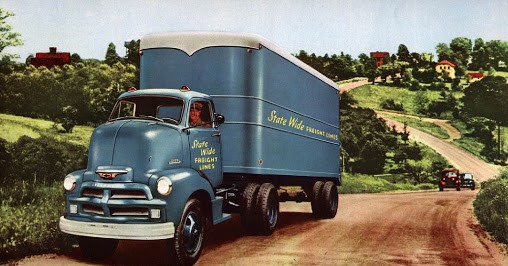
Palmer Hove down-shifted coming off of Highway 22. As he rolled into the driveway of his business, there was a clackety, rattle, squeak and then a Moooooo!!! The gargantuan, 1954 Chevrolet cabover livestock truck rolled its dualie tires into the expansive, graveled yard of Kiester Sales Company there in Kiester, Minnesota.
In the warm, summer dryness, droll curls of lazy dust clouds, lifting into the air, were generated by those large treaded tires as the quizzical cows inside the slatted box of the truck got jostled from side to side as they wondered where their new farm and barn home would be next.
In ‘moo-chats’ amongst themselves, I’ll bet the those bossy bovines likely inquired of each other, (in a higher Holstein voice, of course) “Well, Henrietta Holstein, I wonder which farmer at the auction is gonna milk us next”? 😉 Ever so deftly, from his many years of experience, Palmer put that Chevy’s clutch pedal to the floor boards and man-handled the ‘three on the tree’ gear shift lever into reverse. Letting out the clutch, and with a whine of obedience, the ‘tranny’ (transmission) in that immense old Chev began the mooooving migration backwards towards Palmer’s target of matching the slanted loadout chute and the truck’s rollup back door. Palmer’s handsome sons, Merrill and Harlan were nearby to help their dad carefully bring these cows off of the truck and down into the many pens at Kiester Sales Company livestock and auction barn.
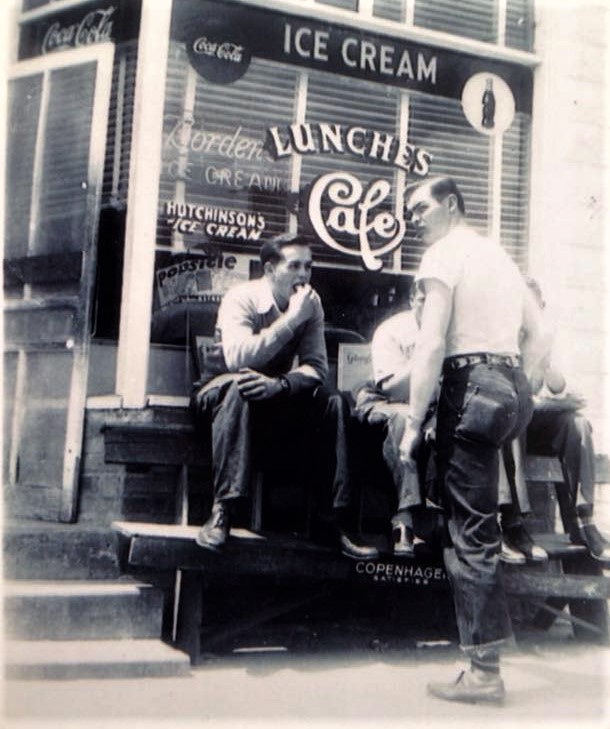
Young Merrill Hove (L) enjoys some tasty refreshments from Kenny’s Recreation Parlor on Main Street in Kiester. ‘All work and no play’, you know. Therefore, it was time for play after helping his dad at the Sales Barn. His buddy, Dean Mutschler is to the right in this photo.
The Palmer and Vera Hove family, who were blessed with five children, were a composite of one of those wonderful ingredients that flavored our hometown with the blessings of integrity, hard work and love of their fellow man and community. It’s no wonder our village of Kiester was so tightly knit together in those golden days of yore.
I’m sure, thanks to the inbred honesty and Christian morals of the farming families that populated our area, townsfolk were blessed, like our farm family, with the peace of mind to be able to not feel the need to worry about locking their home when leaving for a day (or even two or three). I know that upon our return home each time, all was safe and well. We just knew that our good Lord Himself and our ‘brother’s keeper’ of neighboring farmers would watch over our home in our absence. Heck, it was even customary for us to always leave our keys in the ignition of our car and truck, too. Or, at the very most, trap the keys in the windshield visor above the driver’s seat. Dad would just reach up, pull down the visor, and the car or truck keys would drop in his lap to start our vehicles and we’d be on our way for another day of life on the farm. 😉
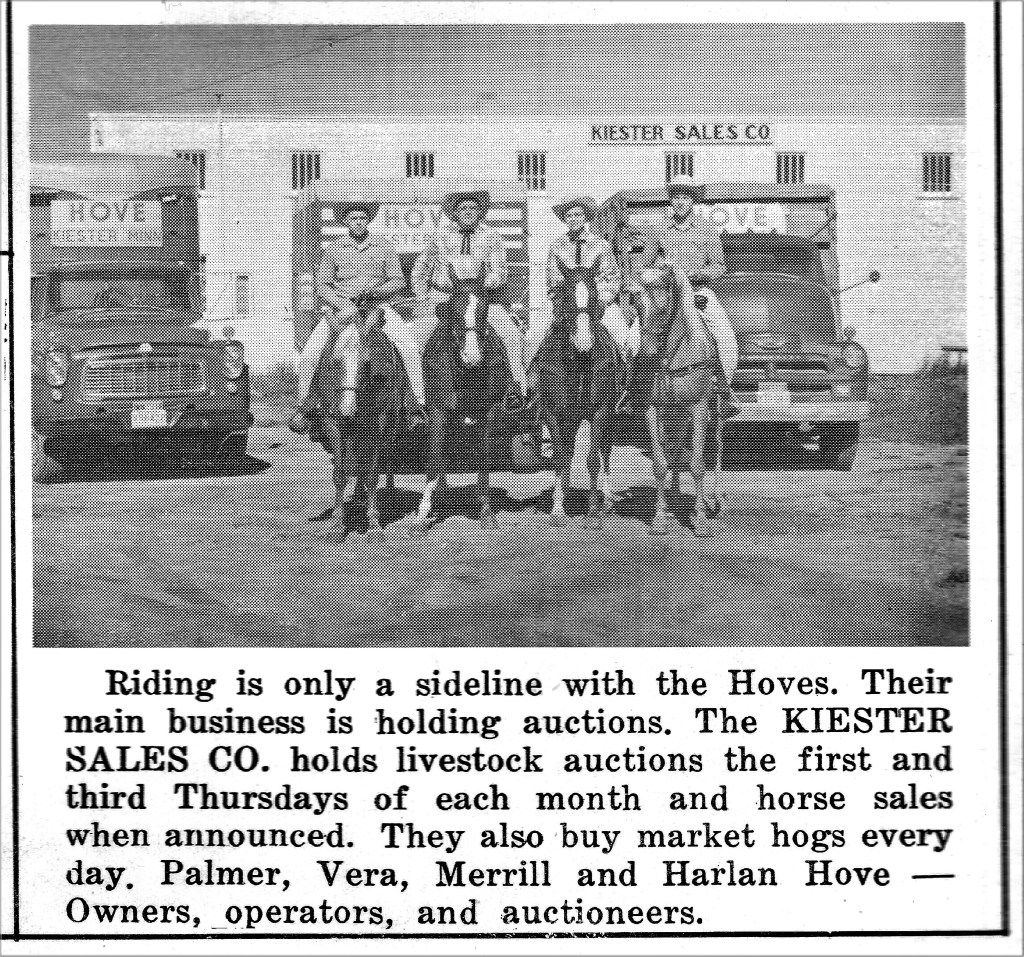
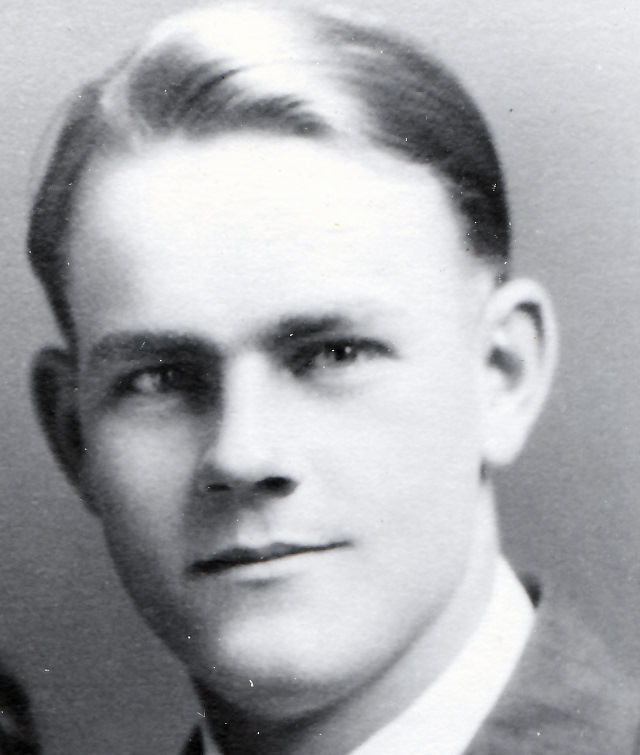
The Hove family always made Kiester folk proud of the great way they provided livestock and even stud servicing to farmers in Elliott’s hometown there in southern Minnesota. This photo comes from the 1959-60 Kiester High School yearbook called “The Rambler”.
Over and above the bovine, sheep, horse and hog fragrances, that were an evident part of life in the sales barn, there could also be enjoyed the delicious aroma of various food delights at the lunch counter/restaurant there at the stockyard.
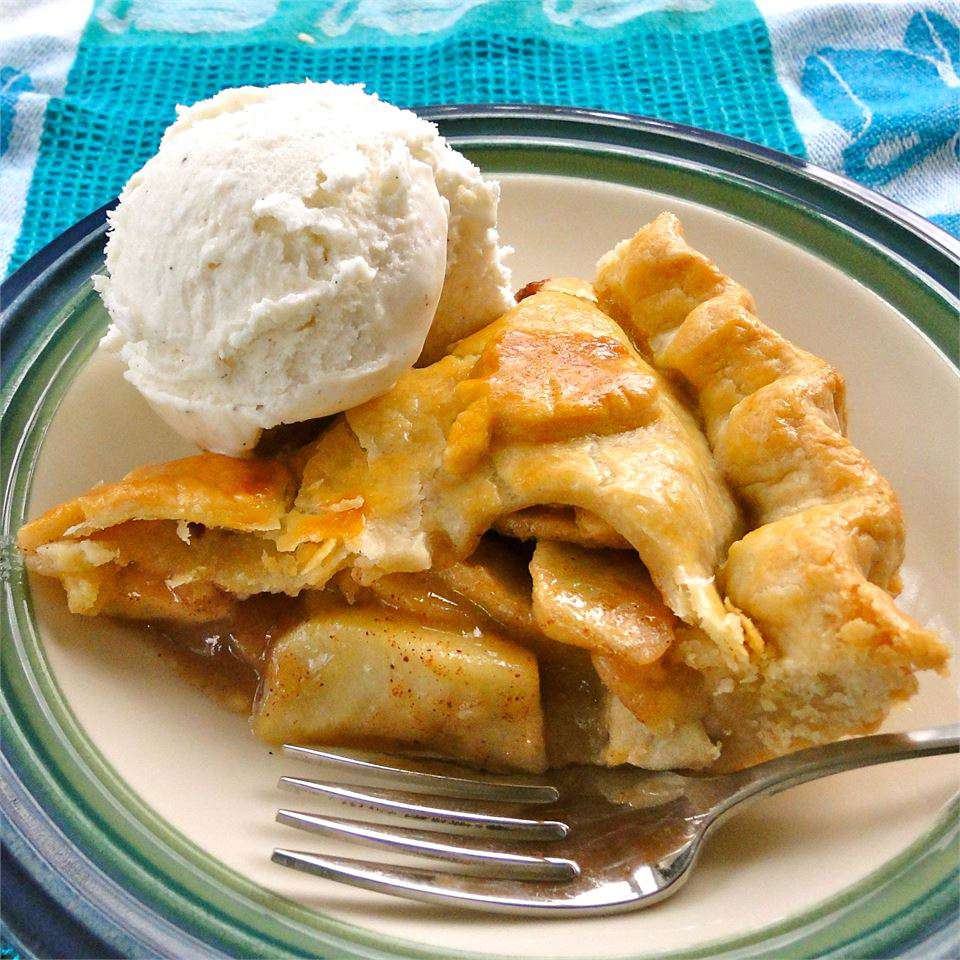
Our big brother, Lowell, gainfully looked for any opportunity he could find to accompany Dad as they’d jump into our old 1937 Chevy and head for Kiester and another livestock sale. There was nothing better for our big brother than to get a yummy piece of homemade apple pie from the Hove’s lunch counter for only 15 cents and an ice cold glass of milk for 5 cents. Lowell would then follow Dad as they entered the sawdust-filled arena area and the wrap-around wooden bleachers of the auction ring. Being like any adventurous youth, our big brother loved to take his tasty pie and milk and then climb to the top tier of those bleachers to take in what he considered a farm boy’s happy entertainment in the sales bidding that would happen shortly.
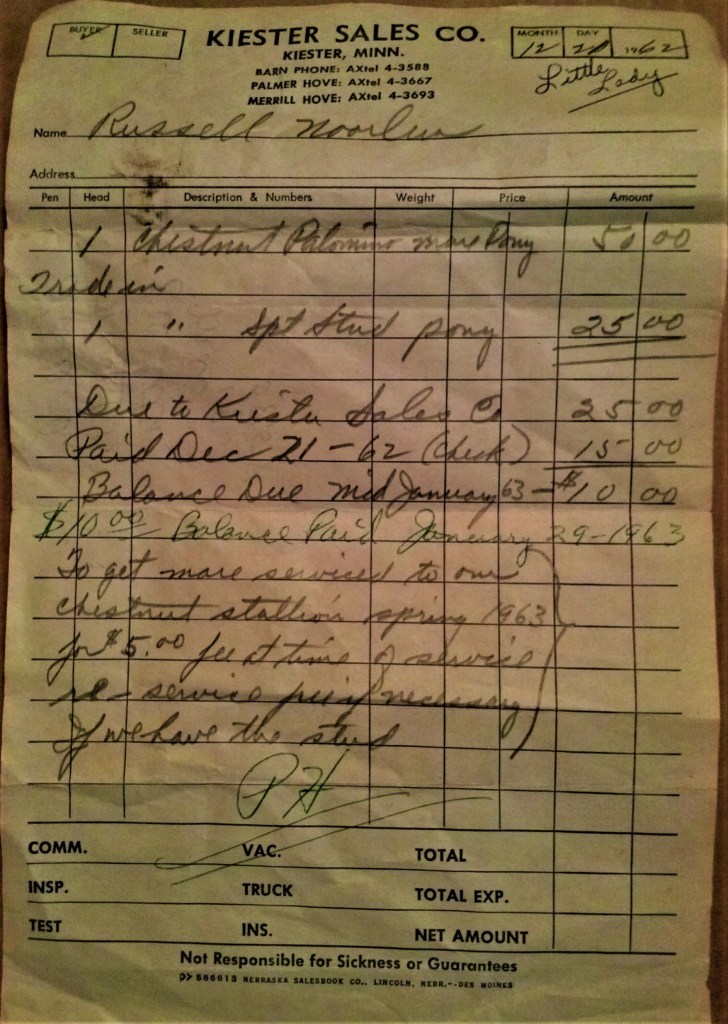
You can even see Palmer Hove’s initials on this bill of sale from December 21st of 1962 when Elliott’s dad traded in a mean pony for their “Little Lady”.
The staccato ‘cattle rattle’ of the auctioneer captured all the farmers attention in the bleachers that day as the first animal entries were herded into the arena. Those animals would strut around just like a movie star would walk the red carpet of getting attention in Hollywood.
The loud and clear auction chant was usually comprised of barking out two numbers at a time that reflected the monetary starting bids hoped for in the sale of said animal or group of animals. Dad and our brother often witnessed the sale or buying of sheep, hogs, horses and the customary bovines that populated farms in our area of southern Minnesota. “One dollar bid, now two, now two.Who will give me three”!! That chatter and the rapid fire fill words were thrown into the sales chant for color and rhythm of the overall auction cry.
On one of those sale auction days, our father, Russell, had bought a Shetland Chestnut stud pony who we ended up giving him the name, “Joker”, cause he was soooo mean-spirited.
Another quality of Palmer Hove was his compassion. As the long months of that following year passed, that nasty Shetland Dad bought became a burden to us, so Dad approached Palmer about this ornery little equine enemy and sought a remedy of the issue. Palmer took the matter to heart and kindly gave Dad a $25 Trade-In Value to take back “Joker” and replaced him with the sweetest little pony this side of ‘Horse Heaven’. Our new pony friend was a young mare; another Shetland with speckled Chestnut coloring and a lovely white mane and tail. This Shetland was so darling, we gave her the name of “Little Lady”!!! 😉
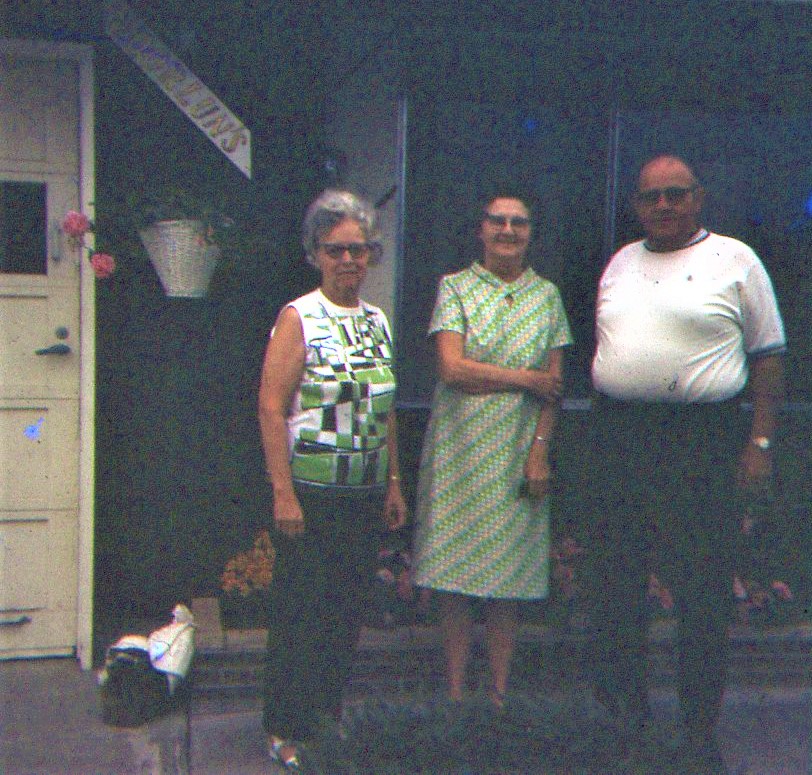
Left to right: Vera Hove, Mabel Heitzeg and Palmer Hove visiting Elliott’s family at their new home in Battle Ground, Washington in July of 1973.
There’s an old saying I recall from my younger days that goes: “You can take the boy outta the farm, but you’ll never take the farm outta the boy”!!!
That phrase paralleled how much we loved our dear Kiester friends over the years. We, as a family, were taken out our of Kiester, but Kiester still remained in our hearts. And, even after moving our family to Washington State in 1967, those precious kindred-spirit family friends would make the journey out west to visit us in our new home. Palmer and Vera Hove were some of those cherished Kiester friends who’d come visit us. On one occasion, even Charlie and Mabel Heitzeg made the 1,700 mile journey with the Hoves. Ohhhhh for the times of memories, coffee and meals around our family table as Mom and Dad would relive dear hometown reminiscing with these folks that were more like family than just acquaintances.
A Christian hymn from 1782 comes to my mind as I ponder the dear ones of my Minnesota hometown. The hymn sings………“Blessed be the tie that binds, Our hearts in Christian love; The fellowship of kindred minds, Is like to that above”!! Can you hear that lovely tune in your heart today? It sure resonates in the soul of this Norwegian Farmer’s Son. ><> 😉
May 7th……….“TELL US, GRANDPA, WHAT WERE SOME WAYS YOU HEATED YOUR FAMILY FARM HOME IN THE FALL AND WINTER MONTHS THERE NEAR KIESTER, MINNESOTA”?
Not only did I admire the man and his dear family, but Axel Challgren and I were kindred spirits in a common bond; his business and my farm home bedroom were as cold as a Meat Locker!!! 😉
The pioneer family that built our home in the mid to late 1800’s were obviously frugal and of pretty tough stock when it came to heating that old two-story farm house. I’m guessing those first farmers likely had a classic potbelly stove in the Living Room in those early days.
Officially, there was no viable means of heat in either of our upstairs bedrooms. Oh, there was a hint of heat that emanated into our sister’s bedroom via an open hole from the Living Room ceiling downstairs and the floor of their bedroom upstairs. To keep us little kids from falling through that hole to the Living Room below, there was a black, metal grating made of a curlicue filigree fastened to the floor. Other than that, though, the only hint of heat for the upstairs bedrooms was the venting stovepipe that carried the furnace fumes up and out of a chimney on the roof. That stovepipe was like a ‘loving buddy’ that we wanted to hug with a WARM personality. In the mornings, we’d jump out of our warm beds and into that frigid bedroom air to get dressed at the speed of light. When dressed, we’d then be able to run over to the stovepipe and hug it for the warmth it conducted to the metal, round surface of that pipe from the furnace below.
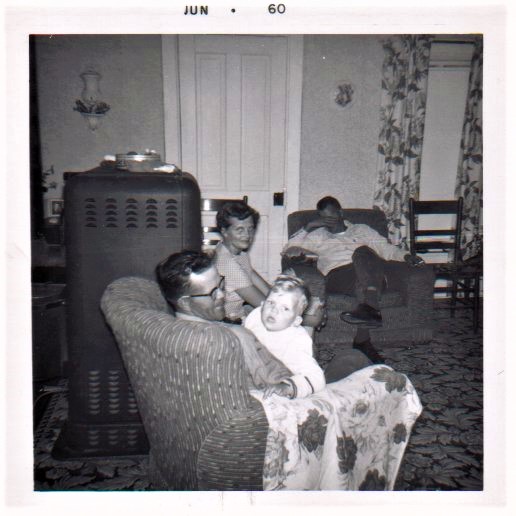
Elliott’s father, Russell, cuddles with one of his nephews next to the family’s oil-fired furnace in their Living Room.
Centered and to the north side of our modest Living Room stood our mainstay of keeping out winter’s icy blasts; an oil-fired furnace. Many a can of fuel oil had to be hauled into the house and poured ever so gently into a reserve tank on the back side of the furnace to give it the ‘food’ it needed to cook us up some heat on those below zero Minnesota winters.
During some of my frozen outdoors adventures, during those icy months of the year, I’d come home to report to Mom that, “I can’t feel my toes, Mom”!!! To which she’d reply, “Take off your boots n socks and put your frozenfeet on the side of the furnace. Just don’t leave them on the metal surface too long at one time or you’ll burn your flesh since, right now, you can’t feel your feet”!!!
It worked like a charm. I’d cuddle up on Dad’s upholstered rocking chair and put my feet on that hot, vertical side surface while watching cartoons on TV. Pretty soon, those feet of mine were coming back to life and I found the surface of the furnace too hot, then!!! 😉
This dual usage (gas + coal, corn cobs or wood) stove is very similar to the one in the Noorlun’s farm kitchen.
Our beloved family friend, ‘grandpa’ John P. Madsen used to say, “Yah,them Noorluns, they’ve got EVERYTHING”!!! 😉 In a humble, yet grand way, we did. By many standards of the day, our family was monetarily poor, yet we had the marvelous blessings of, what I call, a two-way stove in our Kitchen!!! The one side of our stove could burn wood, coal and even corn cobs (left over from Dad’s corn-shelling times). This was an excellent back up source of heat AND cooking for our family in case we ran out of propane gas. The other side of the range in our kitchen operated on propane gas for the stove top and the oven for baking needs. In between the burn side and the gas side of our appliance was a rectangular and deep water reservoir that Mom always had filled with water. The burning wood, coal or corn cobs kept that water source hot for washing dishes, doing laundry, or even Saturday night baths.
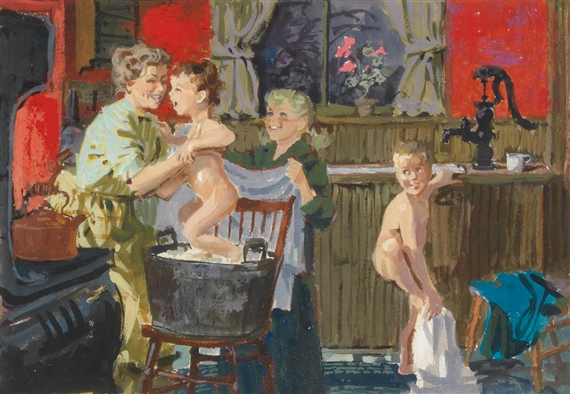
On those blessed Saturday evenings, each winter, Mom would hang up a big quilted blanket in the doorway from Kitchen to the Living Room (to capture some heat in the Kitchen) and would then fill a very large metal washtub with water from that hot water reservoir on the stove. She’d then open up the large oven door and start the oven to create more heat so that we kids could climb into that tub and get all cleaned up for Sunday School the following morning. Heck, when we were really tiny, two of us would bathe in the same tub together. In olden times, research reveals, that the entire family had their baths in the same tub and same water. Dad first, then mother, then all the kids and finally the baby. The water got so murky that, in a sense, you could ‘lose’ the baby in the ‘chocolate brown’ water……….thus came the old time saying, “Be careful you don’t throw the baby out with the bath water”!!! Hehehehe 😉
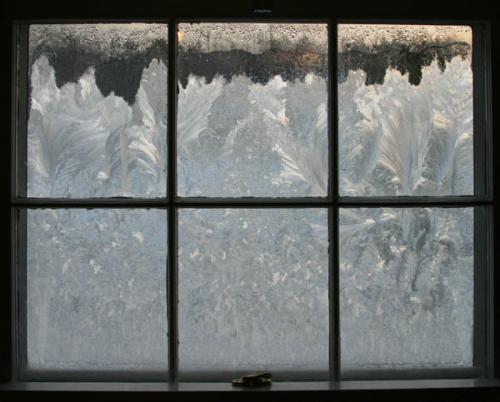
To give you an idea of how cold our bedrooms were in the wintertime; when we’d pull back the heavy layers of blankets and quilts each morning, we could see our breath vapors in the bedroom air!!! For one thing, Mom’s heavy quilts were so insulating and cozy, it was torturous to even think of leaving that cocoon of warm comfort. And, for another thing, our boy’s bed was like an old sway-backed horse that kept us in the ‘valley’ of its worn out springs at center. Either way, we finally would have to make the catapulting effort to spring out of that old bed and yank on our underwear, long-johns, long-sleeved T-shirt, flannel long-sleeved shirt and a thick sweater along with one or even two pairs of jeans and a couple pairs of thick socks for that day’s preparation of daily life. The window of our boy’s bedroom resided at the top of our stairwell and, on icy mornings like this, we couldn’t even see outside because of the thick ice buildup on that old, single-paned glass. For fun, I’d scratch words in the ice with my fingernails, like, “Where is spring”? 😉
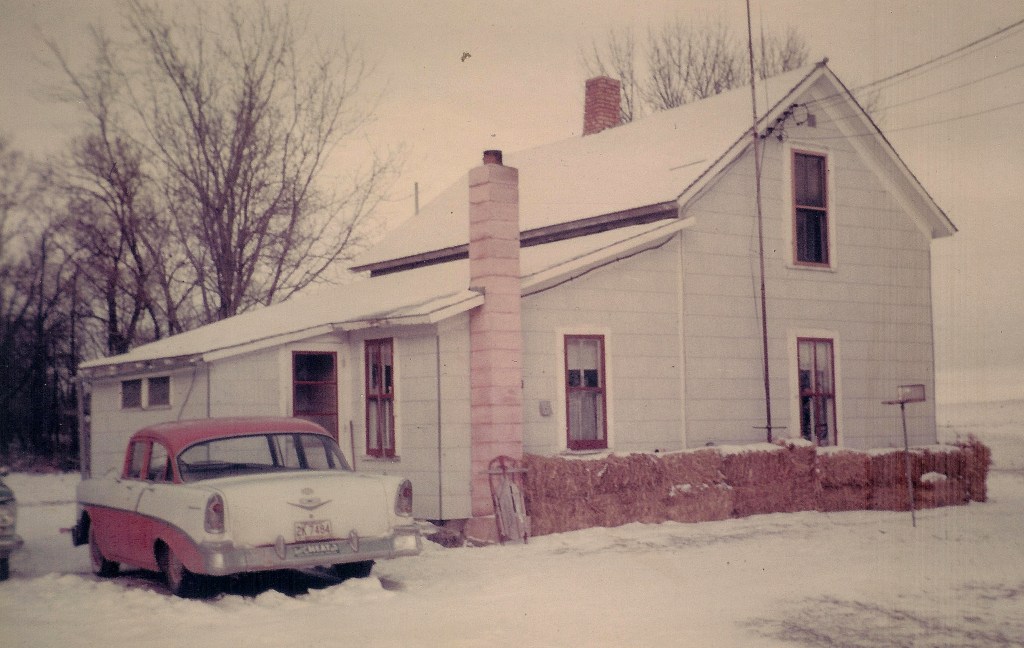
Layers of straw bales, plus red-framed storm windows helped keep Old Man Winter outside of the Noorlun farm house near Kiester, Minnesota in January of 1965.
Our loving parents did all they possibly could to make life comfortable and even enjoyable there in our fine farm home. Dad would stack multiple layers of straw bales around the house each fall to ward off freezing of water pipes, etc.. Some farm families, with lots of horses, would even pile horse manure up against their homes for winter insulation. As the horse manure would decompose, it would produce heat, naturally.
Dad also mounted ‘storm windows’ over our regular window to keep out some of the blizzard winds and cold. The warmth of these measures, plus the warmth of family love kept all things cozy for this Norwegian Farmer’s Son.
May 6th………“PLEASE SHARE SOME THOUGHTS GRANDPA, AS YOU THINK BACK ON THE LIFE OF OUR GREAT GRANDPA RUSSELL”
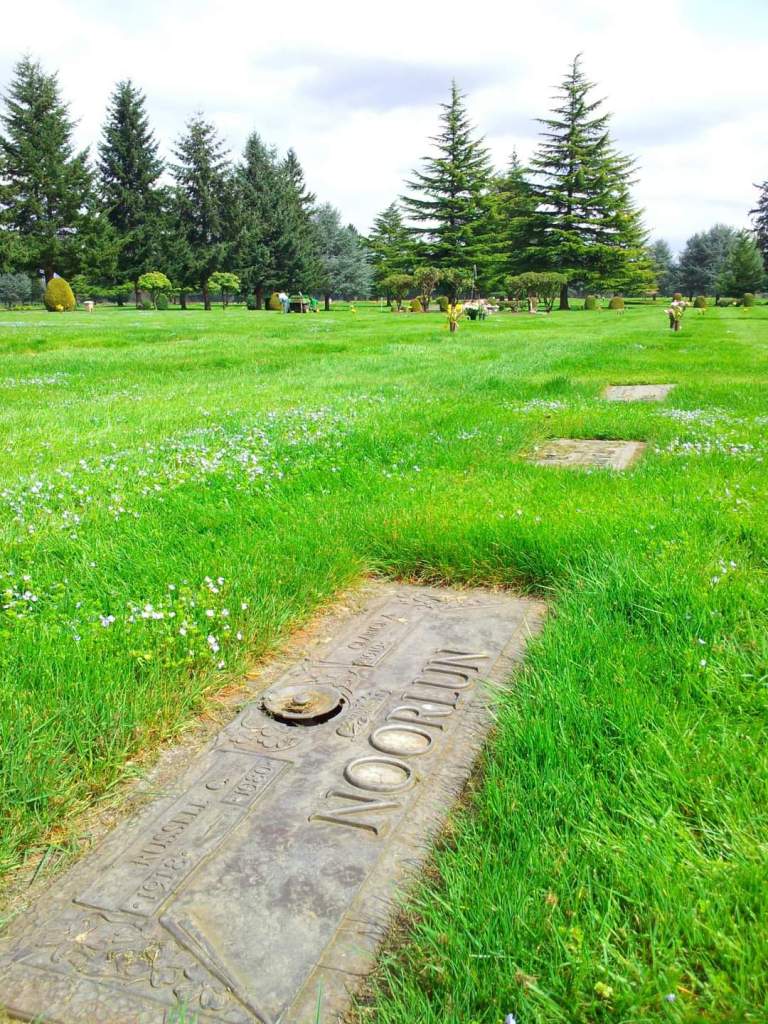
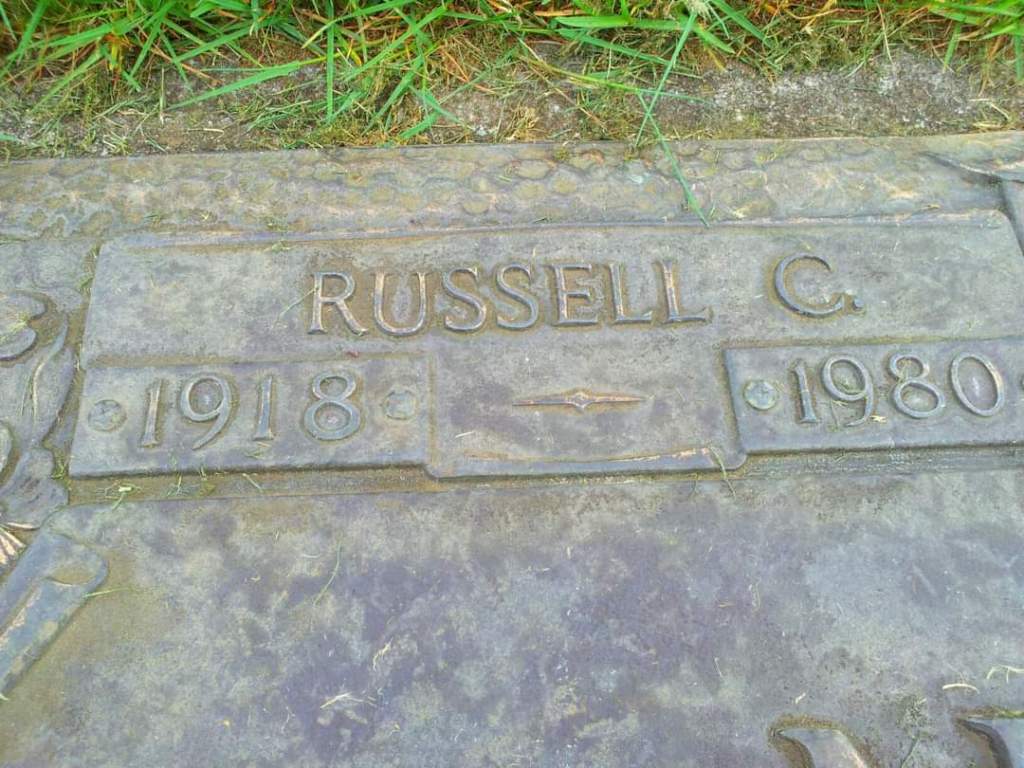
POEM – “Dear Father” by N. Elliott Noorlun. In 2013, on our annual visit back to Washington State for our mother’s birthday, I stopped by Dad’s grave there in Vancouver, Washington. Every year, it was my tradition to visit Evergreen Memorial Gardens to show my respect to Dad’s memory and ‘talk to Dad. This is one of a number of poems I wrote of my feelings.
Dear Father I’ve come, To your grave, To give God thanks, For all you gave,
To keep our family, Fed and warm, Both here and on, Our family farm.
Elliott’s father, Russell, on a trip to see family in northern Minnesota around 1960.
For teaching us all, To know right from wrong, Enjoying each day’s, Fun-filled song,
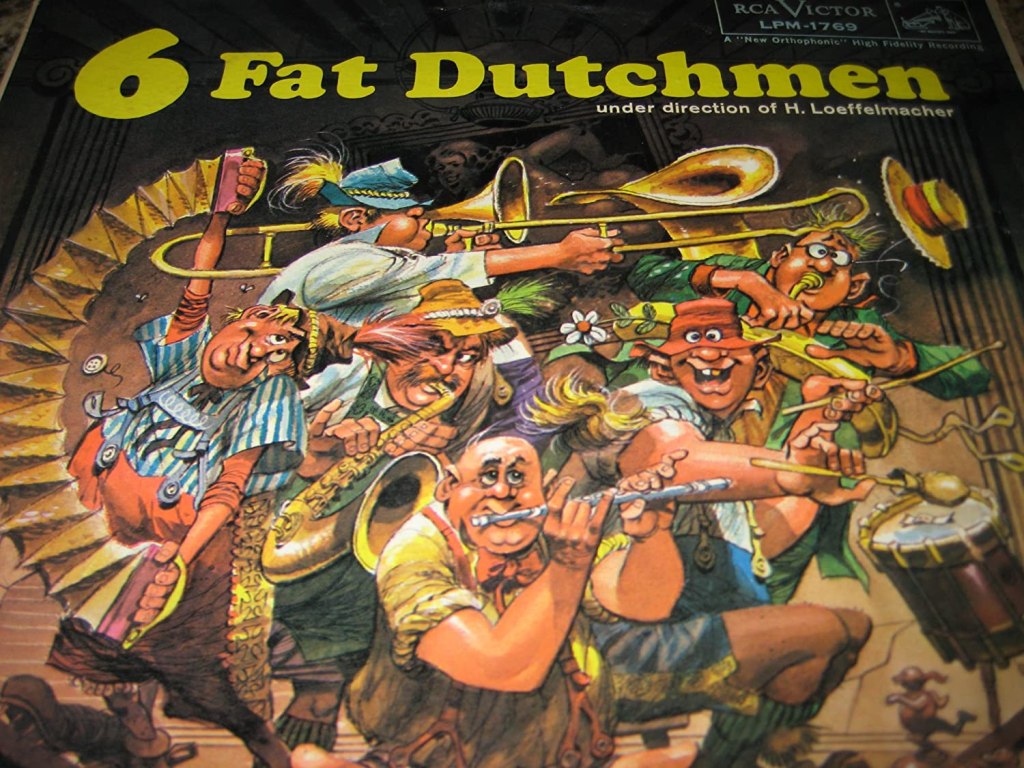
That sometimes came, From a polka back when, There was a TV show, With six fat men,
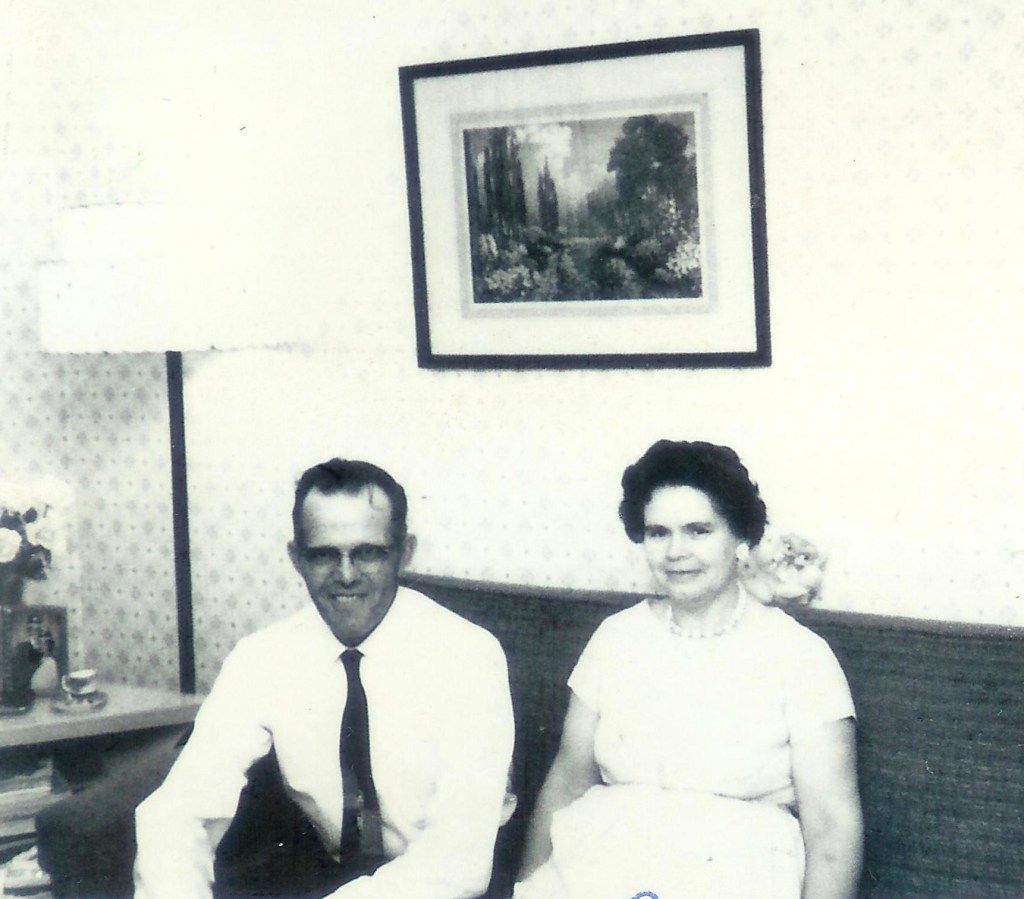
Elliott’s parents, Russell & Clarice, couldn’t help but laugh as their children attempted to dance around the room along to the tune of a happy polka!!
That would have us whirling, In front of you, As you and Mom laughed, From your happy view!
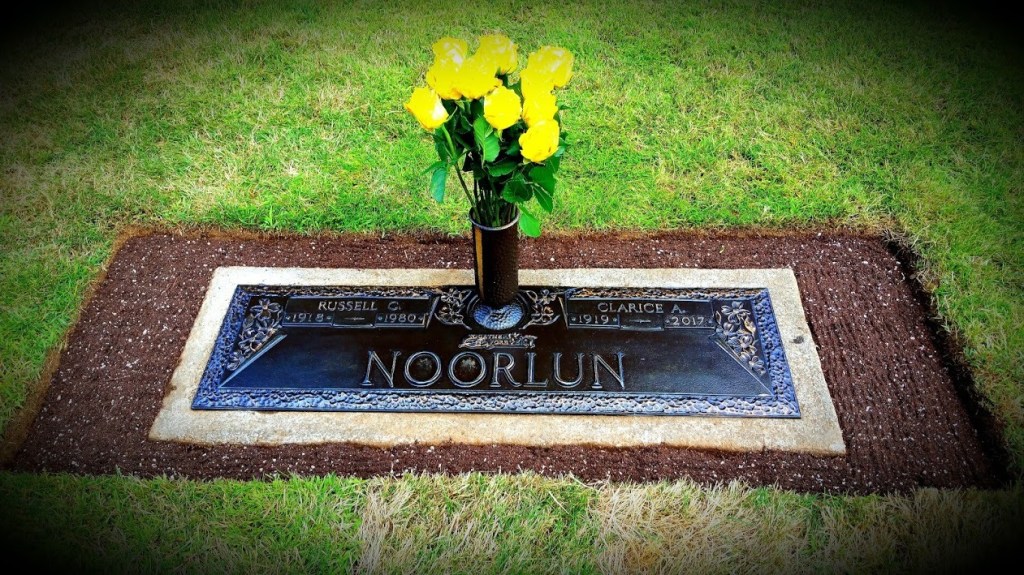
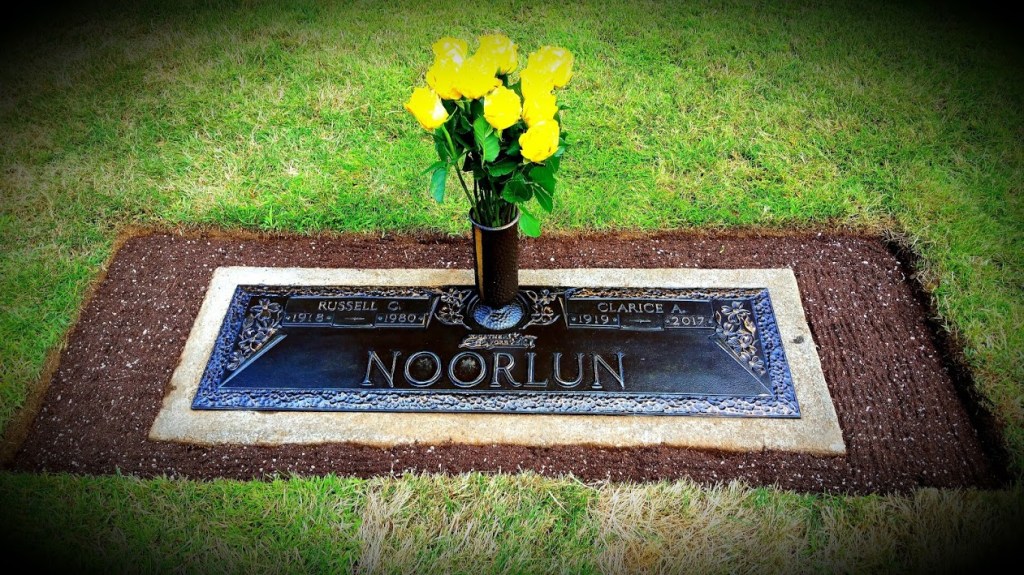
Since June of 2017, Elliott’s mother, Clarice, now rests alongside her handsome Norwegian husband, Russ, at Evergreen Memorial Gardens in Vancouver, Washington.
So many years, Have transpired since the day, That pancreatic cancer, Held your body at sway?
As, mercifully, our Savior, Gathered you to His Home, No more in pain, No more to roam.
“And Dad, as a mortal, I just have to say”, “That I still deeply miss you, To this very day”!!!
Elliott, The Norwegian Farmer’s Son, snuggles next to his daddy, Russ, around the year 1956.
May 4th……….“DID OUR GRANDPA RUSSELL ALWAYS EAT HIS MEALS IN YOUR FARM FAMILY’S KITCHEN”?
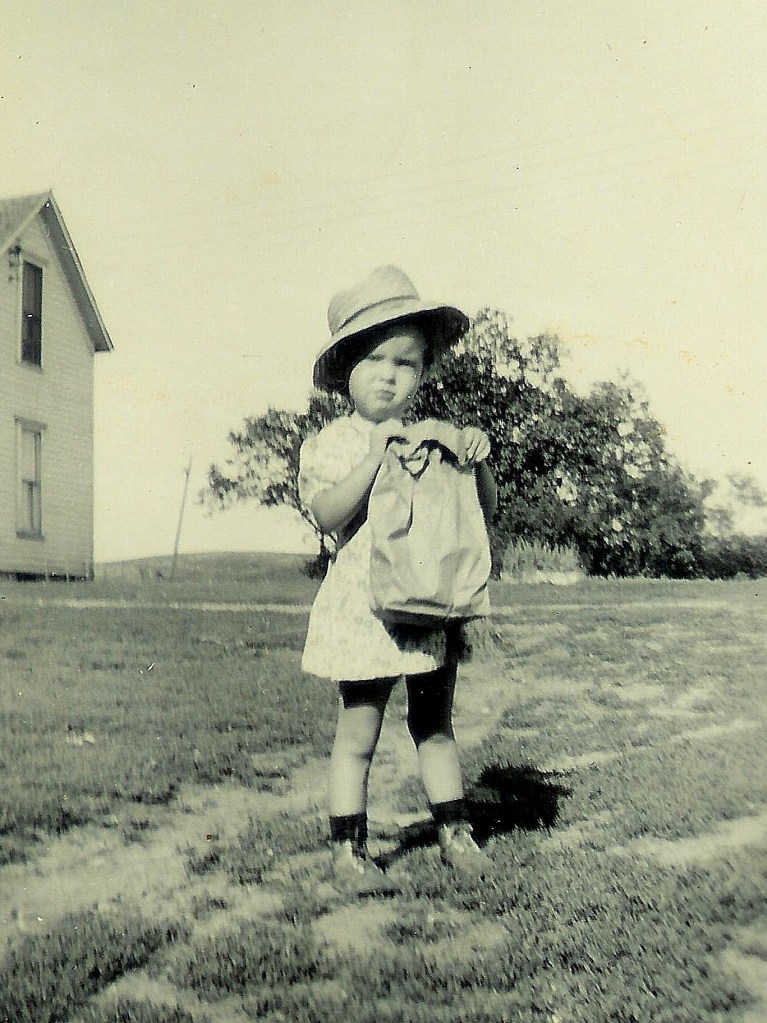
It’s 1949 and Elliott’s big sister, Rosemary (1946-1989), is 3 years old and ready to help her mommy take the noon meal out to daddy in the field.
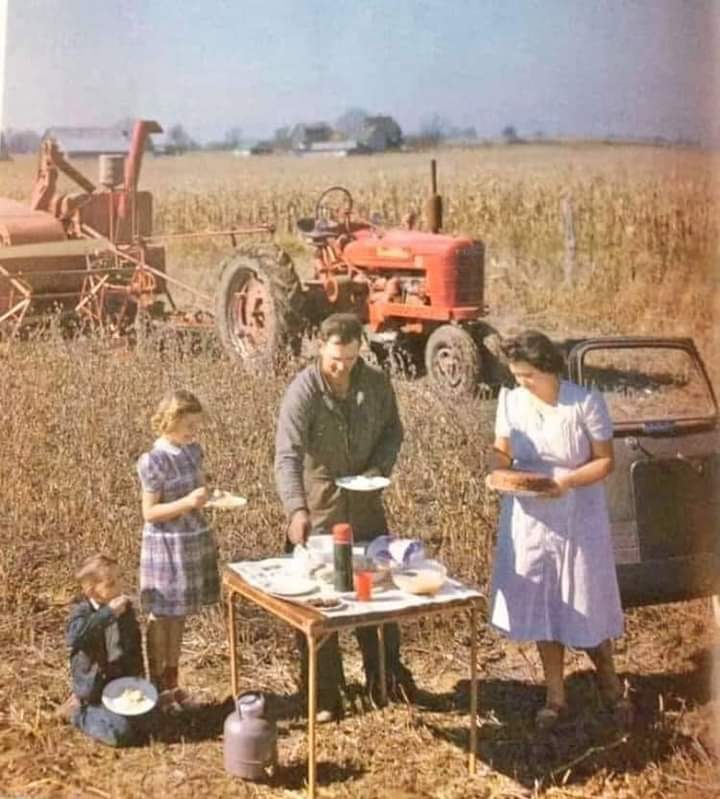
It was 1949, and while fashion-modeling a type of Norwegian sombrero, darling little Rosemary toddled around our small, cozy farm kitchen with her straw hat on. All excited she was as she intently shadowed our mother, Clarice, while she was busy creating a farmer’s ‘Dinner On Deck’ (deck being another word for the ground). This was to be a ‘Dinner On Deck’, instead of the usual occasion in our kitchen, because of the importance of getting the field work done that day. It was far more appropriate for Mom to take the noon meal TO Dad in the field so that he could be nourished, have his thirst quenched and get right back to baling hay or whatever the farm field needs were that day.
Our hard-working farmer father, Russell, truly lived up to the old farmer’s saying that went, “Ya gottamake hay while the sun shines”!!! And a shining that sun was that fine summer Minnesota day. Dad had lit out from the earliest cockadoodledooos of our chickens that morning and was out on the west acreage of our farm land baling alfalfa. Generically, when we cut and dried the alfalfa, we called this crop ‘hay’, but this plant, wealthy in nutrients, was truly part of the legume family of plants and is actually called “Lucerne” (and/or alfalfa) in most parts of the world.
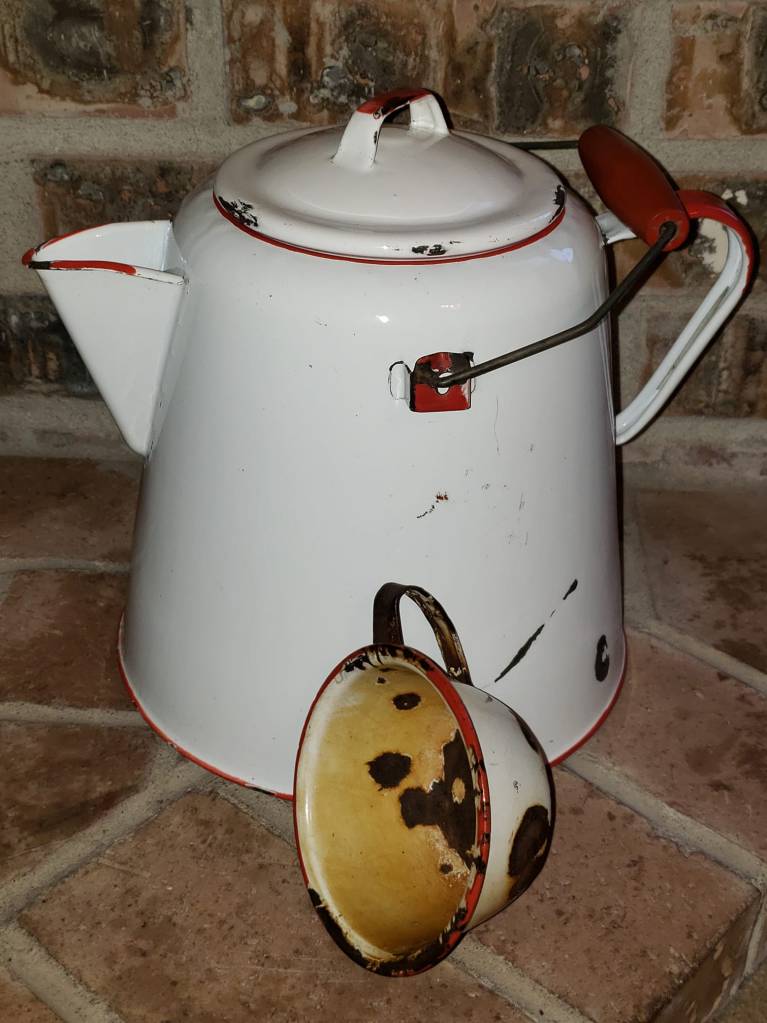
This BIG coffee pot actually belonged to Elliott’s mother, Clarice. The cup used to hang on their well-house for quenching a farmer’s thirst with delicious well water.
The scrumptious fragrances of food in our kitchen that day competed with the rustic aroma of large amounts of coffee that were percolating to perfection and would be carried out to the field in Mom’s ginormous, white porcelain coffee pot with a carrying bail. Fried chicken was sputtering away in its glory to fill the tummies of Dad and his hired hands. Homemade potato salad was on the menu, as well as Mom’s homemade bread with sweet cream butter.
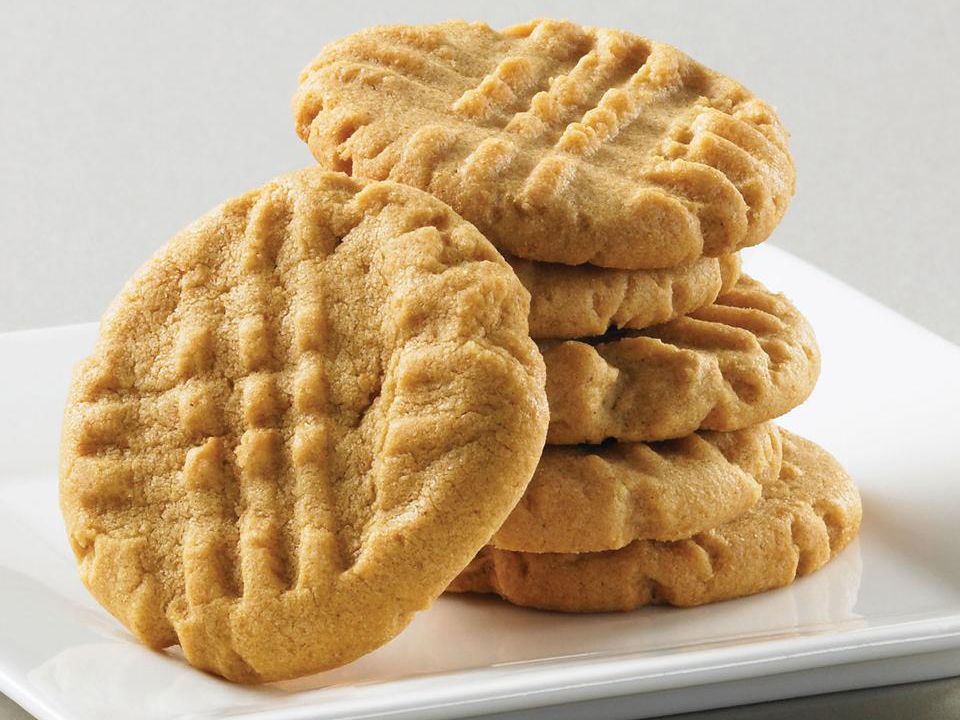
Dessert came in the form of Mom’s crisscross-pressed homemade peanut butter cookies or, one of our family’s favorites, a pan-baked chocolate cake with white ‘plastic frosting’. 😉 Well, o.k., at least that’s what Mom teasingly called it. Mom would cook that frosting on the stove top and then beat the ever-lovin’ daylights out of the frosting with a spoon before ladling it all over the top of that, still warm, chocolate cake. By the time the whole pan of cake got out to the field to feed our dad and crew, that frosting had hardened over to make itself almost like a hard-shelled candy. Once in the field, Mom cut the pan of cake into good, man-sized squares. Of course, we’d have to eat the cake first, but usually us kids would peel off that ‘plastic frosting’ in one big piece to savor it, like the candy it was to us, at the end of eating that piece of cake.
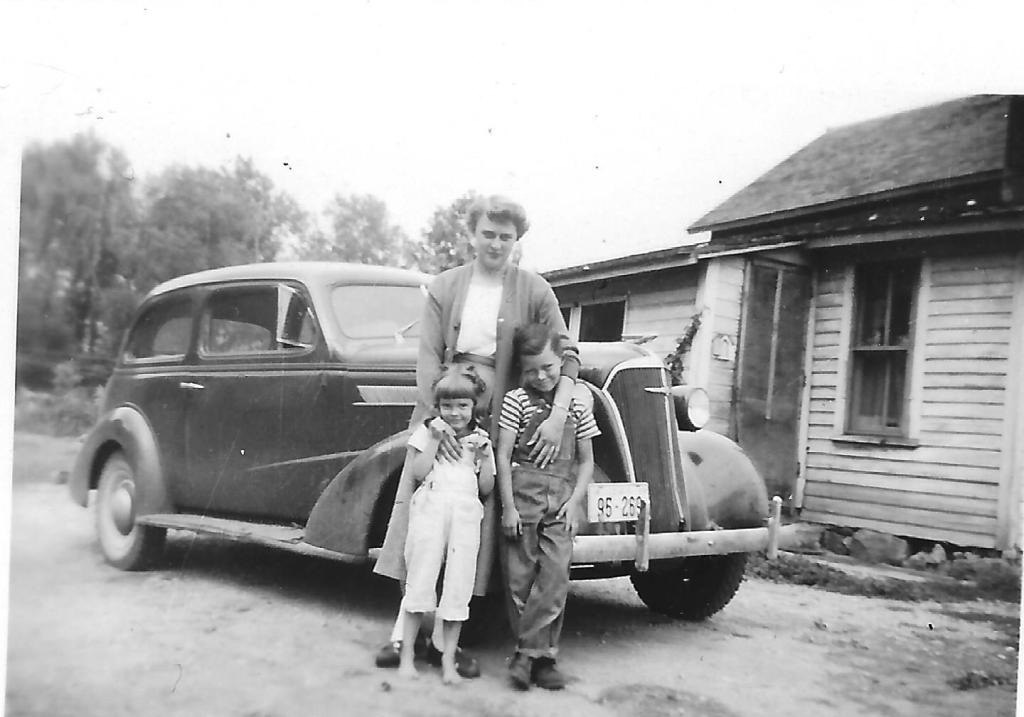
Elliott’s sister, Rosemary, and brother, Lowell, stand in front of the family’s 1937 Chevrolet Master Deluxe family car with neighbor lady, Janet Ozmun (who later married Marion Twedt).
With such a delightful feast for our men, Mom enlisted little Rosie (at 3 years) and bigger brother, Lowell, (at 6 years) to help her haul this farmer’s feast out to the family’s 1937 Chevy that sat just outside the back porch kitchen door. Once safely laid on the flat surface of the car’s trunk floor, our momma and her two youngin’s climbed in, pushed the starter button to bring the engine to life, and rolled out of our graveled yard for as gentle a ride as possible and out to the field to feed our well-deserving crew of menfolk.
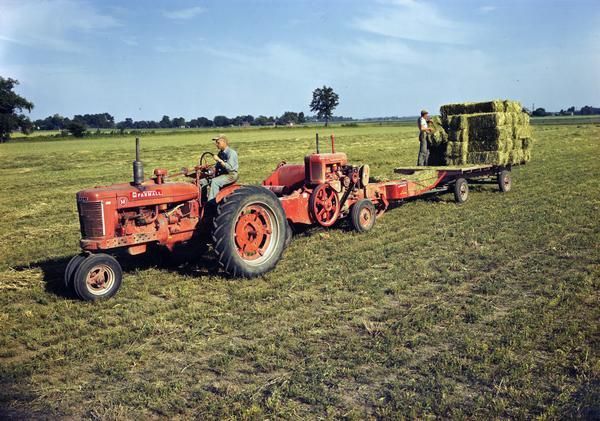
This is a similar hay baling operation like Elliott’s father, Russell, would perform on their farm three miles northwest of Kiester, MInnesota.
With the Chevy’s windows rolled down for summer ventilation, Clarice could hear the sound of twin engines as they approached the crew in the alfalfa field. One engine was Dad’s handsome Farmall Super M tractor. The second engine Mom heard was the pulsating motor on our family’s hay baler. It’s motor was pulsating to compensate for the powerful plunger that repeatedly rammed the alfalfa into the compactor section of the baler which eventually tied and then spit out a solid, rectangular hay bale. Hooked up to the baler and tagging along behind was what our farming culture called a ‘flat rack’ wagon that had a series of back boards to stack the bales up against as they came out of the baler.
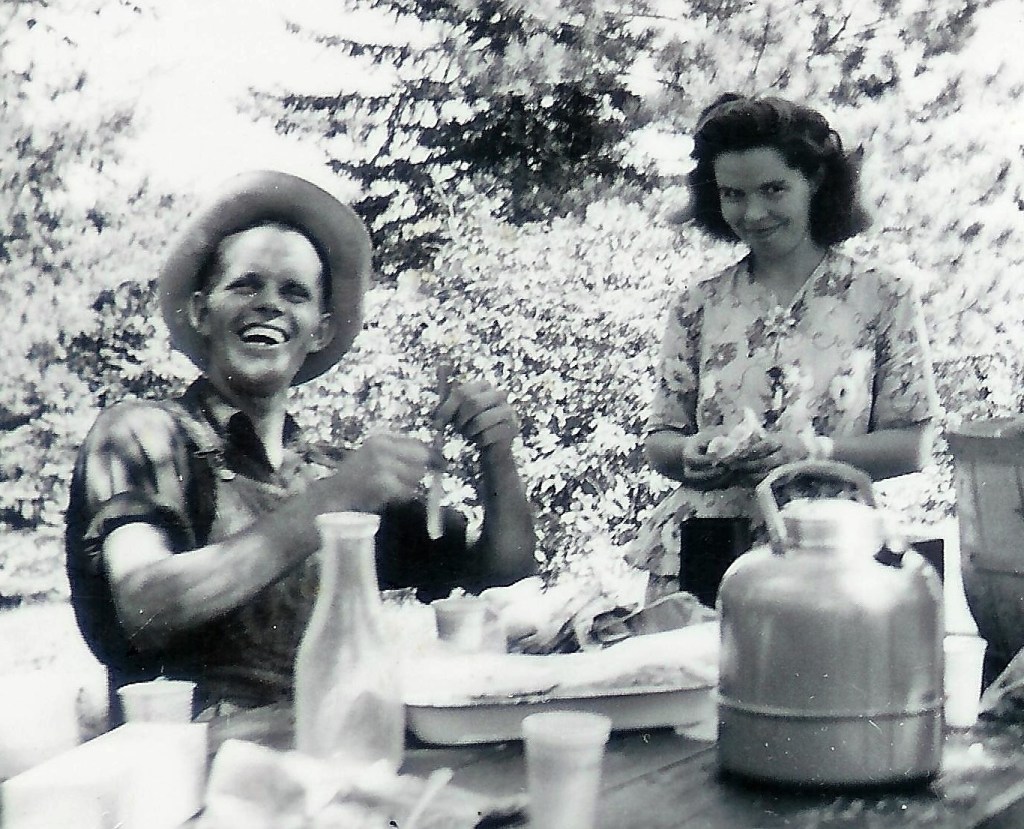
This outdoor farmhand feed had chairs to sit on. Elliott’s family sometimes sat on the cool grass under the shade of a tall load of hay bales stacked on the flat rack wagon.
There may have been plenty of gasoline in the fuel tanks of Dad’s tractor and baler, but Dad and his helper’s internal ‘gas tanks’ were empty and ready to enjoy Mom’s great food, coffee and even large quantities of ice water and Kool-aid. Oftentimes, Mom’s happy food ‘customers’ would find coolness in the shade of the tall load of haybales on that flat rack while brisk prairie winds cooled the men’s sweaty bodies. Now was a time of food and fellowship as our farmer father and his menfolk could enjoy each other’s company and good home-cooked food at the same time. Later in life, after I was born and came of little boy age, I, too enjoyed the productive prairie picnics that included this Norwegian Farmer’s Son!!! 😉
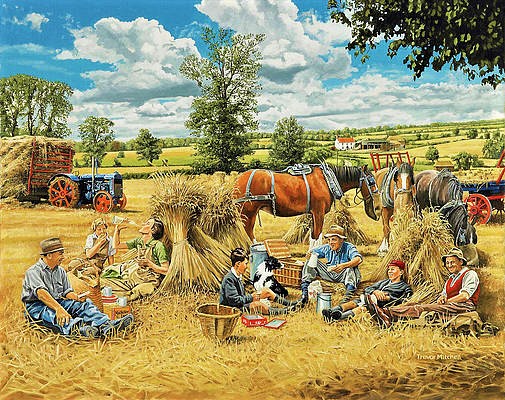
Another pleasant scene of a farm crew resting for Dinner time (noon meal) while harvesting wheat in earlier years when horses AND tractors were used. Notice the horses have feed bags tied over their noses to enjoy their own meal, too. 😉
May 2nd……..”AS A LITTLE BOY, ON YOUR FARM NEAR KIESTER, MINNESOTA, DID YOU HAVE TO FEED PIGS AS PART OF YOUR CHORES? EVEN IN THE WINTER BLIZZARDS”?
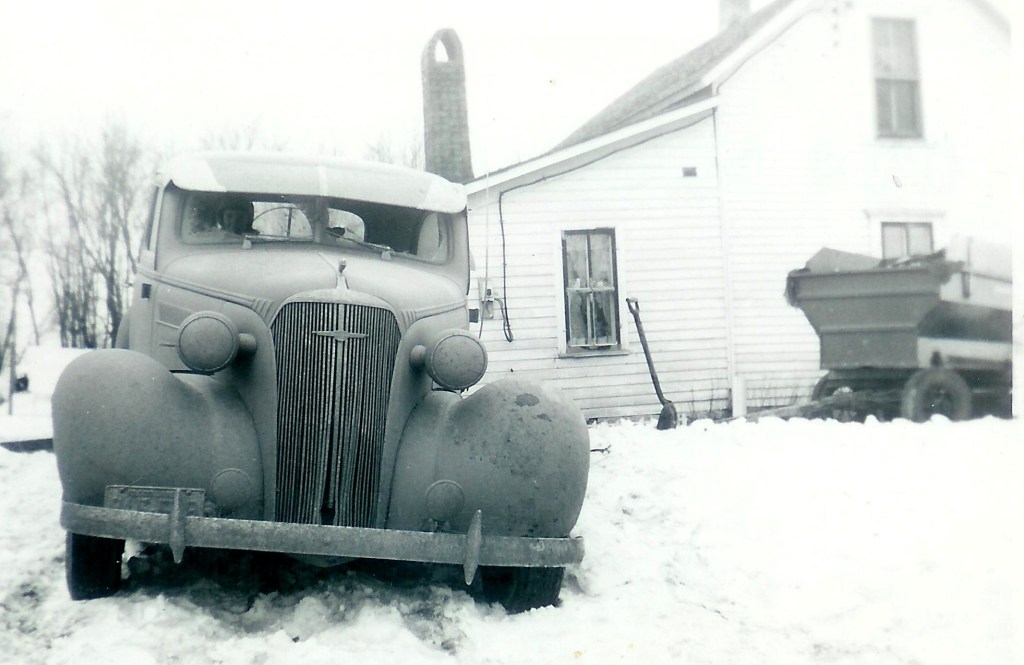
Snow surrounds the Noorlun’s 1937 Chevrolet in one of the harsh winters that could, and did, happen on their farm near Kiester, Minnesota
A mordant blast of winter’s fury shrieked past me and stole all the oxygen from my little boy lungs!!! Bundled up against the onslaught of this extreme weather, I had just stepped out from the back porch door of our farm home there near our hometown of Kiester, Minnesota. Even a second or two without that viable breath of life was too much for me!!! My longing lungs automatically gasped in a large replacement supply of life-giving oxygen. Now I could go on about my set chores for the day.
Having been born into the frigid similitude of another former January in 1954, I was acclimated to the normalcy of what a Minnesota winter was all about. My old seasonal adversary had just caught me by surprise, that’s all!!! 😉
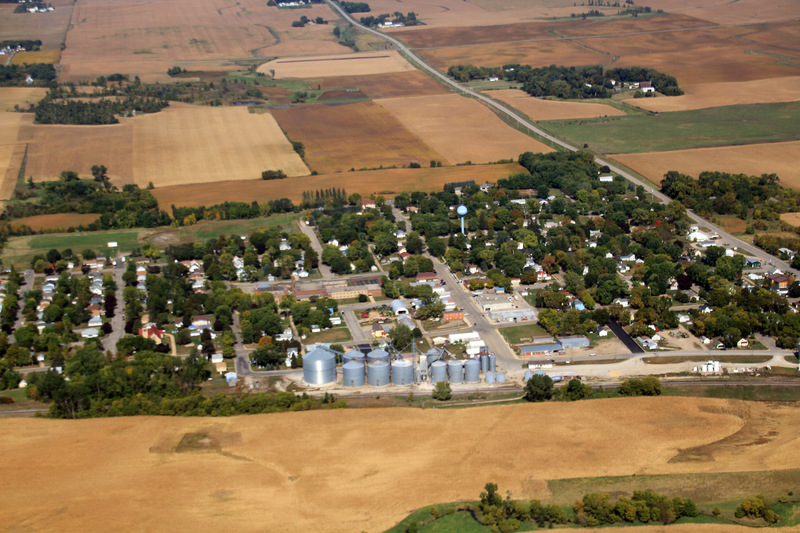
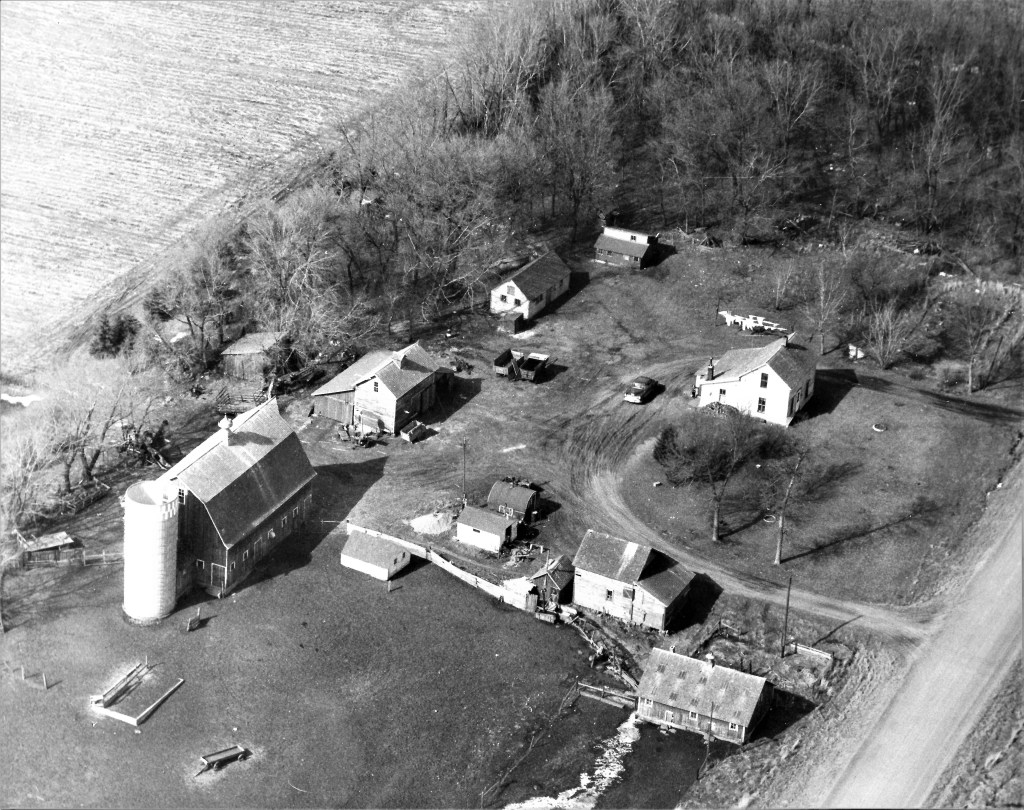
To the left is Elliott’s large barn. Just north of that is the granary. The hog house is at bottom right, along the gravel road. Elliott carried buckets of grain across the yard to feed their pigs, even in the snow of Winter.
When you’re knee-high to a grasshopper’s burp, anything and everything seems at least ten times larger than it really is. All things agrarian, in my farmer boy world, seemed larger, taller, heavier and farther in getting my chores accomplished each day. Layer on top of those conditions the trepidity of snow up to my “yoohooeee” and crusted over ice-melt divots from days when our local temperatures dared rise enough to get near 33 degrees and thawing. 😉
With my head tilted onto my shoulder, like a battering ram against the winds, I surged forward on the 50 yard diagonal trek that took me from our family home to the granary building that sat just north of our massive barn. My clumsy, thumb-n-one finger type of mittens pinched the vertical edge of our granary’s door as I pulled from left to right while the door’s upper rollers traversed the metal track above my head.
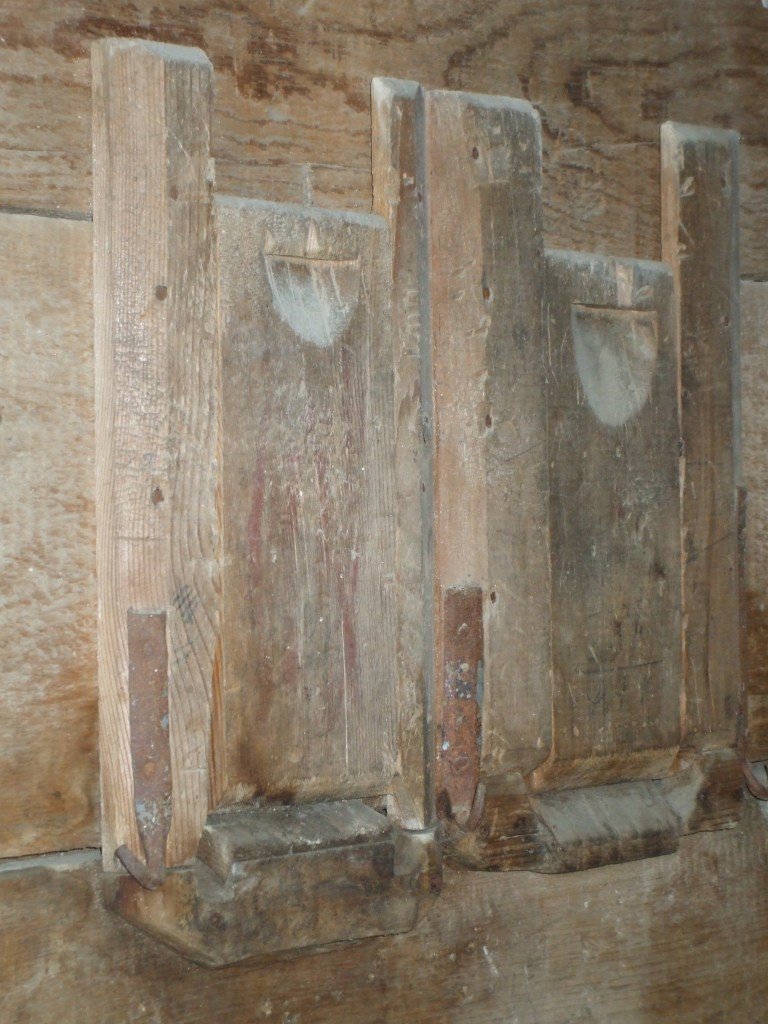
This is a photo from inside Elliott’s family granary. It shows the vertical hatch doors where grain came out, from the second floor, to fill buckets.
Making my ungainly entrance to the high flooring of the Granary, I relished the momentary respite from those howling winds that still circled this building reminiscent of the Sioux Indians circling a wagon train of old; waiting for the opportunity to attack.
Grabbing two, stout metal five gallon buckets, and with my breath vapors in the icy air, I stepped over to the wall of the Granary and slid up a vertical hatch door that, to me, was magical in itself. The pioneers (I seem to recall their last name was Santmaier or Sandmeyer) who constructed this granary in the mid to late 1800’s, created an ingenious, inter-connecting, enclosed chute system that allowed grain from the second floor of this animal food edifice to gravity-flow down and out of that little vertical hatch door. All I had to do was slide up that hatch door and the golden goodness of hog feed filled up those two buckets in a lickety split!!
Lugging those two full buckets of grain over to the doorway, I hopped down to ground level once again and heave-hoed them suckers to the level of the snow surrounding me. Before I could grant those hogs a “happy, heapin’ helpin’ of my hospitality”, I had to carry those massive metal magnets all the way down to the Hog House which was easily 75 yards from our Granary doorway.
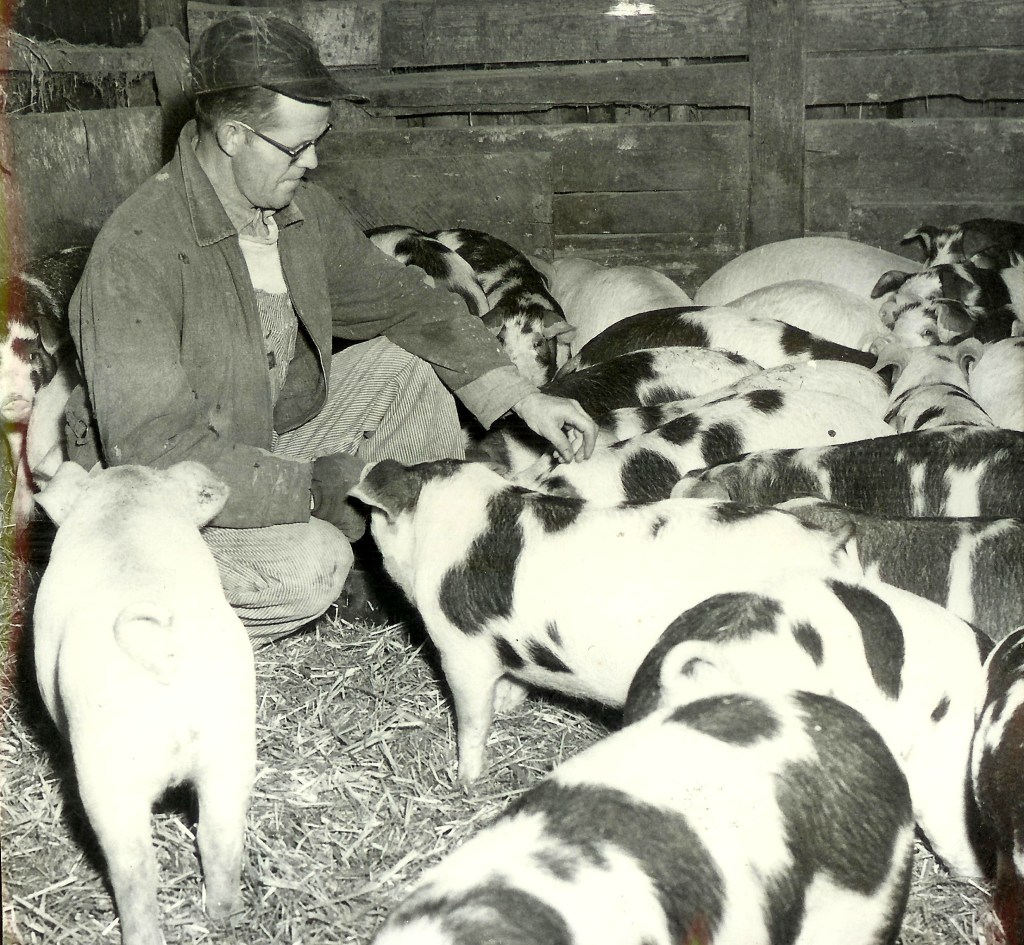
Elliott’s father, Russell, enjoys the “piggy palace” where dwelt each happy porcine prince and princess. 😉
I teasingly called those metal buckets, full of grain, magnets for a couple reasons. #1. Gravity made those buckets heavier to tote with each tiring footstep. And, #2. When you add being a little guy, plus the length of my arms, plus the height of those grain buckets and their extended carrying bails………well, I could barely get those heavy grain buckets to clear an inch or so above ground level!!! 😉
So there I was, a midget farmer either breaking snow trail with my buckets or dragging them heavy things on the snowy ground itself, or experiencing a “slippity doo dah” of a farmer’s ‘Fred Astaire’ dance on the icy areas. It was comical to say the least!!! 😉
With a blustery blast, those same winter winds blew me and my buckets into our hog house that sat at the southeast corner of our farmyard right along the north/south gravel road that passed our family place.
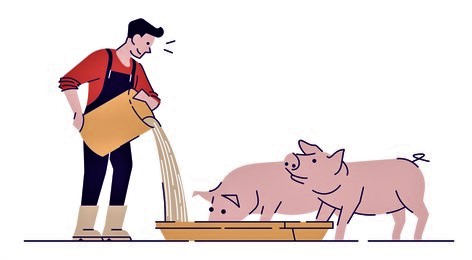
It only took a couple pig calls of, “Sooo-ee, Sooo-ee” to get the attention of every porcine prince and princess in that grunting grungy abode of theirs. Over the fence and into their trough went the grain along with some water to make some yummy ‘slop’ for them to rummage and root at with their super strong snouts and all was happy in that piggy palace……..both for the pigs AND for this Norwegian Farmer’s Son!!! 😉
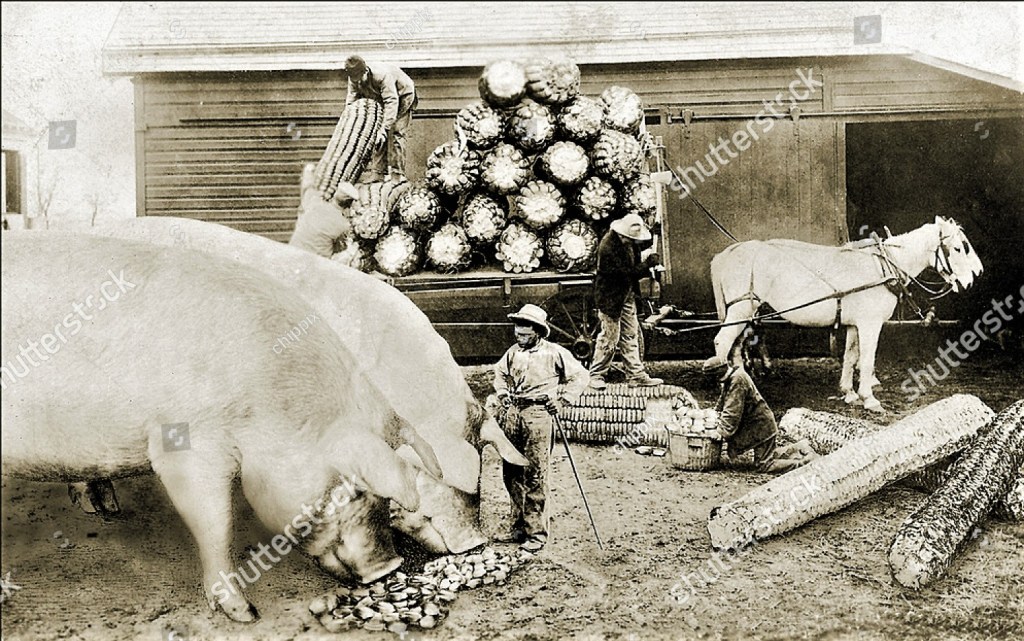
Bet you didn’t know that Minnesota grows corn cobs as big as tree trunks and pigs ten feet tall, ya? Just teasing!!! Hehehe 😉 This old version of ‘photoshop’ was just too good to pass up!!!
May 1st………..“IN YOUR KIESTER GRADE SCHOOL DAYS, DID YOU WEAR YOUR FARMER BOOTS DURING EVERY CLASS? EVEN DURING PHYSICAL EDUCATION (PHY. ED.) IN THE GYMNASIUM”?
POEM – “That Gym Floor Got Sore” by N. Elliott Noorlun
That Gym floor got sore, If you wore, Scratchy street shoes in that place.
And you’d get no smile, From Custodian’s file, Matter of fact, You’d get growl face.
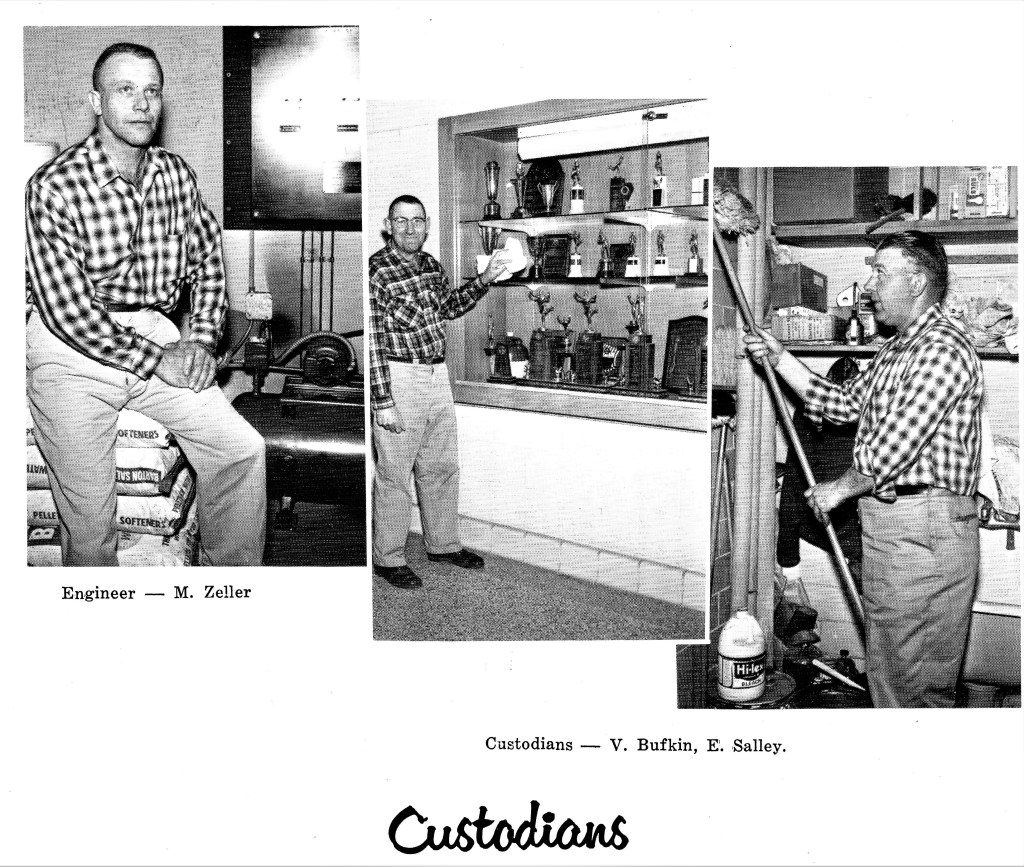
As a, now retired, custodian, I KNOW how intense the labor was for these fine janitors to make the Gymnasium floor at Kiester High School come to a sparkle and want to maintain that shine.
Our Custodian crew, Who were true n blue, Put in time and sweat and grunt,
And they sure never relished, What they’d embellished, On a scratchy-shoed little runt!!
So before going inside, Every Susie and Clyde, Got the word from the teacher’s news,
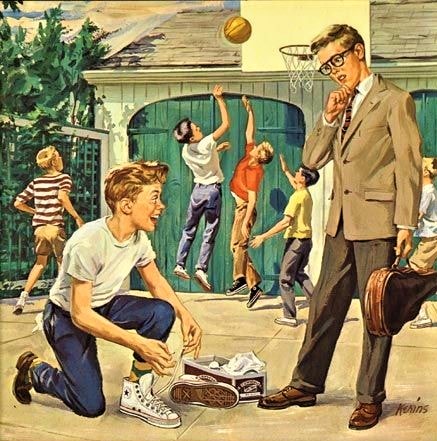
“We protect our gym floor, So if need, go to store”,“And buy yourself new gym shoes”!!!
The Kiester High School Gymnasium floor sparkled so nicely that Elliott’s big sister, Rosemary (on right), and her cheerleader friends could see the reflections of their uniforms in the luster of that shiny wooden floor. Class Year 1962 – 1963.
T’was like ‘holy ground’, When the only sound, Emitting from that Gym Room,
Were squeaks of rubber, Bouncing shoes like flubber, And a soft dust mop, No broom.
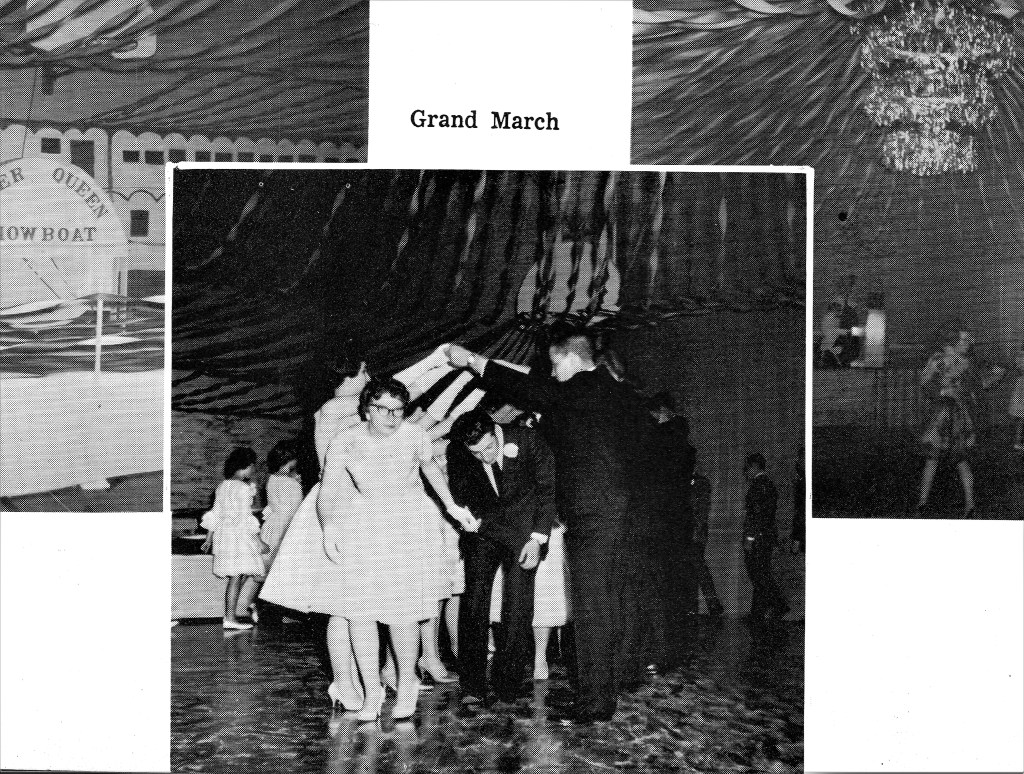
‘Dancing Dust’ is protecting the Gym floor while Vicky Schacko and her handsome date, Lamoyne Krohnberg enjoy the Prom held during the 1963 – 1964 school year.
For special occasions, When street shoes were a must, They’d cover the gym, With ‘dancing dust’.
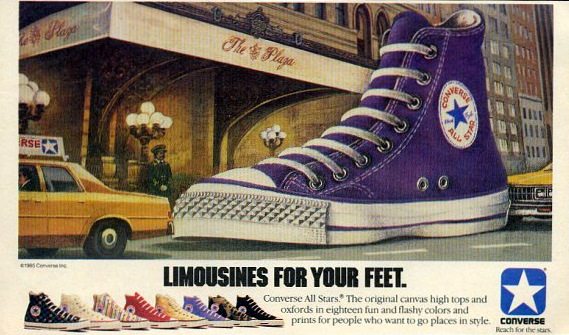
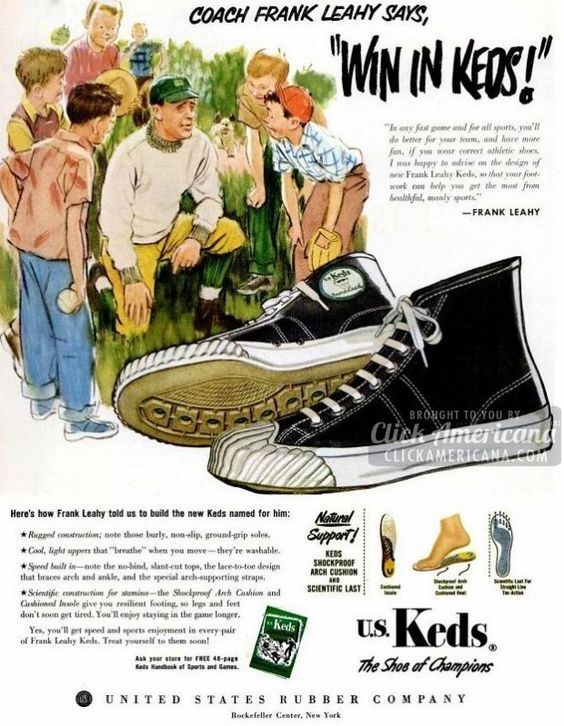
Even then, you knew, To make light treads, Cause you weren’t wearing, Gym shoes by “Keds”.
All in all we learned, Back when we were young, Take care of our school, Where anthem is sung.
And it started by taking, Care of our floor, While in Phy. Ed. classes, In those days of yore!!! 😉
April 30th……...”WHEN YOU MOVED TO WASHINGTON STATE IN 1967, GRANDPA, WHAT WAS ONE OF THE DIFFERENCES YOU SAW FROM THE LIFESTYLE IN MINNESOTA TO THE LIFESTYLE OF WASHINGTON STATE”?
POEM – “Food From Mid To West” by N. Elliott Noorlun
In ’67, when we sold the farm, And moved our family west,
I learned that food, No matter how good, Had to pass the West Coast test.
Meeting friends, At this strange new school, And tryin’ to be a winner,
I’d inquire what might be, There to see, On the menu that day for Dinner.
“DINNER!?!?, they’d scoff!! “That’s not till tonight”!!! “New boy you’re way out of sight”!!!
With embarrassing blush, I learned with this bunch, That for a noon meal, I’d better say Lunch.
In my Minnesota days, I was raised to call, Our meals by order, Come winter through fall.




























 Norwegian Farmer's Son